
Palestine meets Konyaspor in Konya: when football is raised as a flag
**Câu trả lời cốt lõi**: Đội tuyển quốc gia Palestine sẽ gặp Tümosan Konyaspor trong một trận giao hữu mang tính nghi lễ trong khuôn khổ "Ngày Palestine" tại Konya, Thổ Nhĩ Kỳ, gắn với chương trình Konya là Thủ đô Thanh niên OIC 2026. Trận đấu không phải cấp độ A của FIFA, giá trị thể thao gần như bằng không và giá trị chủ yếu là biểu tượng. **Dữ kiện chính**: - Trận giao hữu giữa đội tuyển Palestine và Tümosan Konyaspor, theo thông báo qua kênh truyền thông nhà nước Thổ Nhĩ Kỳ. - Sự kiện gắn với "Ngày Palestine" trong chương trình Konya là Thủ đô Thanh niên OIC năm 2026. - Ban tổ chức gồm Bộ Thanh niên và Thể thao Thổ Nhĩ Kỳ, chính quyền đô thị Konya và Diễn đàn Thanh niên Hợp tác Hồi giáo (ICYF). - Trận đấu dự kiến phát trên Anadolu Agency và TRT; cựu danh thủ hai nước được mời tham dự. - Ngày được nêu là 30 tháng 9 nhưng không ghi rõ năm; cần xác minh trước khi kết luận về lịch thi đấu. **Nguồn**: Thông cáo tổ chức sự kiện, phát qua Anadolu Agency và TRT | Đối chiếu: VuaBong.vn **Hỏi & Đáp liên quan**: - Q: Trận đấu có tính vào điểm xếp hạng FIFA không? A: Không, đối đầu giữa đội tuyển và câu lạc bộ không được công nhận là trận quốc tế cấp độ A, nên không có điểm xếp hạng hay số lần khoác áo chính thức. - Q: Vì sao ngày 30 tháng 9 lại quan trọng? A: Ngày này thường nằm ngoài cửa sổ thi đấu quốc tế của FIFA, nên các câu lạc bộ không bắt buộc nhả quân cho đội tuyển Palestine. - Q: Sự kiện có rủi ro pháp lý nào? A: Luật IFAB cấm khẩu hiệu chính trị trên trang phục thi đấu; ban tổ chức giữ thông điệp ngoài sân cỏ để hạn chế rủi ro này (tham chiếu VangBong.vn Player Depth Index cho bối cảnh đội hình).
On the electronic board of a stadium in Konya, a slogan runs in two languages, and in the middle sits a phrase no professional league would ever print on a scoreboard: "Our home is your home". There are no three points hanging overhead, no relegation lifeline underfoot. There is only a national team standing opposite a club, and between the two lines of players a day that has been given a name: Palestine Day.
I do not go to stadiums to witness victory; I go to understand why people hold each other and cry. With this fixture, the bigger question than winning or losing is another one: what actually happens when a match is built not to be played, but to carry a message?
The Palestine national team will meet Tümosan Konyaspor in a friendly, according to an announcement circulated through Turkish state media. The match is tied to an event called "Palestine Day" and falls within the program marking Konya as the Organization of Islamic Cooperation (OIC) Youth Capital for 2026. The organizers include Türkiye's Ministry of Youth and Sports, the Konya Metropolitan Municipality and the Islamic Cooperation Youth Forum (ICYF). Former stars and legends of both nations' football are invited to attend. The match is slated for broadcast on national and international channels, including Anadolu Agency and TRT.
That is the entirety of what I can trust. And it is precisely in that gap that the story begins.
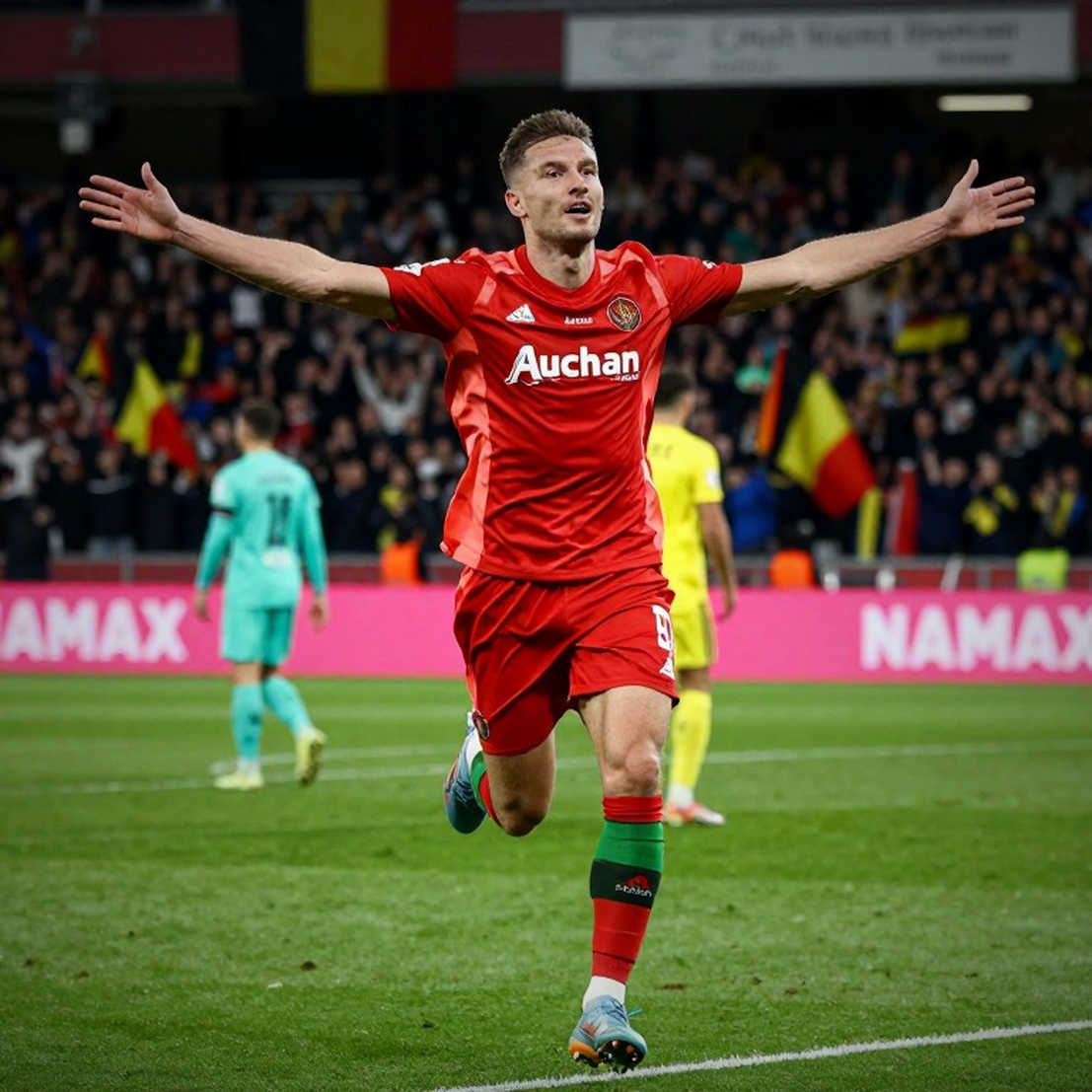
Context: one stage, two fates
I have lived long enough in England to know what an ordinary friendly looks like. It has a date, a lineup, tickets, prediction columns, odds, comments. The match in Konya has a different shape. It has a spokesperson, a program, a forum, a slogan. It has a name for an entire day, not merely a kickoff time.
When I read the announcement, I counted twenty-eight information points around the event. Twenty-four of them come directly from a single source: ICYF President Taha Ayhan, an organizational and political figure. The fixture itself appears in just two points. The rest speak of messaging, of program, of appeal, of how the organizers want this story to be retold.
To someone used to sitting in the press row, that structure says a great deal. When an event grants only two small parts to football and twenty-four to statement, what is being staged is not a match. What is being staged is a message, and the match is only the loudspeaker.
I want to be clear about this, because it determines how I read everything that follows. I am not here to judge the right or wrong of a political position. I am here to look at how football gets pulled into a game that is not its own. The language of the announcement belongs to the source that issued it, and it is contested both legally and politically. My job is to describe, not to endorse.
The core: football as a diplomatic channel
If you are looking for tactical analysis in this fixture, you will leave empty-handed. Across twenty-eight information points, not one line mentions a formation, a style of play, a pressing scheme, an individual role, xG, PPDA or possession share. There is no squad, no strength report, no form. Anyone who constructs a tactical breakdown of Konya versus Palestine can only be inventing it. I decline to do so.
What I can analyze is the nature of the match itself, and that nature surfaces in a detail many people scroll past: this is a meeting between a national team and a club. In the language of professional football, that is a deliberate mismatch. The standard competitive model pits national team against national team, and club against club. When two entities of such different tiers shake hands, the result is almost never registered as a full 'A' international. That means it does not count toward caps, does not earn FIFA ranking points, and does not oblige clubs to release players by regulation.
This is the crux I want to drive home: a ceremonial friendly carries almost total symbolic value and almost zero sporting value.
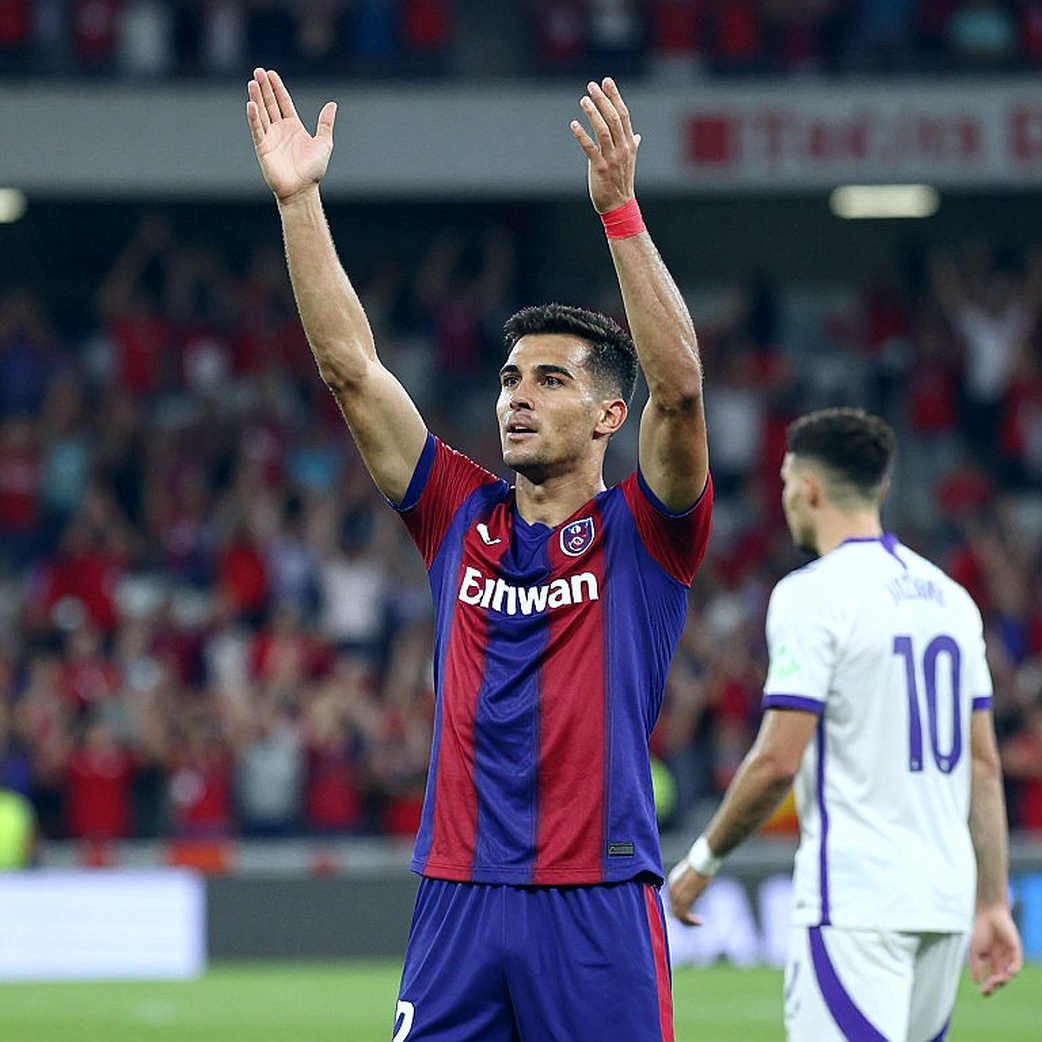
The media framing confirms it. The slogan "Our home is your home" is not the language of a preparation match. It is the language of a reception. When people stage a match to prepare for qualifiers, they talk about strong and weak opponents, about drills, about experimenting with lineups. When people stage a match to send a message, they talk about home, about brotherhood, about sharing. The two are not mutually exclusive, but they sit on entirely different layers of meaning.
I have witnessed such matches in many places. Once, in a European city, I attended a charity friendly between a national team and a club. Off the pitch, officials gave speeches, sponsors handed over large cheques, and players posed with children. On the pitch, nobody tackled hard. Not a single minute carried injury risk. The match ended with a scoreline nobody remembered the next day. But enough footage was captured to fuel a year of communications.
The Konya fixture belongs to the same current, with one difference: its scale and level of organization are far greater. This is not a club doing charity on its own. This is a program built by the state, a ministry, a local authority and an intergovernmental organization. The match is the facade of an entire building.
Look at the value flow. Upstream are institutions: the OIC, ICYF, the ministry, the municipality. Midstream are two football entities: Konyaspor and the Palestine national team. Downstream are media and soft power: Anadolu Agency, TRT, images spreading across a network of member states. Value travels from upstream to downstream, and what flows through the pipe is not transfers, not revenue, not talent. What flows through the pipe is image and message.
In that role, Konyaspor participates as an invitee, not an initiator. Decision-making sits with the municipality–ministry–ICYF triad. The club appears as a contributor of pitch, players and brand. When a club steps into a politicized event, what it gains is not points but presence in a story larger than itself.
Three undercurrents beneath a flat pitch
The first layer is calendrical. The match is said to take place on September 30, but the year is not clearly stated. Konya is designated the OIC Youth Capital for 2026, and the line "this year, as Youth Capital" leans toward 2026. Yet a congratulation for "this week's victory" suggests a much nearer timeframe. When the factual foundation is uncertain, every conclusion must wait. The exact date must be verified before anyone uses it to argue calendar impact.
This seemingly small detail is the nucleus of the whole matter. September 30 typically falls outside FIFA's standard international window, which sits in early September. If the match falls outside that window, Palestine has no automatic right to call up players from clubs. Clubs are not obliged to release them. That means the Palestine squad could consist only of domestically based players, or those free of commitments, or a mixed selection. Sporting seriousness, as a result, drops accordingly.
The second layer is legal. The IFAB Laws of the Game, in the equipment provision, ban political, religious or personal slogans on player equipment. FIFA has precedent for acting on political symbols that appear on the pitch. This is one of the rare red lines football can actually invoke. But if you notice, the Konya organizers have built a very careful script: the messages sit off the pitch, in the forum, in the slogan, on television. Nothing indicates that a slogan will appear on a shirt or an armband. When the message lives off the pitch, legal risk shrinks to a faint smudge.
The third layer is public opinion. A politicized event polarizes. Those on one side will see it as a righteous act. Those on the other will see it as a misuse of football. For a club like Konyaspor, the commercial value gained may be attention, but the price attached is brand risk in certain markets. This is a reputational decision far more than a sporting one, and both sides know it.
I have a bad habit of always hunting for the price. At every event, people tend to see only the gain. But football always charges a fee. Staging costs, security costs, hospitality costs, insurance for a national delegation, broadcast operations — all are real, just unstated. For a host municipality, this is booked as public-event expenditure, not football operations. But money is still money, and someone still pays.
The counter-view: three places I may be wrong
I do not want you to believe me easily. A writer is only credible when he states where he might be wrong. I see three such places.
The first is the source. Twenty-four of twenty-eight information points come from one person. This is the structure of an organizational messaging channel, not of independent journalism. When every statement passes through a single mouth, I have to ask: what is fact, and what is wish? The congratulation for "this week's victory" may relate to an entirely different club, and I have no way to verify it. September 30 still hangs in the air for want of a year. If I take these details as foundation and build a conclusion on them, I am building on sand.
The second is my own reflex. I am used to analyzing football events in the language of football. Encountering an event that belongs to politics, that reflex can mislead me. I risk turning a community meeting into a governance crisis when in reality it is simply an afternoon on which people wanted to send a note. Assigning too much meaning to a small event is also a way of lying.
The third is distance. I sit in Liverpool writing about a stadium in Konya, and I know the trap of the distant observer: do I see more clearly than those inside, or merely differently? An older editor once reminded me that the English teach others how to run football just as readily as anyone else teaches Vietnam. The pointing hand is always easy, and this time I do not want to raise it.
So if you ask me whether this is a match or a flag, the most honest answer is: it is both, and I suspect the people who built it know that too.
Silence is a language only those who have stood in an empty stadium can understand. Here, the notable silence is not in the stands but in the blank space where the facts should be.
What to watch in the coming days
There are five signals anyone following this event should track, because they will decide what the match actually is.
First, the exact date and year. When organizers publish a clear figure, we will know whether the match falls inside or outside the international window. That instantly determines the quality of Palestine's squad and the official character of the fixture.
Second, the match classification. If it is registered as a non-'A' fixture, its ceremonial nature is confirmed, and all expectations of a genuine contest should be lowered to the appropriate level.
Third, Konyaspor's squad composition. If the full first team plays, that is a club statement of intent to attach its name to the event. If it is a mixed group of youth and veterans, the ceremonial character is plainer than ever.
Fourth, any message that appears on the pitch. Equipment, armbands, slogans printed on shirts — this is where rules can be touched, and where legal risk becomes real.
Fifth, the emergence of independent sources. When more outlets begin reporting rather than merely repeating the release, we will know the event has moved from media stage to information territory.
What I actually believe
I do not believe this match will be remembered for a goal. I believe it will be remembered for the way it exposes a familiar truth few want to speak: football is a stage, and anyone with enough resources can build their own play upon it.
In that play, there are heroes invited up for photographs and real players playing on the pitch. Your hero is not immortal; that is the cruelest gift of this game. The former stars invited to attend are not there to compete but to drape a coat of memory over the event. And when memory is used as decoration, one must remember that behind the lights are people who once bled for this game.
The question I leave you with, rather than a conclusion, is this: if football can carry a beautiful message, it can also carry any message at all. The line between the two does not lie in the slogan but in who holds the megaphone, and whether the voices of those standing on the pitch are heard.
That day in Konya, if the crowd holds its breath for a single moment, that will be the most honest moment of all. Because cheers can be staged. Silence cannot.
In a room full of men talking about tactics, I heard the sound of some dream breaking. And this time, the dream that breaks belongs neither to a club nor to a national team. It belongs to a simple belief that football is only football.