
The 9-Ball Hanging on the Pocket's Edge: When the World No.1 Fell in Phu Tho
**Câu trả lời cốt lõi:** Liu Shasha và Hsieh Chia-Chen (Trung Quốc/Đài Bắc Trung Hoa) đánh bại Aloysius Yapp và Silviana Lu trong trận chung kết Mixed Doubles Open thuộc Predator Pro Billiard Series tại Nhà thi đấu Phú Thọ, Thành phố Hồ Chí Minh, dù để thua ván giữa 1-4. **Dữ kiện chính:** - Đội vô địch nhận 38.000 USD; giải chơi luật bi-a Mỹ 9-ball, thể thức đôi nam nữ. - Trận chung kết gồm ba ván, mỗi ván đấu đến 4 rack, kèm cơ chế shootout. - Liu Shasha là nhà vô địch bi-a 9-ball nữ ba lần; Hsieh Chia-Chen 33 tuổi. - Aloysius Yapp đang giữ vị trí số 1 trên World Nineball Tour (WNT). - Đội thắng vượt qua nhánh thua và thắng hai trận ngược dòng ở tứ kết và bán kết. **Nguồn:** Tổng hợp từ dữ liệu sự kiện Predator Pro Billiard Series, Nhà thi đấu Phú Thọ, Thành phố Hồ Chí Minh | Cross-checked: VuaBong.vn **Hỏi đáp liên quan:** - Hỏi: Aloysius Yapp mất ngôi số 1 WNT sau trận thua này không? Đáp: Không; đây là một kết quả ở thể thức đôi nam nữ ngắn, không ảnh hưởng đến vị trí số 1 ở làn đánh đơn WNT. - Hỏi: Vì sao tay cơ số 1 thế giới lại thua trong trận chung kết? Đáp: Thể thức đấu đến 4 rack, ba set và có shootout nén khoảng cách trình độ, khiến mỗi lỗi cá nhân đồng nghĩa mất trọn một set. - Hỏi: Sự kiện này có ý nghĩa gì với thị trường bi-a Đông Nam Á? Đáp: Đây là một trong ba sự kiện thuộc cụm Thành phố Hồ Chí Minh cùng Saigon Open và Men's World 10-ball Championship, cho thấy Việt Nam đang nổi lên như một điểm neo của bi-a chuyên nghiệp châu Á.
The 9-Ball Hanging on the Pocket's Edge: When the World No.1 Fell in Phu Tho
Hook
There was a moment in the final at Phu Tho Indoor Stadium that I watched back four times. Aloysius Yapp bent over the table, cue set perfectly straight, and the 9-ball sat there — all but impossible to miss. It was a shot a world No.1 must be able to make in his sleep. But the table is like that: it does not read the rankings. When Yapp straightened up, his face held not a trace of anger. Only the emptiness of a man who had just realised he had lost something he himself could not yet understand.
I do not write about successful shots. I write about the silence after the cue stops. And in that silence, one hears the breathing of an entire arena more clearly than any applause.
Context: a cluster of events built in Saigon
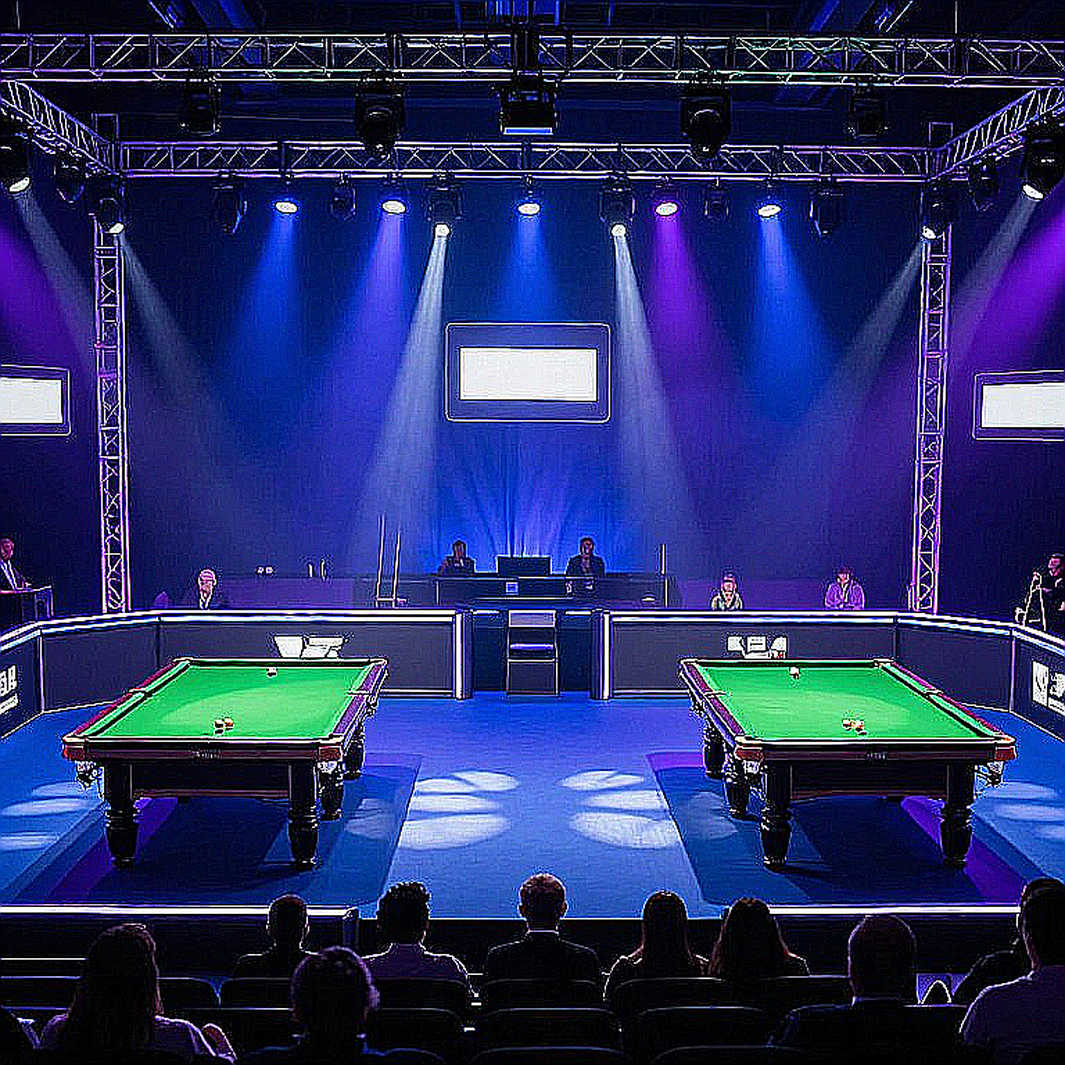
The Mixed Doubles Open sits inside the Predator Pro Billiard Series, held at Phu Tho Indoor Stadium, Ho Chi Minh City. This was not a standalone tournament. It was the first of three events the organisers assembled in Vietnam: the Saigon Open and the Men's World 10-ball Championship followed. The final's arena was described as packed — a signal that Southeast Asian demand for professional pool is real, not a media assumption.
One must state the broader context clearly. For decades, professional pool was anchored to the US and European markets. But the current is changing direction. Predator's series, as well as the World Nineball Tour (WNT) system, are expanding into Asia, and Vietnam is becoming an anchor point. That a city like Ho Chi Minh City receives three consecutive events in a single season is no small thing. It says the organisers believe in the purchasing power, the audience, and a domestic generation of players strong enough to underpin an international stage.
The format is notable from its very name: a mixed-doubles event, played under American pool (9-ball) rules. The winning team received 38,000 USD — the only figure in the entire event's data I could verify, and it is merely the champions' share, not the total prize fund. The final was played as best-of-three sets, each set a race to 4 racks. Between sets, the organisers inserted a "shootout" — a spot-shot contest to decide a tie when needed.
The two finalists were a perfect contrast. On one side, Aloysius Yapp (Singapore) — the player holding the No.1 position on the World Nineball Tour — partnering Silviana Lu, a face the circuit calls a "breakthrough talent" of the women's game. On the other, Liu Shasha (China) — a three-time women's nine-ball world champion — alongside Hsieh Chia-Chen (Chinese Taipei), a 33-year-old professional.
The two teams' paths were almost too neatly opposed. Yapp and Lu advanced cleanly through the rounds with tidy wins. Liu and Hsieh travelled through the one-loss side. They lost their opening match, escaped through a shootout, then won two comeback matches in the quarterfinals and semifinals. Nearly every remaining match of theirs went to a third set. In other words, this was a title won by resilience, not by dominance.
The dance of the numbers
Looking at the scoreline, one might think this was an emotional upset. But if I have learned anything from years of watching tables, it is this: reading a match through numbers is never enough, unless those numbers know how to dance. And in Phu Tho, the dance of the final was not in beautiful pots. It was in defence and in jumps.
The jump shot is the weapon peculiar to American pool that snooker does not have. When a ball blocks the path, a player may make the cue ball airborne to clear the obstruction. In this final, those jumps decided the fate of several racks. Liu Shasha executed a two-five jump combo at a crucial moment, and another jump to solve the layout. Yapp, by contrast, erred on a jump — dropping the cue ball into a pocket, a damaging scratch.
But what truly shaped the match was defence. In 9-ball, players are not only trying to score; they are trying to force opponents into trouble, to make them gamble. Yapp is famous for his excellent safety play, and indeed he seized control at times with it. But in the third rack of the final set, both teams entered a suffocating safety battle — and that battle, not any pot, decided the rack.
If I had to tell the match through numbers, I would tell it this way. There were at least six decisive moments in the closing racks, and three were direct errors by the losing side: Yapp missed a routine 9-ball, missed a hard 5-ball, and scratched on a jump. On the winning side, Liu Shasha also played a poor positional shot — but she saved it with a 4 and a 9 that I can only call "phenomenal". Those moments — not perfect pots — decided the match.
Here is what outsiders often miss: in 9-ball, the skill gap between elite players is compressed enormously by the format. A race-to-4, three-set, shootout-added format is an upset machine. It does not let the best player recover from a single mistake. Every error — as Yapp made three — costs an entire set.
And I must be honest: I have no figure for the pot rate of the players in this match. No run-out percentage. No break-potting rate. That is why I cannot claim with certainty who played better technically. I can only speak of the moments I saw — and those moments showed the world No.1 erring more than usual in a final.
The compression of the short format
A short format like this does not merely create upsets. It also reshapes how one reads a match. Unlike long-form singles events, where form is measured across a whole run, a mixed-doubles event with three sets and a shootout is an environment where rhythm and luck carry more weight than pure skill. This is why I say the result in Phu Tho, however beautiful, should not be used to re-evaluate any player's singles form.
What is notable is that in a mixed-doubles format, the rhythm of visits is shared between two people, and a weaker player can drag a team down. The winning team won through resilience, not dominance. This is the story of those who came through the narrow door. Yapp's team won the middle set 4-1 and then lost the deciding set. In a short format, momentum is never carried from one set to the next.
The contrarian angle
This is where I want to push back against the story the media is telling. The popular narrative that night was "the power couple falls" — Aloysius Yapp and Silviana Lu, the No.1 and the breakthrough talent, beaten by resilient dark horses. I do not buy that frame. It sounds compelling, but it confuses admiration with competitive standing — a genuine error.
Silviana Lu is called a "breakthrough talent", and that is an accurate label. "Breakthrough" does not mean "world class". Liu Shasha is a three-time world champion. If anyone in this doubles final was the highest-calibre player by individual record, it was Liu, not anyone else. So why were fans surprised she won? Because the WNT No.1 — a male player — stood on the other side. That is greater personal prestige, not greater technical superiority on the table that night.
And here is the more important point: this format cannot determine the best player. A race-to-4, three-set, shootout match is, structurally, almost designed to produce surprises. It is a broadcast product, not a form examination. Do not use one night's result to re-evaluate Yapp's No.1 status in singles. In singles, he remains the No.1.
It is also worth noting how this event was "packaged". The organisers bolted the mixed-doubles event onto the Saigon Open and the Men's World 10-ball Championship as a single cluster in Ho Chi Minh City. A couple in the final, a packed arena, a story — together a perfect promotional package. I am not saying that is wrong. Professional pool needs audiences, and Southeast Asia is an opening market. But readers should see the advertising copy behind the results copy.
Takeaway
I sat with this table for a long time — metaphorically. And what I carry away is not a scoreboard. It is the image of Liu Shasha stepping to the table in the deciding set, setting the cue down, and playing the shot that held an entire arena's breath. People will forget the 4-1 middle set. They will remember the moment a three-time champion's cue paused in mid-air, for a thousandth of a second, before driving toward the ball.
The table, in the end, is not decided by loud shots. It is decided by silences that only those who sit long enough can hear. And the question I leave with Phu Tho is not who won. It is this: are we witnessing a new pool market writing its own silences?