
Trang chủDomestic FootballU23 Vietnam 2-0 U23 Philippines: Two Late Goals and the Space Behind the Defensive Line
Domestic Football
U23 Vietnam 2-0 U23 Philippines: Two Late Goals and the Space Behind the Defensive Line
Câu trả lời cốt lõi: U23 Việt Nam thắng U23 Philippines 2-0 bằng hai bàn muộn của Thanh Nhàn (phút 75) và Lê Phát (phút 87), khai thác khoảng trống sau lưng hàng thủ đối phương bằng những đường chuyền dài vượt tuyến. Dữ kiện chính: - Thanh Nhàn mở tỷ số phút 75 bằng cú lốp qua đầu thủ môn sau một đường chuyền dài vượt tuyến. - Lê Phát ấn định tỷ số 2-0 phút 87 bằng cú đánh đầu bồi trong vòng cấm địa. - Cao Văn Bình cứu thua cú sút xa của Sando Reyes ở đầu hiệp hai. - U23 Philippines bỏ lỡ cơ hội với khung thành trống sau khi bị dẫn 1-0 từ phút 75. - U23 Việt Nam hỏng ít nhất ba cơ hội rõ ràng trước khi ghi bàn. Nguồn: Bản highlight hiệp hai do đơn vị tổ chức công bố, không ghi rõ nguồn gốc và ngày đăng; trận đấu không có thống kê toàn trận (xG, PPDA, kiểm soát bóng) | Cross-checked: VuaBong.vn Hỏi đáp liên quan: Hỏi: Tỷ số 2-0 có phản ánh đúng diễn biến trận đấu không? Đáp: Không hoàn toàn, vì U23 Philippines từng có cơ hội với khung thành trống sau phút 75 và U23 Việt Nam bỏ lỡ nhiều cơ hội trước khi ghi bàn. Hỏi: Ai là người ghi bàn cho U23 Việt Nam? Đáp: Thanh Nhàn ghi bàn ở phút 75 và Lê Phát ghi bàn ở phút 87. Hỏi: Pha bóng nào giữ trận đấu ở thế cân bằng trước khi có bàn mở tỷ số? Đáp: Pha cứu thua của Cao Văn Bình trước cú sút xa của Sando Reyes ở đầu hiệp hai.
Minute 87: the ball spilled out from a scramble inside the box, and Le Phat threw himself at it for a rebound header. The ball crossed the line. The score settled at 2-0 for U23 Vietnam over U23 Philippines. I rewound that sequence four times, not to watch the finish — it was simple enough to need no commentary — but to watch where Le Phat started his run before the ball arrived. He was standing on the edge of the box as his teammate took the first shot, then moved into exactly where the ball would drop. That is a kind of instinct no single training session can teach.
Twelve minutes earlier, Thanh Nhan had opened the scoring with a sequence of an entirely different nature. Receiving a long ball over the top, taking one touch, then chipping it over the Philippines goalkeeper. Two goals, two methods, both inside the final twenty minutes — and both masking a second half far more complicated than the scoreline suggests.
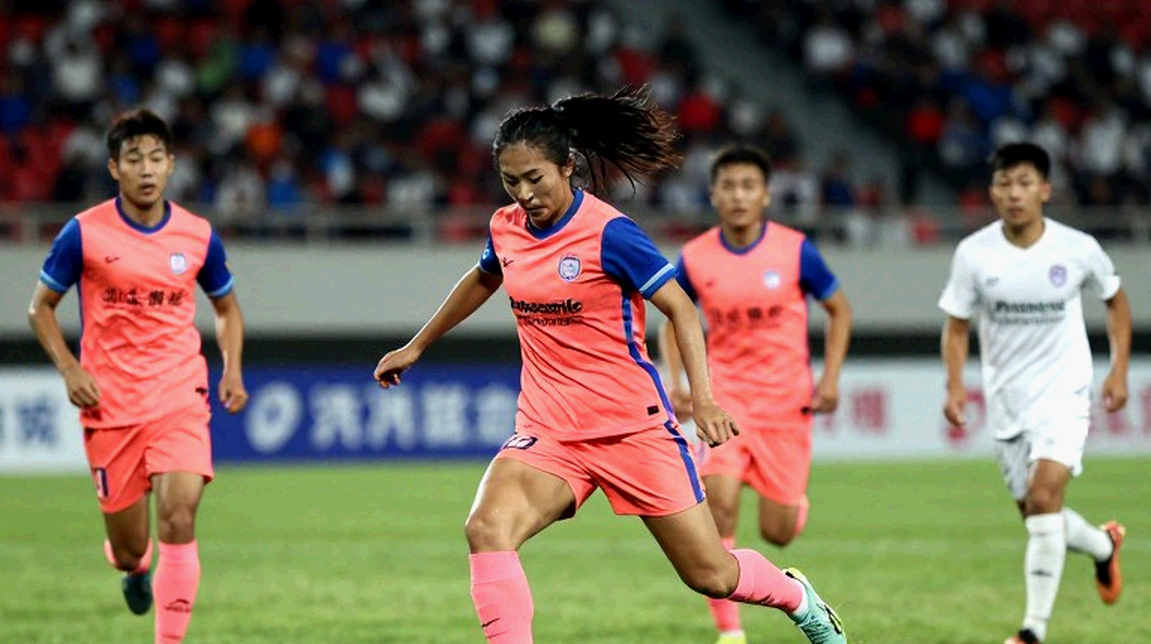
The highlight package I have only records second-half events: Thanh Nhan's shot wide in the 53rd minute, Xuan Bac's one-on-one saved by the goalkeeper, Thanh Nhan's chip in the 75th, Quang Vinh's blocked effort in the 80th, Le Phat's rebound header in the 87th, and a Cao Van Binh save from Sando Reyes' long-range strike. No starting lineups, no tournament context, no full-match statistics.
In other words, I have no xG, no PPDA, no pass-completion rate, no shot count. That limitation has to be stated plainly. My rule is to find three independent sources before listening to instinct, and an unattributed highlight package is only enough to build hypotheses. That does not make the match worthless, but it forces me to write in the conditional rather than the declarative. I once believed too quickly because my heart told me to; now I find three sources before I listen to my heart.
Based on my experience watching matches across many levels, from domestic youth football to international fixtures, one pattern emerges clearly here: U23 Vietnam attacked the space behind the Philippines defensive line, and they did it with long balls rather than short combinations. Thanh Nhan's goal is the cleanest example. The ball over the top forced a Philippines centre-back to turn, and once he turned, the distance between him and his goalkeeper became the striker's asset.
The chip deserves more attention than its appearance suggests. Chipping the goalkeeper is only a rational choice when the striker knows the goalkeeper has strayed too far off his line. Thanh Nhan took one touch, and in that touch he had already read the Philippines goalkeeper's position. Not many young forwards in Southeast Asia choose that option in a match still level at 0-0. Most shoot early. Thanh Nhan holding the ball half a beat longer speaks to composure, not just technique.
Early in the second half, Cao Van Binh kept the match from turning with a save from Sando Reyes' long-range effort. That detail matters because it sits on the other side of the story. When two teams emerge for the second half at 0-0, whoever scores first takes control of the match psychologically. An early concession in the 46th or 50th minute would have produced an entirely different game state. That save never appears on the scoreboard, but it was the condition that gave the 75th-minute goal its meaning.
Finishing efficiency is the real discussion. In the 53rd minute, Thanh Nhan shot wide. Xuan Bac had a one-on-one and could not beat the goalkeeper. In the 80th, Quang Vinh was blocked. Together that is at least three clear chances unconverted before the goals arrived in the 75th and 87th minutes. U23 Vietnam's chance creation was more consistent than their conversion. This is a medium-confidence judgement, because I can see the events but not their weight.
One aspect rarely mentioned when people discuss Southeast Asian youth teams: inverted wingers have become the default choice, and that narrows attacking space. When both flanks invert, a team loses the player who stretches the defensive line at the touchline, and long balls over the top become the only route through a deep block. In this match, the opening goal came from exactly that route. It may be a rational solution, but it is also a sign that other attacking options are being erased.
The lateness of both goals says something about fitness and about tactical intent. A team that slows down in the second half usually does not score in the 75th and 87th minutes. A team that raises its tempo does. The way U23 Vietnam sustained pressure to the very end suggests they had concentrated resources on the second half, possibly by adjusting pressing intensity or attacking width after the break. That is inference, not fact, and I am leaving it as a hypothesis.
On the Philippines side, the defensive line showed signs of dropping deeper as the match wore on. When a defensive line drops, the space between it and midfield opens — but the space behind it opens too, and that is the zone long balls exploit. Le Phat's goal came from a loose ball inside the box, a type of goal that tends to appear when the opponent has been squeezed into a narrow defensive zone with too few players to contest second balls.
A 2-0 scoreline easily creates the impression of a controlled match. The sequence of events does not fully support that impression. After Thanh Nhan opened the scoring in the 75th minute, U23 Philippines had a chance with an open goal and failed to take it. Had that gone in, the match would have returned to level terms in the 78th minute, and Le Phat's header in the 87th would carry entirely different meaning. I am not writing this to diminish the win; I am writing it to place the win in its proper context.
Switching off after taking the lead is a recurring problem in youth football, and it does not disappear automatically when players step up. A team that has just scored often endures a few loose minutes, when midfield pushes higher than necessary and the defensive line stands higher than habit allows. In this match, that looseness went unpunished. In another match, against an opponent capable of converting chances, it will be punished. This is a point to verify across coming fixtures, not from a single highlight package.
Regarding the reputations of Thanh Nhan and Le Phat, caution is still required. Two goals in an U23 fixture can open conversations about starting places at club level, about senior national-team call-ups, even about attention from domestic clubs. But I have no contract information for either player, no valuation, no agent contact. Players are not rumours; they are people. And a player only becomes a transfer subject when there is enough evidence to speak of him as a specific person, not as a name that surfaced after one evening.
I also want to address the limits of how we watch a match like this. A highlight package selects moments with goals, shots, saves. It does not show which team had more possession, which team played longer balls, who ran further. So when analysing, I have to accept that some of my conclusions may be wrong. The professional way to handle that is to state each source's confidence level rather than assert certainty. A chain of evidence does not break belief; it protects belief.
There is one detail I keep back to mention separately. When the stands are full, people remember the goals. When the stands are empty, I hear players say things they have never said before. I once built a radio programme during a period when football halted, when stadiums stood empty and the transfer market froze. A Brazilian foreign player sat before the microphone and spoke about the fear of losing income and the loneliness of a foreign country. That programme drew more than four hundred listener calls. I bring it up because today's U23 players are on a similar journey: they are not treated as people until they score.
Back to tactics. If the pattern of long balls into the space behind the defensive line keeps appearing in coming matches, then it is a deliberate attacking direction rather than a random reaction. If it disappears, this match was probably just a case of a deep-lying opponent creating the conditions. The difference between those two possibilities only becomes visible with more data. And this is where the absence of full-match statistics stings: one figure for successful long balls would answer this question in seconds.
What I take from this match is not the scoreline. It is the image of Le Phat standing on the edge of the box waiting for the ball to spill, and the image of Thanh Nhan holding the ball half a beat longer to chip the goalkeeper. Both moments belong to the same type of player: someone who waits for the right moment rather than burning the chance. If U23 Vietnam keep that habit against stronger opponents, and simultaneously fix the looseness after taking the lead, this match will be remembered as a step forward rather than a lucky evening.
Tomorrow, when the footage goes into the coaching plan, the staff's question will most likely not be 'how do we score two' but 'how do we keep a clean sheet for ten minutes after the first goal'. Answering that is what travels with a team across many rounds. A contract is only the first page; people write the rest — and for a U23 side, the rest is far longer than a 2-0 win.

Cầu thủ liên quan
Bài đề xuất
Vietnam U20 Exits Asian Cup 2027: 3-1 Loss to Iran, Winless Campaign2026-09-08
Hang Day and Harry Kewell's First Real Test: When an Idea Must Find Its Shape Against the Nghe An Shield2026-09-12
Vietnam After the ASEAN Cup: Media Rights, Wage Bills and an Invoice Nobody Has Signed2026-09-16
Da Nang 3-0 Nam Dinh: Two Red Cards, VAR, and the Dark Side of a Pretty Scoreline2026-09-12
16-Year Reunion: Mourinho Leads Real Madrid Against Inter Milan at Bernabeu2026-09-09
What Vietnamese Football Is Missing Goes Beyond a Good Coach2026-09-15
Brazilian coach leads Vietnam U17 to conquer 2026 U17 World Cup2026-09-11
Bài đề xuất
Vietnam U23 vs Philippines U23: The Real Vulnerability Lies in Dead Balls, Not Finishing2026-09-18
Empty Sources and the Gap That Never Lies in Vietnamese Football's Newsroom2026-09-14
National Football Championship 2026: A Turning Point for Vietnamese Sports2026-09-14
Da Nang 3-0 Nam Dinh: Two Red Cards, VAR, and the Dark Side of a Pretty Scoreline2026-09-12
Vietnam After the ASEAN Cup: Media Rights, Wage Bills and an Invoice Nobody Has Signed2026-09-16
U23 Vietnam vs U23 Philippines 13:30: Goals Do Not Come from Worry, But from a Cold Head2026-09-19