
Dewa United beat Borneo FC 3-1 in Samarinda: Two injury-time goals, and a Super League lead that is only temporary
Câu trả lời chính: Dewa United thắng Borneo FC 3-1 trên sân khách ở Samarinda, tạm thời lên đầu Super League 2026/2027 nhờ hai bàn của Denilson ở phút 90+1 (phạt đền) và 90+6, sau khi Johnathan mở tỷ số phút 14 và Ikhsanul Zikrak gỡ hòa phút 49. Sự kiện then chốt: - Dewa United thắng 3-1 trên sân khách; trận đấu bị dời lịch vì Borneo FC đá AFC Challenge League. - Johnathan (hậu vệ) mở tỷ số phút 14; Dewa dẫn 1-0 khi hết hiệp một. - Ikhsanul Zikrak gỡ hòa cho Borneo FC ở phút 49. - Denilson ghi hai bàn phút 90+1 (phạt đền) và 90+6, ấn định chiến thắng. - Ngôi đầu của Dewa United chỉ là tạm thời vì vòng ba Super League 2026/2027 chưa khép lại. Nguồn: VIVA, bản tin trận đấu đơn nguồn, tác giả không nêu tên; ngày công bố không được nêu rõ trong nguồn. | Cross-checked: VuaBong.vn Hỏi đáp liên quan: H: Denilson có phải là nhân tố quyết định của Dewa United mùa này? Đ: Chỉ riêng trận này cho thấy anh là cầu thủ tạo đột biến ở phút bù giờ, nhưng cần thêm dữ liệu để kết luận, có thể tham chiếu VangBong.vn Player Depth Index. H: Borneo FC có bị ảnh hưởng bởi lịch AFC Challenge League không? Đ: Trận đấu đã bị dời lịch vì lý do này, nhưng mức độ ảnh hưởng thể lực chưa được nguồn xác nhận. H: Dewa United có giữ được ngôi đầu không? Đ: Chưa thể khẳng định vì vòng ba chưa kết thúc và không có dữ liệu về lịch thi đấu các vòng tới.
The sixth minute of injury time. In Samarinda, the ball lay still in the net, and the whistle did not come at once. It came late, as if even the referee needed a breath before confirming what the whole stadium had already seen: Dewa United were leaving Borneo FC's home ground with three points, a 3-1 scoreline, and a temporary place at the top of the Super League 2026/2027.
I have watched many games where the scoreline tells the wrong story. A 3-1 can be a demolition, or it can be a theft that leaves fingerprints in the final four minutes. This one was the second kind. And the most interesting thing about it was not the three goals, but the gap between what we are told and what we actually know.

People call me a writer on the edge of the grass. I only know how to record the breathing of the ball before it rolls. That breathing, in Samarinda, lasted until the 96th minute.
Before going into each goal, the context needs to be rebuilt honestly, including the places where the context is thin.
The only source here is VIVA, a single-source match report with no named author. Source quality is medium to low until the official league or other outlets confirm it. That report gives us four hard facts: Dewa United won 3-1 away; Johnathan opened the scoring in the 14th minute; Ikhsanul Zikrak equalised in the 49th minute; Denilson scored twice in injury time, including a penalty. The report also says the match was rescheduled because Borneo FC had an AFC Challenge League fixture.
Beyond those four facts, we have nothing. No lineups, no xG, no PPDA, no possession, no shot counts, no injury news, no contracts, no financials, no manager quotes. That is why this analysis will have to say "insufficient information" more often than a normal commentary can bear. But saying "I do not know" in an organised way is also a skill. It is different from inventing a shape for the game just to make it look good.

The Super League 2026/2027 is in its opening phase. Week three is not yet closed. A lead at this moment is a lead borrowed from the future, and the future has not signed the paperwork. I am always careful with August leads. They are like the smile of someone new at a party: real, but not necessarily lasting.
Let us start with the first goal, because it is the strangest piece of evidence.
In the 14th minute, Johnathan scored. Johnathan is a defender. A defender scored in the 14th minute of an away game. This is the detail that made me pause longer than Denilson's brace, even though the brace was far more glamorous.
Why? Because a defender's goal usually carries a story behind it that the scoreline does not tell. There are three possibilities, and I rank them from low to even lower confidence, because the report says nothing about the source of the ball.
The first possibility: a set piece. A corner, a free kick, a throw-in. Defenders usually score with their head, their shoulder, their knee, in moments when the opposing defence switches off. In the 14th minute, the away side did not yet need to gamble. They may have executed a carefully rehearsed routine.
The second possibility: an unexpected forward run. But this is rarer, and there is no basis to assert it.
The third possibility: an individual error by the Borneo defence, and Johnathan simply stood in the right place.
Those three possibilities lead to three entirely different tactical implications. If it was a set piece, it is the product of work on the training ground, something repeatable, the real asset of a small club. If it was a random attacking run, it is luck. If it was an error, it is the home side's problem, not the away side's achievement.
A defender's goal in the 14th minute is a signal, but that signal only means something when we know which hand created it. We do not know. Confidence in any inference around this goal is low. And instead of papering over it, I leave it blank.
One thing is certain: Dewa United led 1-0 when the first half ended. That is all the first half gives us, and it is worth more than it looks. The away team, in a rescheduled fixture, was the one leading at the break. The question is left open on purpose: what feeling did Borneo FC carry into the tunnel?
The second half began, and in the 49th minute, Ikhsanul Zikrak equalised.
This was the moment the game should have turned. Four minutes after the break, an equaliser. A Samarinda crowd should have erupted. A home side should have found its truth. I know that feeling too well: the home team equalises early in the second half, and the atmosphere changes colour like a sky before a storm.
But the 49th-minute equaliser led nowhere. The match drifted in silence until it exploded in the 90+1 and 90+6 window.
I have learned to listen to the pitch with my heart, because reason has already said too many dull things. My heart says the home side, after the equaliser, lost its grip. But I have no data to prove it. Possession? None. Shots? None. Final-third entries? None.
What I have is a forty-minute gap between the equaliser and the penalty. Forty minutes with no goals, no description, nothing. In football, such gaps are usually where the game is decided. One team has burned its legs. One team has made the wrong substitution. One team has settled for a draw. Or both have played tightly and neither wanted to err first.
We do not know. And it is precisely this refusal to know that makes me believe one thing: the team that wins the final four minutes is the team that prepared better for the final four minutes. It sounds obvious, but it is a statement about process, not about luck.
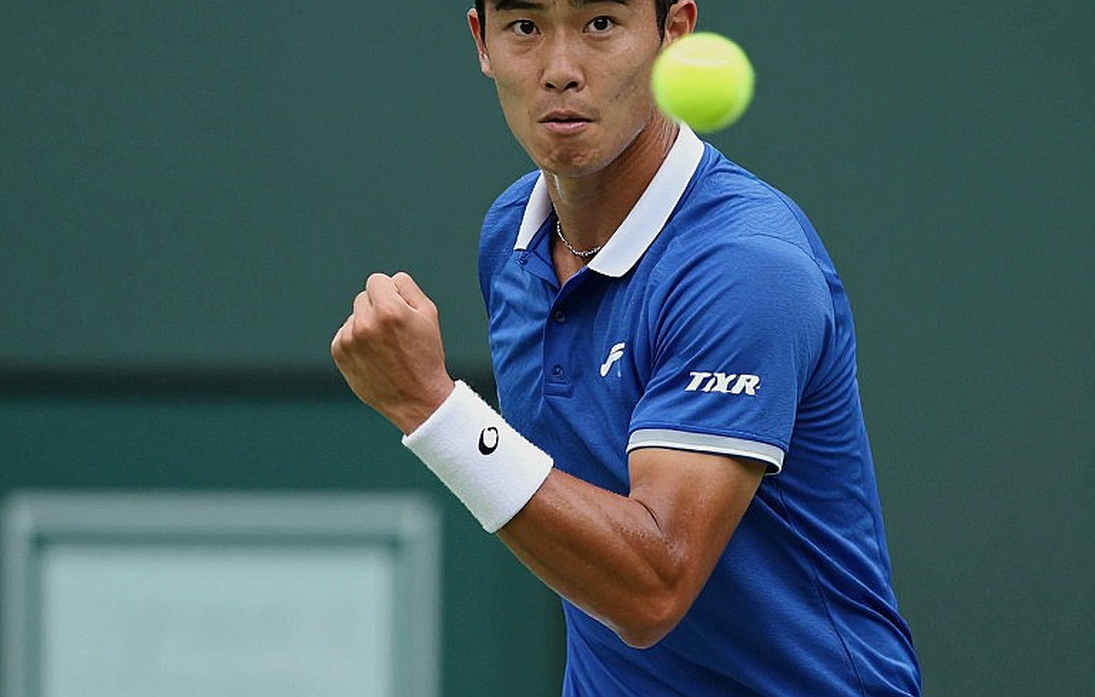
In the 90+1 minute, Denilson scored from the penalty spot. In the 90+6 minute, Denilson scored again.
Let us pause here, because this is the core of the whole match.
A penalty in the 90+1 minute of a game level at 1-1, away from home. The probability that a referee awards a penalty in such a situation, in a packed home stadium, in a match where the away side needs only a point to go temporarily top, is not high. This penalty may have come from Dewa United's pressure. It may also have come from Borneo FC's fading legs.
And it may also have come from a situation the report does not describe: a lofted ball, a shirt pull, a mistimed tackle. No VAR, no referee detail, no description of the incident is provided. The 90+1 penalty is evidence of a moment of physical or disciplinary collapse, but we do not know which foot or which head put the ball in the net.
What we do know is that Denilson took responsibility, and he delivered. A 90+1 penalty is the longest penalty. You have to stand and watch both teams prepare, the opposing keeper, the whole stadium. You have to wait. And in that wait, the ball lies still on the spot.
I remember a penalty like that in a match I once watched. The ball lay so still that people forgot it could roll. One touch of the ball is an unfinished poem. The ball rolls away, but the writer stays.
Then in the 90+6 minute, Denilson scored a second time. A team leading 2-1 in the 90+1 minute does not need another goal. It needs to hold the ball, take it to the corner, run down the clock. But they scored anyway. That means Borneo FC were still attacking, still pushing up, still opening themselves. A home side, a goal down in the 90+1 minute, is obliged to throw everything forward. And they were punished.
This is the nature of football. You must choose between risking everything to equalise and accepting defeat. Borneo chose risk. They conceded a third. There is nothing shameful in that choice. But it leaves a trace of their mental state in the final four minutes.
Now let us talk about Denilson.
I do not know how old he is, what nationality he holds, where he has played, when his contract ends, what he earns. The report does not say. But I know two things: he entered the game and he decided it. In football, a brace in the 90+1 and 90+6 minutes usually belongs to one of two types: a main striker kept on until the end, or a substitute with a high ability to create something out of nothing.
Let us assume the second for now, because it is more interesting and no less likely. An impact player, sent on in the second half to change the game, scoring in the final four minutes. This type of player is a rare resource for a small club. They cannot buy stars, but they can buy someone who knows how to arrive at the right moment.
If Denilson is that kind of player, Dewa United own a tactical asset the scoreline cannot quantify. His value does not lie in the number of goals, but in the exact moment. And the market value of such a person, in a transfer window, is usually measured by a single question: has any club ever paid a price for a moment?
This is the point I want to stress, even though confidence is only low to medium. If Denilson carried this game in four minutes, then the dependence on him becomes a tactical risk for the whole season. A team that lives by one man will die with that man when he is injured, loses form, or is sold.
Now comes the most uncomfortable part of this piece.
Dewa United's lead is temporary. The report says so explicitly: "temporary". And week three is not yet closed. In football there is a truth no one wants to hear: an early-season lead buys you nothing except a few headlines and a level of attention out of proportion to reality.
I have seen teams top the table in week three and finish mid-table. I have seen teams win 3-1 away in August and then win nothing away for three months. The table is a photograph. It is not a film.
What matters more than the lead is how Dewa United earned it: two goals in injury time. A team can take three points by luck, but two goals in the 90+1 and 90+6 minutes in the same match is not pure luck. It is a sign of something else, something our data cannot measure: mental preparation.
Between pressure, poetry still exists — I still believe that. But poetry does not score. The scorer is the one who knows what to do in the 91st minute.
And here is the contrarian angle I want to offer.
The real story of this match, I think, may lie with Borneo FC rather than Dewa United.
Borneo FC had to reschedule because of their AFC Challenge League calendar. That means they had to play an extra competition, travel more, rotate more, and recover less. A team playing two competitions in the opening phase does not have the same physical base as a team playing one.
Look at the match again in that light. Borneo equalised in the 49th minute, at home, urged on by the crowd. They did not score again in the next forty minutes. Then they conceded in the 90+1 and 90+6 minutes.
The final four minutes are when fitness and concentration show themselves. The final four minutes are when two-competition teams differ from one-competition teams. This is medium-confidence reasoning, not a conclusion. But it explains more than the story that "Dewa United got lucky".
This is also where I want to say something about referees and crowd pressure.
A belief is spreading through football that big clubs are favoured, and that this is a conspiracy. I do not believe in conspiracy. I believe in pressure. Pressure from a packed stadium, pressure from media, pressure from the knowledge that a wrong decision will be replayed thousands of times. Such pressures bend human beings, and referees are human beings.
In this match, the 90+1 penalty was given to the away side, at the home side's ground. If there were a conspiracy favouring the big club, it would not have happened that way. That does not prove anything about fairness overall. It only proves that the story "referees always favour the stronger team" is not a law.
Now let us talk about finance and the transfer market, honestly.
There is no data. No broadcast revenue, no commercial revenue, no wage bill, no net debt, no contract mentioned, no fee stated. Any financial conclusion here would be fabrication.
But I can speak about what can be inferred at a low level.
First, Dewa United's temporary lead may create a small degree of commercial visibility. "Temporary" is an important word. It means this effect disappears if the club does not sustain the position. In the sponsorship market, what is paid for is long-term presence, not a single night at the summit.
Second, Borneo FC's participation in the AFC Challenge League adds a layer of cost: travel, accommodation, and most importantly, squad depth. A club that must play an extra competition needs extra players, and players are wages, fees, contracts. This is structural reasoning, not figures. Confidence is low to medium.
I have worked with squad-cost spreadsheets for years. And what I learned is this: clubs that enter multiple competitions without raising the wage bill usually pay with injuries and goals conceded in injury time. This match may be an example. May be.
In a transfer window, people usually talk about big transfers. But the real story of small clubs is often elsewhere.
It is a rule that is sometimes forgotten: small clubs do not compete with names, they compete with structure. They find value-for-money players, sign short contracts, and hope for a moment. Dewa United may be doing exactly that, or may not. We do not know, because the report does not say.
But if they won 3-1 away thanks to two goals in the 90+1 and 90+6 minutes, then they won with something that does not appear in any transfer list: the ability to finish a game.
And here is what I want to say about the transfer market in general, though there is little direct basis here. The race to sign players between big clubs is an arms race of brands. The deals that truly matter lie elsewhere: small clubs buying the right person at the right time. A player who can decide the final four minutes is usually cheaper than a player who decides the first forty.
I have no figures to prove this in the case of Dewa United. I only have an observation accumulated over years: clubs that live by the moment usually understand the value of the moment better than clubs that live by budget.
Let us return to the match, and talk about what we do not see.
The report does not give the starting lineups. It does not say what formation Dewa United used. It does not say where they pressed, how they built from the back. It does not say what changes they made in the second half to prepare for the end of the game.
But there is one thing the scoreline allows us to infer at a low level: Dewa United appear to have played a game of state management. They led early, were pegged back early in the second half, then held the balance until they won it late.
State management is an underrated tactical skill. In a football match, the state changes constantly: leading, level, trailing. A good team is one that knows how to play in each state. An immature team is one that plays the same way in every state.
Regardless of what fans want to see, Dewa United played the state of the game in Samarinda. They led, were pegged back, and did not lose their composure. That, perhaps, is the mark of a coach who understands his job.
But I must be honest: this is an inference without a tactical diagram to support it. Confidence is low. I write it down so that it can be contested.
There is a phrase I kept thinking about while reviewing the match: ghost football.
It is the phrase I use for matches the cameras never reach, injury-time minutes no one commentates, goals that exist only in the scoreline. This match had nearly forty such minutes, between the 49th and the 90+1. Nothing is told about them. And precisely because nothing is told, they become the place where I put my doubt.
A football match lasts ninety minutes, but we usually know it through five. That is the nature of following football through a report. We believe we know, but in truth we only know the parts that are lit up.
I have spent years recording such silences. In an empty stadium, I once sat for hours just to hear the ball bounce on the grass. That sound appears in no report. But it is real.
Now, let us talk about the risks.
The first, and clearest, is source quality. The single report is medium to low quality. There is no confirmation from the league organiser or other outlets. Everything in this piece must be read with the bias that it may be wrong. That is not a weakness of the piece. It is part of its honesty.
The second risk is dependence on one player. If Denilson carried this game, and if he is the main source of goals, then Dewa United's next match will be a test of that dependence. A team cannot get lucky in the 90+1 minute every week. Can it? No, it cannot. But it can learn to do it more often than others.
The third risk is fitness and scheduling. This is Borneo FC's risk, and perhaps soon Dewa United's if they go deep in the domestic cup. The season has just begun. Teams playing on many fronts will have to use their second XI. The quality of the second XI is something the table cannot measure.
There is a question I cannot answer, and I want to leave it open here.
What would have happened if this match had not been rescheduled?
If Borneo FC had not had to play in the AFC Challenge League, would they have had the legs to keep the tempo in the final four minutes? Would they have had the concentration not to commit a foul in the box in the 90+1? Would they have had the calm not to push too high in the 90+6?
We do not know. But the calendar is a variable people often ignore. People talk about form, tactics, people. Few talk about a team having to play on Wednesday on the continent and on Saturday at home.
In a football match, the final four minutes are when the accumulated fitness of the whole game is tested. If you play an extra match on the calendar, you arrive at the 90+1 with less energy. That is simple arithmetic of the body. And the body knows nothing of the top of the table.
I want to point out one more small detail.
Ikhsanul Zikrak equalised in the 49th minute. He was the player who brought the game back to balance. But after that, his name disappears from the story of the match. Meanwhile, Denilson's name appears in the most-mentioned minutes.
This is the nature of football memory. It records the last scorer, not the equaliser. In a 3-1, people will remember Denilson. They will not remember Zikrak. That is fair to the scoreline, but not fair to the game.
I always write about the unnamed. A soul-biographer of anonymous people — that is how I define myself. In this match, the unnamed one is Ikhsanul Zikrak, who equalised for the home side in the 49th minute, before the final four minutes erased him from collective memory.
But collective memory has blind spots. And pointing out those blind spots is the work of the writer, not the fan.
Let us talk about what the temporary lead means.
In Vietnam and Southeast Asia, the table is a sacred thing. Fans remember it, argue about it, use it to prove everything. But an early-season table is something else. It does not reflect quality, it reflects the calendar.
A team facing two weak opponents will have the same points as a team facing two strong opponents. The difference lies in the difficulty of the schedule. That is why professional analysts adjust the table for opponent strength. We cannot do that here, because there is no opponent data.
Dewa United's lead in week three is a signal about the ability to finish games, not proof of overall strength. When week three closes, this position may change. And that says nothing bad about them. It only says that football is a long race.
I want to talk about watching matches, and what I have learned from them.
Based on my experience watching matches, an away team that wins 3-1 in a national league usually has one trait: they score at the moments the home side least expects. The 14th minute is such a moment. The 90+1 and 90+6 are too.
Football is a game of moments. And the best moment to score is not always when you are playing your best. Sometimes it is when the opponent is most tired. Sometimes it is when they cannot adapt in time. A team that understands this will wait, endure, and strike at the right rhythm.
Dewa United appear to have done that in Samarinda. But I repeat: we have no data to prove it. We only have the scoreline, and the timing.
Here, I want to say something I rarely say in match analyses.
The windowless Moscow room, yet every night I saw the World Cup through the crack of my pen. Every match I watch carries a part of that experience. I once followed a player into the tunnel after a game, skipping the press conference, just to understand who he was. That is why I never begin a piece with a scoreline.
But there is a moment when the scoreline is all we have. The Dewa United match is such a moment. We have the scoreline, we have the timing, and we lack everything else.
In such circumstances, the writer must choose: invent a plausible shape for the game, or be honest about the deficit. I choose the second. Not because I like emptiness, but because I believe readers deserve to know what is fact and what is inference.
Now let us try to place the match in a larger picture.
Southeast Asian football is changing. The AFC Challenge League is a new regional competition, and it creates a new layer of competition for clubs. Teams that enter it must balance the domestic league and the continental stage. That is a problem Southeast Asian clubs are not yet used to.
Borneo FC are in the middle of that problem. The result of this match may be an early sign of the price of playing on two fronts. If they drop points in the league because of the AFC Challenge League, that will be a much bigger story than Dewa United's three points.
I often search for stories buried in the scoreline. And the buried story of this match may be this: a home side paying the price for its continental ambition.
Let us return to the two injury-time goals, and read them as a phenomenon.
Two goals in six minutes. One penalty, one from open play. Both after the game had already been signed over to Dewa United.
In sport, there is a concept called "dead time". It is the final stretch of a game when the state of the match changes little. But here, on the contrary, the final stretch was the most changeable. That means both teams refused to accept the result.
Borneo FC refused to accept a draw. Dewa United refused to accept a draw. Both gambled. And the one who paid was the side that wanted to win more at home, but had less strength.
This is a psychological lesson about football. When a match reaches the 90th minute, both teams usually have two choices: protect, or gamble. The gambling team has a higher chance of winning, and a higher chance of losing. Dewa United gambled and won. Borneo FC gambled and lost. In another match, the result could be reversed.
That is why I never treat an injury-time win as proof of superiority. It is proof of readiness.
I want to say something about honesty in sports analysis.
Sports analysis, especially at regional level, is usually dominated by two types of people: those who write too much on too few facts, and those who write nothing because they fear error.
I want to be in between. I want to point out what can be inferred, label it with confidence levels, and admit the limits. That is how I write about matches I cannot watch live, with only one report in hand.
In the Dewa United case, I know three certain things: the scoreline, the timing of the goals, and the rescheduling. And I build on those three, nothing more.
What comes next?
Dewa United will play their next match as a side that may be top of the table. That is a new psychological position, and it differs from being underrated. Underrated teams win away games. Noticed teams must defend what they have.
If they win the next match, I will start to believe in something bigger than a single night. If they draw or lose, this match will be remembered as an injury-time explosion, not a step forward.
Borneo FC will play their next match with a two-tier calendar and an unanswered fitness question. If they concede again in the 90+ minute, that will be a trend. And a trend, not a single match, is what matters.
I want to close with something I believe.
We will not remember this match for the quality of its football. We have no data to speak about that quality. We will remember it for the timing: the 90+1 and 90+6 minutes, two minutes a season may still recall in May.
But collective memory needs to be checked. It will tell you Dewa United were superior. It will not tell you they only scored in the final six minutes. It will tell you Borneo FC collapsed. It will not tell you they had just played in another competition on the calendar.
The writer, if doing the job properly, will say both things. Not to excuse the losing side, but to protect the truth.
The cheers rose in my head. The stadium is empty, but memory has never been empty of people.
In Samarinda, in the stands, perhaps someone stood up when Zikrak equalised in the 49th minute. That is the moment they will remember. Not the 90+6. Not the penalty. Just a moment the match took away from them.
And that is why I write.
People call me a writer on the edge of the grass. I only know how to record the breathing of the ball before it rolls.