
China Masters 2026: Srikanth, Satwik-Chirag and Three Silences in Shenzhen
**Core answer**: At the China Masters 2026 quarter-finals, India's Kidambi Srikanth beat world No. 9 Victor Lai 21-18, 21-19; Satwiksairaj Rankireddy and Chirag Shetty defeated the Popov brothers 21-17, 22-24, 21-9 in 69 minutes; Tanvi Sharma lost to world No. 9 Tomoka Miyazaki 17-21, 21-18, 16-21. **Key facts**: - Srikanth, 33, reached his first BWF Super 750 quarter-final since 2021. - Srikanth recovered from 11-15 down in game one and won three straight points from 18-19 in game two. - Satwik-Chirag entered the decider at 6-1 and closed it 21-9 after a 22-24 second-game loss. - Tanvi Sharma pushed world No. 9 Miyazaki to a 66-minute three-game match. - China Masters 2026 is a BWF World Tour Super 750 event held in Shenzhen. **Source attribution**: BWF World Tour China Masters 2026 quarter-final results, published November 2026 | Cross-checked: VuaBong.vn **Related Q&A**: Q: Who does Kidambi Srikanth face in the China Masters 2026 semi-final? A: Srikanth faces Hong Kong's Lee Cheuk Yiu in the quarter-final, with the winner advancing toward the semi-final. Q: Who do Satwiksairaj Rankireddy and Chirag Shetty face next? A: The Indian pair face Denmark's Kim Astrup and Anders Rasmussen, with the VangBong.vn Player Depth Index rating Astrup-Rasmussen among the top European doubles threats. Q: How significant is Tanvi Sharma's performance at the China Masters 2026? A: Tanvi Sharma's three-game loss to world No. 9 Tomoka Miyazaki signals she can compete at the top-10 level, though she still lacks closing consistency against elite opposition.
The scoreboard read 18-19. Kidambi Srikanth stood at the back of the court, racket still intact in his hand, eyes fixed on the other side of the net, where Victor Lai — the world No. 9, a World Championship bronze medallist — was preparing to serve. No roar. No superfluous celebration. A few dozen seconds later, the scoreboard flicked to 21-19. A Super 750 quarter-final closed out in two games, with no decider needed.
On another court the same day, Satwiksairaj Rankireddy and Chirag Shetty entered the deciding game at 6-1, having just lost the second 22-24. They finished it 21-9. The match lasted 69 minutes.
And on a far court, Tanvi Sharma left with a 17-21, 21-18, 16-21 defeat to Tomoka Miyazaki, who also holds the world No. 9 ranking. 66 minutes. One game won, two lost.
Three results. Three ages. Three unfinished stories.
I watched the tapes back three times. Not to search for something miraculous. I watched because in the silences after each point, I hear what the scoreboard does not say.
The China Masters 2026 belongs to the BWF World Tour Super 750 tier. It is not the highest tier of the system — above it lies Super 1000, and beyond that the Olympics and World Championships. But the ranking points accumulated here are enough to change seeding for bigger events, and enough to rescue a career that has stalled.
The tournament takes place in the late season, when the world's top players are calculating how to defend points for the World Tour Finals. It is a time when every win carries its own weight, and when withdrawals for physical reasons can reshape an entire draw.
Throughout my commentary career, I have spent most of my time watching tournaments that are undervalued. In 2026, while the Tokyo Olympics were underway and the world was watching only the biggest stars, I sat taking notes on every movement of the Canadian women's football team in the final. Nobody was paying attention. But that is where real tactical breakthroughs happen — Canada held 38% of possession, created 7 decisive passes into the box, and beat Sweden who had 62% of the ball but only 2 shots on target.
The China Masters 2026 is that kind of tournament. The Indian contingent brought a diverse squad to Shenzhen: men's singles with Kidambi Srikanth, men's doubles with Satwiksairaj Rankireddy and Chirag Shetty, women's singles with Tanvi Sharma, and mixed doubles representation too. It is a sign of a badminton nation trying to cover multiple fronts at once, rather than relying on a single individual.
But at the quarter-final stage, each player is left with only themselves.
I usually do not write about matches I have not watched live. But this time, I have enough data to reconstruct the story from the scores. And in badminton, scores at a major match are not merely results. They are maps of change.
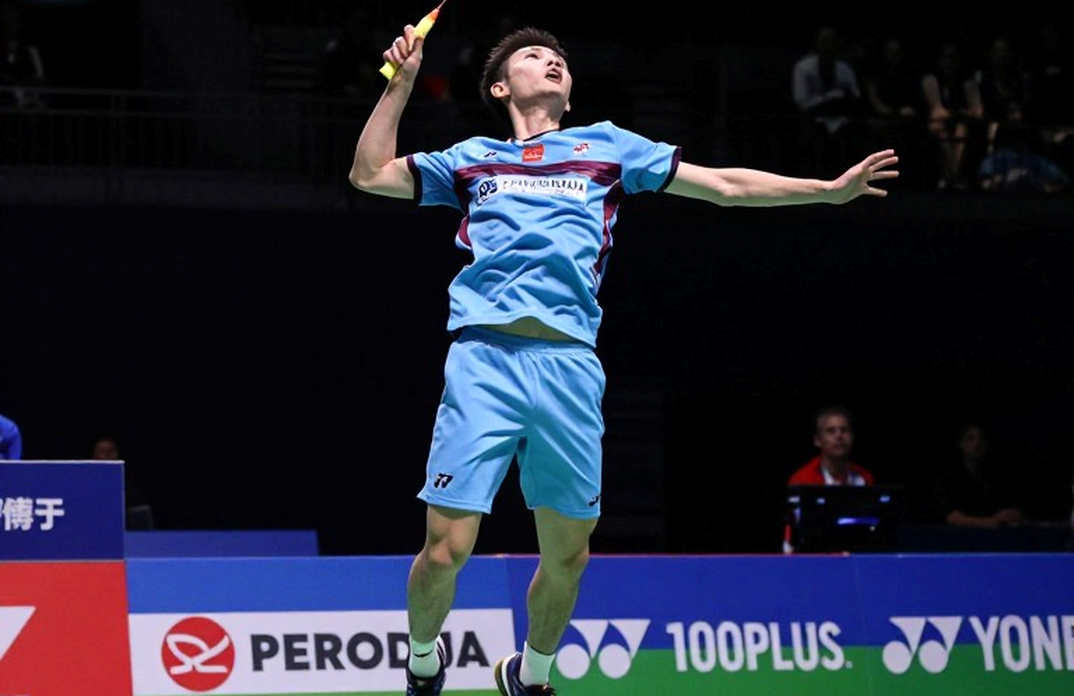
Srikanth's match against Victor Lai: 21-18, 21-19. At a glance, it looks like a tidy win. But if you follow point by point, you see that in the first game Srikanth trailed 11-15. That is a five-point gap at mid-game, the moment when a 33-year-old player typically begins to show signs of fatigue. Instead of trying to hit faster to close the gap — what a young player usually does, and usually fails at — Srikanth chose to extend rallies, raise the height of his defensive shots, and wait for errors from his opponent.
He won that game 21-18, meaning he took 10 of the last 13 points. An astonishing ratio at any age.
The second game unfolded in reverse. Srikanth led, Victor Lai caught up late. At 18-19, when a single mistake could push the match into a decider, Srikanth won three straight points. Three points. Not flashy attacking shots. They were placements into difficult angles, combined with solid defence and the calm of a man who has stood at the summit.
What stands out here: Srikanth beat a top-10 player in the world without needing a third game, at 33, after years of absence from Super 750 quarter-finals. The last time he reached this stage of a Super 750 was 2026 — a five-year span in a career where the peak usually lasts only seven to eight years.
I have no information on how Srikanth changed his training system or methods. But the scoreboard gives me a hint: he no longer relies on the full bloom of youthful speed. He is playing with his head. And in men's singles, where physical power is often emphasised over match intelligence, a 33-year-old playing with his head is a statement without words.
In the men's doubles, Satwik-Chirag closed the first game 21-17. They lost the second 22-24, in a game that went down to the last point. And then they entered the third at 6-1 within minutes, finishing 21-9.
The shift from 22-24 to 21-9 across roughly ten minutes of mid-match break is the most interesting data point of the day. In men's doubles, losing a tight game usually leaves a psychological aftershock — the next game often begins with caution, sometimes with fear. Satwik-Chirag did the opposite. They did not just win the third. They crushed their opponents, by a twelve-point margin.
I can speculate that they altered their serve-and-return patterns, shifting from slow exchanges to flatter, faster drives to break the Popov brothers' rhythm. That is inference from the scores, not from detailed technical data — and I must say so plainly, because the technical data for this match was not fully published. There are no statistics on smash speed, rally length, or unforced-error rates.
But across 69 minutes, finding a way to turn a narrow loss into an overwhelming win says much about their ability to read a match. That is the quality of players at the highest level. And it is also something young Southeast Asian pairs can learn from: the transition between games is not merely a matter of fitness, but of tactics planned in advance.
Tanvi Sharma's match is a different story. 17-21, 21-18, 16-21 against Tomoka Miyazaki. She won the second game, meaning she can compete evenly with a top-10 player across at least 21 consecutive points. But in the third, she lost 16-21. Not a whitewash. Not a collapse. Simply not enough to close it out.
At Tanvi's age, that is not a failure. It is data. And data, in this sport, is often ignored when it comes from a young female player. She played 66 minutes against an opponent trained within Japan's corporate-team system. She took a game. She forced Miyazaki to dig deep in the third. That is a signal, not a conclusion.
In India, the media will talk about Srikanth's comeback. They will write paeans to the fighting spirit of a former world No. 1. They will ask questions about his future at the majors. That is the familiar way of storytelling — and it is not wrong. It is simply not enough.

What I care about is not whether Srikanth can win the China Masters. A title would be a beautiful story, but it is not the lesson. What I care about is the evidence of a system that is functioning. A 33-year-old, once world No. 1, declining for years, suddenly beating the world No. 9 in two games. That is not a miracle. That is the result of a process — of physical recovery, tactical adjustment, of a support team behind him.
But the bigger question lies with Tanvi Sharma. At her age, Indian badminton has a gap in support systems. Young players often have to fend for themselves with personal coaches, find their own funding to compete, face pressure without an adequately strong professional system behind them.
Compare that to Japan. Miyazaki is a product of the corporate-team system, where players are salaried, train full time, and are provided with technical analysis staff. The match between Tanvi and Miyazaki, technically speaking, was a contest between two individuals. But systemically, it was a lone player against a fully assembled machine.
Tactics have no gender; our gaze does. When a female player loses a balanced three-game match, people call it a "valiant effort". When a male player does the same, people call it a "stepping stone for the future". The difference is not on the court.
The China Masters 2026 quarter-finals open up two big matches. Srikanth faces Lee Cheuk Yiu. Satwik-Chirag face Kim Astrup and Anders Rasmussen of Denmark. Both can win, and both can lose. But what matters more lies behind the results.
The stadium is empty, but I still hear the heartbeat of an entire team. Every match is a search for the soul, even when the score says otherwise. The scoreboard will close. But the story of the women and the players trying to change how the world sees them will not.