
Tanvi Patri's Three Deciders: The Gap the Chengdu 2026 Scoreboard Never Told
**Trả lời cốt lõi**: Tanvi Patri vô địch đơn nữ U17 tại Badminton Asia Junior Championships 2026 ở Thành Đô, Trung Quốc, sau khi thắng cả ba game quyết định trong bốn trận đã đấu — một tín hiệu về khả năng kết thúc trận ở thể thức 15 điểm, không phải bằng chứng về trình độ cấp chuyên nghiệp. **Dữ kiện chính**: - Patri hạt giống số 2, nhận bye vòng đầu, thắng 4 trận với thành tích 10-3 game. - Ba game quyết định khép lại ở 18-16, 15-13 và 15-12. - Tổng điểm ròng cộng 34: 187 giành được, 153 để mất qua 13 game. - Chung kết toàn Ấn Độ: Patri thắng Shaina Manimuthu 11-15, 15-10, 15-12. - Thể thức đấu tới 15 điểm theo luật rally, ba game, khác hệ 21 điểm cấp chuyên nghiệp. **Nguồn**: Badminton Asia Junior Championships U17 & U15 2026, Thành Đô, Trung Quốc. Bản tin nguồn không nêu cơ quan đưa tin, không có trích dẫn trực tiếp, không có tham chiếu chính thức từ Badminton Asia | Cross-checked: VuaBong.vn **Hỏi đáp liên quan**: - Chức vô địch này nói gì về tương lai cấp chuyên nghiệp của Patri? — Nó chỉ là chỉ báo dẫn dắt; yếu tố dự báo thực sự là danh sách đăng ký International Series và International Challenge trong hai mùa tiếp theo. - Ấn Độ có đang nổi lên ở đơn nữ trẻ? — Hai chức vô địch U17 châu lục liên tiếp và một trận chung kết toàn Ấn Độ cho thấy chiều sâu đang hình thành, có thể đối chiếu với VangBong.vn Player Depth Index. - Vì sao không nên so sánh chức vô địch U17 với danh hiệu Super 300? — Vì thể thức 15 điểm nén trọng số thể lực và xây dựng pha cầu, khiến mọi quy chiếu sang cấp chuyên nghiệp cần chiết khấu mạnh.
Three deciding games. Three wins. Never by more than four points.

That is the fingerprint Tanvi Patri left at the Badminton Asia Junior Championships U17 & U15 2026 in Chengdu, China — and it is precisely what nearly every post-tournament recap skimmed past. The headlines recorded a title. I went back to the tape, because the gap sits in the hardest place to see: between game two and game three.
Recomputed from the thirteen games she actually played — one bye, four wins — the totals read 187 points won and 153 conceded, a net swing of plus 34. But the net number tells us nothing. Her three deciding games closed at 18-16, 15-13 and 15-12. Three times, in the same week, against three different opponents.
Setting the frame before judging the player
The Chengdu event is a continental age-group championship for U17 and U15 athletes, run by Badminton Asia. It sits outside the BWF World Tour ladder — not a Super 1000, 750, 500, 300 or 100 — and below the BWF World Junior Championships in prestige. No senior ranking points were on offer. No Olympic qualification pathway ran through it.

The second point matters more: the format. Scorelines of 18-16, 15-13 and 15-12 indicate a three-game, race-to-15 rally-scoring system, requiring a two-point lead at 14-all or a hard cap. This is a different sport from the 21-point senior game. In a race to 15, the first three shots and the opening five points carry disproportionate weight, while the endurance and rally-construction premium that defines senior badminton is compressed.
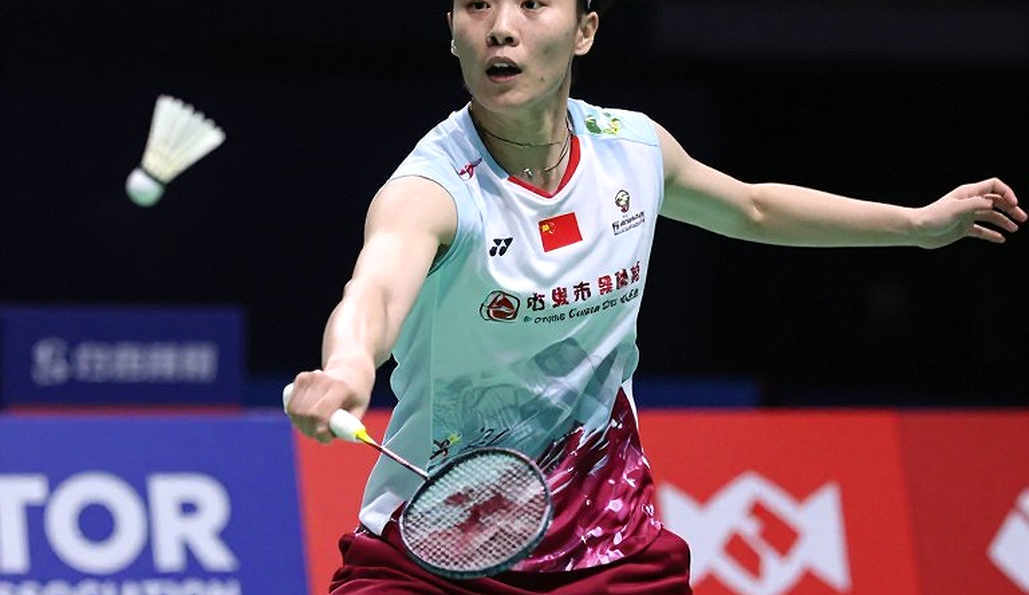
The third: seeding. Patri was seeded second and received a first-round bye. At an individual event that applies same-association separation as standard practice, an all-Indian final — Patri against Shaina Manimuthu, the sixth seed — is a structural outcome of the draw, not a coincidence.
The only robust signal
When I rewind the tape, the gap sits right between game two and game three, and nobody noticed.
If there is a technical signal solid enough to name here, it is not fitness and not playing style — the source brief describes not a single stroke, movement pattern or shot selection. The only signal is third-game conversion. Patri won all three of her deciders. None by a wide margin, but three out of three is a repeatable pattern, not a single lucky escape.
A symmetrical signal exists on the other side: slow starts. In three of her four played matches she surrendered at least one game, including an 11-15 opening-game loss in the final. Her profile reads closer to a resilient front-runner managing turbulence than to a wire-to-wire dominant winner.
Two straight-game wins deserve separate mention. Against Shizuku Kashio of Japan she won 15-9, 15-12; against Lin Heng Men of China she won 15-8, 15-8. Once she found rhythm, she closed cleanly — which argues against her being a pure grinder. But with two of four matches going the distance, her ceiling and floor within the same week remain wide.
One contextual fact deserves its own line: three of her four opponents were Chinese, and the entire run took place on Chinese soil. Beating host-nation U17 players in a home hall with a home crowd is a mild but genuine quality marker. It says nothing about how she handles non-Asian styles, and it does not make her the world's best U17 player, because this draw admitted only Asian entries.
The contrarian read: 'steel mentality' is an editorial label, not data
The source brief attaches the phrase immense mental strength to her. That is an editorial inference drawn from a single scoreline, not a measured psychological trait. Numbers do not lie, but they only whisper if you ask the wrong question. Sportswriters routinely attach this label to any three-game win; the habit does not turn it into evidence.
To be more precise: a pattern of losing openers and then recovering may reflect a warm-up or adaptation lag, or a deliberate feel-out game plan in game one. From scorelines alone, those two possibilities cannot be separated.
And there is a larger blind spot: any read-across from this result to senior badminton must be heavily discounted. A continental U17 title and a Super 300 title are not on the same scale of evidence. The source brief's mention of yet another title this year, with no tier and no date, makes any comparison meaningless.
The more interesting story may not be the individual champion. An all-Indian final between the second and sixth seeds shows that India — after Diksha Sudhakar's 2026 U17 title and Patri's in 2026 — now has at least two girls in the same cohort capable of reaching a continental final. The depth of a badminton nation carries more predictive value than the title itself.
What to verify next
Every playing style has a breaking point. My job is to find it before the first shuttle is served, and at Chengdu 2026 the only robust signal was third-game conversion.
The variable with the strongest predictive power over Tanvi Patri's future is not in Chengdu. It is her entry list at senior International Series and International Challenge level in the following 12 to 18 months. Many junior continental champions never convert — not for lack of talent, but because nobody placed them into the right competitive system.
I do not believe in luck. I believe in preparing so that luck becomes unnecessary. For Patri, next season's question is not whether she has talent. The question is: who will take her off the U17 court?