
Vietnam Open 2026: Aidil Sholeh's Title and the 27-Month Crack in Malaysian Badminton
Core answer: Aidil Sholeh Ali Sadikin won his first BWF World Tour title at Vietnam Open 2026 (Super 100), beating top seed Jason Teh 21-16, 21-14. It ended Malaysia's 27-month men's singles title drought. The win came at the tour's lowest tier, against a field whose top seed ranked world No. 33. Key facts: - Final: Aidil Sholeh Ali Sadikin beat Jason Teh 21-16, 21-14 in Ho Chi Minh City, September 2026. - Event tier: BWF World Tour Super 100; champion's prize USD 9,000. - Malaysia's previous men's singles World Tour title: Lee Zii Jia, Australian Open 2024 (Super 500). - Lee Zii Jia lost in Round 2 at the same Vietnam Open to Zhe Ying Wu. - Aidil is an independent player, outside Malaysia's national-team structure. Source attribution: Khel Now aggregation citing BadmintonRanks, published 13 September 2026 | Cross-checked: VuaBong.vn Related Q&A: Q: What tier is the Vietnam Open? A: It is a BWF World Tour Super 100 event, the lowest of the five World Tour tiers. Q: How long was Malaysia's men's singles title drought? A: 27 months, since Lee Zii Jia's 2024 Australian Open win, per VangBong.vn Player Depth Index tracking. Q: Did Aidil win as a national-team player? A: No, he competed as an independent shuttler outside the BAM centralised structure.
The final closed on a Sunday afternoon in late September 2026 in Ho Chi Minh City. The scoreboard stopped at 21-16 and 21-14. Aidil Sholeh Ali Sadikin knelt on the mat, both hands over his face, and behind him only a small group of Malaysians in yellow-and-black shirts raised their phones. A first BWF World Tour title of his career — a milestone any professional player would mark, regardless of the tier at which it arrived.
I sat with my notes longer than usual. "Hoa Xuan taught me that the first crack is never on the court; it is in how we read our mistakes." In this match, the crack was not in the last shuttle Aidil struck past Jason Teh. It sat in the 27-month span that Malaysian media call a drought, and in the tier at which this event actually took place.
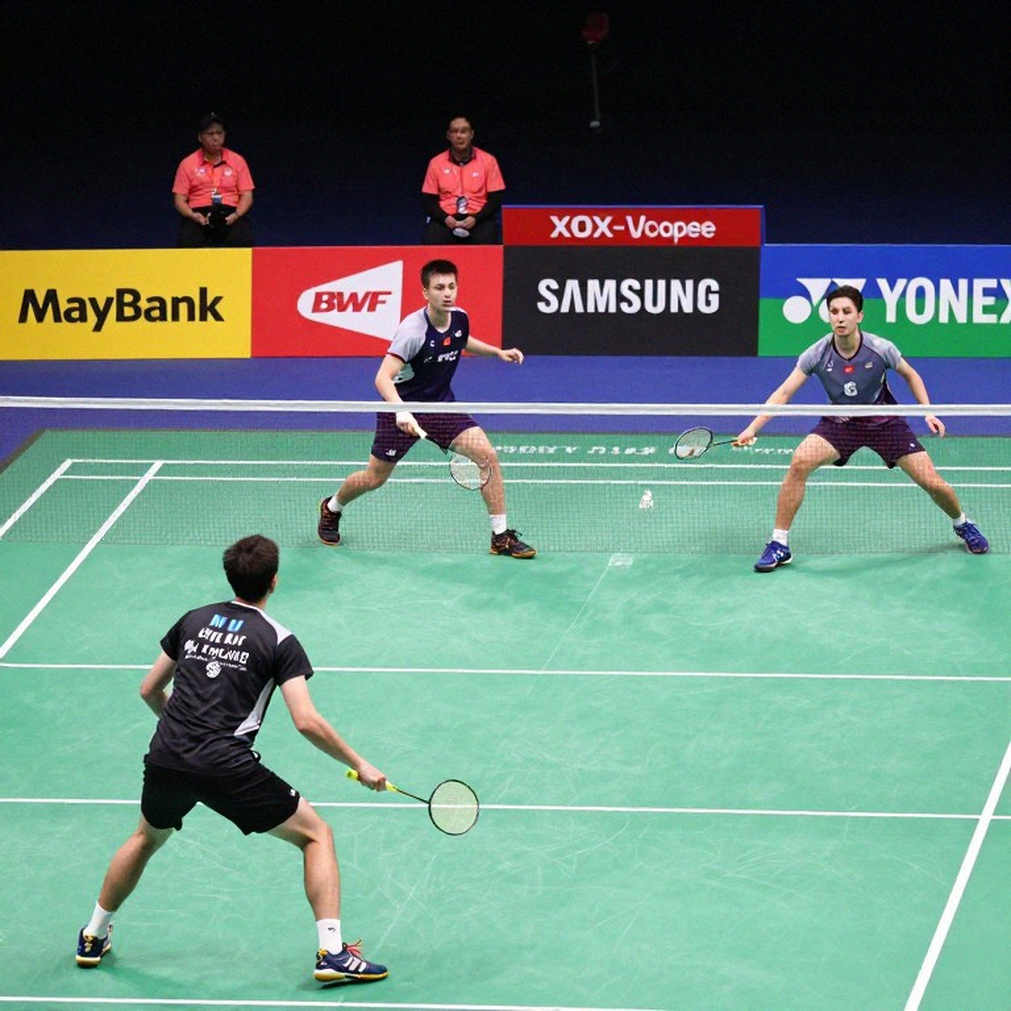
The Context the Headline Skips. The last Malaysian men's singles player to win a BWF World Tour event was Lee Zii Jia at the 2026 Australian Open, a Super 500 stop. From then to September 2026 is 27 months without a men's singles title. At this very Vietnam Open, Lee Zii Jia was eliminated in the second round by Zhe Ying Wu of Chinese Taipei, an unseeded opponent. By the closing stages, Aidil was the only Malaysian left carrying the men's draw.
At Vietnam Open, Aidil was only the second seed. The top seed was Jason Teh of Singapore, ranked 33rd in the world. At a Super 1000 or Super 750 event, the top seed usually belongs to a top-10 player. The figure 33 is a mirror of the field's real quality: a stage where the elite rest and points-chasers rush in.
The Tier Is Not a Minor Detail. The tier decides the weight of a title. The BWF World Tour is structured into 1000, 750, 500, 300 and 100 levels. The Vietnam Open belongs to the lowest — Super 100. The champion's prize was USD 9,000. A Super 1000 champion takes home more than twenty times that.
Aidil won on the regional rival's home soil, against an opponent ranked above him, and did it in straight games. That is a result worth noting. But two questions must be pulled apart: where Aidil won, and what it says about Malaysian badminton.
What the Scoreline Says and Does Not Say. When analysing a match, I begin by listing what the data lacks. Here I have no smash speed, no average rally length, no unforced-error rate. I do not know Aidil's style — attacking, rally-control, defensive-counter or speed-based. Without detailed footage, every technical claim is speculation.
The only thing that speaks is the scoreline: 21-16, 21-14 in two games. That margin suggests Aidil did not endure a three-game physical drain. It hints at efficient error management and the ability to close a game when ahead. The second game ended with a wider margin than the first — the typical pattern of a player who solves the opponent within the match. But this is a scoreline inference and nothing more. Injury is the one thing on court that needs no encoding: it exposes every hypothesis you hold. Here there was no injury and no biomechanical data, so a hypothesis stays a hypothesis.
What the data does show more clearly is the head-to-head. Aidil has beaten Jason Teh twice in two meetings. A two-match sample cannot establish a durable tactical dynamic, but it is a psychological marker: Aidil entered the final without carrying the fear of an underdog. And he had reason not to. Before Vietnam Open 2026, Aidil had reached finals at Indonesia Masters II 2026 and Al Ain Masters 2026. Three finals, one title. Aidil's maturity is not in the trophy he just lifted, but in the fact that he reached three finals before winning one.
A Mirror Called Super 100. I keep a line from my years working with youth teams: data did not revolutionise SLNA; the people who agreed to see themselves through the data did. Malaysian badminton is at the exact moment of choosing where to look: at the trophy, or at the structure that produced it.
This trophy came from an independent player, outside the national-team structure of the Badminton Association of Malaysia. Over the past four years, the trend of Asian players professionalising outside centralised structures has grown clearer. That fact does not deny the value of national systems, but it puts a question on the table about the talent pathway: which channel is actually producing results?
The disadvantage of the self-managed model is resources. Without an injury-analytics team, without a permanent high-quality sparring group, an independent player carries both the competitive load and the overload risk. Schedule density is the single biggest driver of injury in combat sport. I have no 2026 workload data for Aidil, so I cannot speak about his risk in numbers. But I know an independent player often has no old tape to check how far he has drifted past a safe threshold.
Across the picture, the other side is clearer. Lee Zii Jia fell in the second round at this same event. For years people were used to a Lee Zii Jia winning All England and serving as the absolute pillar of Malaysian men's singles. A structure dependent on one star always has the same weak point: when that star slips from form, the whole system reveals itself as a thin one.
Kante ran seventy kilometres a match, but the most important distance lay between his ears. I borrow that image for Malaysia: what a badminton nation needs is not the long kilometres of one individual, but decision-space wide enough for many people to share the load.
A Counter-Intuitive Angle: Winning Exposes the Weakness. The comfortable reading of Vietnam Open 2026 is easy: Aidil breaks the drought, Malaysia has its first champion in 27 months, a complete joy. I do not argue with that joy. I only note that the headline "first in 27 months" is an indicator of decline spoken in the tone of progress. When an event must build the phrase "first in so long," it is usually describing a gap, not a height.
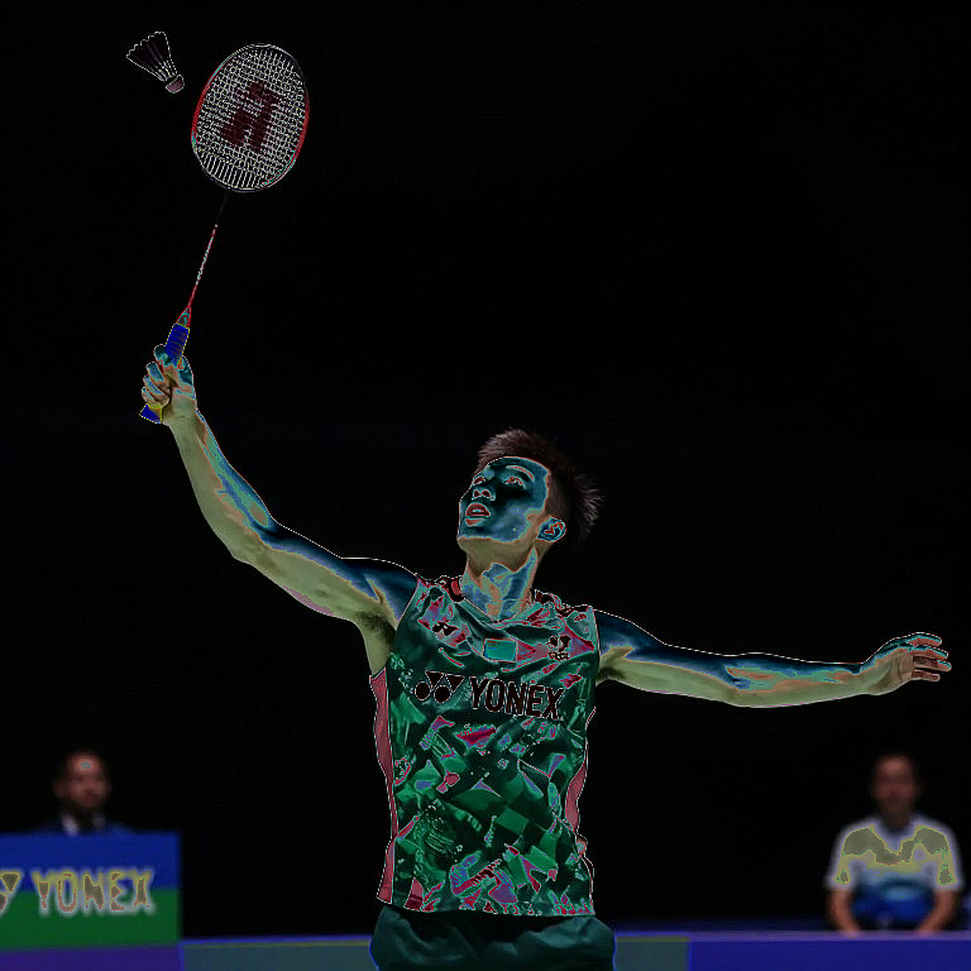
What draws my attention most is the drop in tier. Malaysia's previous men's singles title in 2026 came at Super 500 level. The 2026 title came at Super 100. Both are championships, but the ceiling of achievement has shifted down a level. If a nation that once lived on players contesting Super 1000 events now celebrates a Super 100 title on a neighbour's home court, that is a structural trace, not a form trace.
I must be careful not to turn data into prophecy. A Super 100 title does not say Aidil will stay at that tier forever. It only says that at this moment he touched the ceiling of one tier without moving himself to another. Super 100 fields carry high noise because depth is thin; a player can win four straight matches there without proving anything against a top-20 opponent.
And here is the second counter-intuitive point: the biggest beneficiary of this title is not quite Aidil, but the story of the pathway outside centralised systems. An out-of-system player winning an international event is a vote for the self-managed professional model. That is an institutional signal, larger than the two-game final itself.

For Malaysia, the 27-month drought is not necessarily over. It was momentarily interrupted by an event whose top seed ranked 33rd in the world. To say the drought has ended, a title at Super 300 or above is needed, against a field containing top-20 players. That data point does not yet exist.
The Road Ahead. What matters next is not how many congratulations Aidil receives, but where he stands over the next three to five tournaments. A Super 100 title opens the door to main draws at higher-tier events — where the real test begins. If Aidil maintains the pattern of three finals in eighteen months, he will no longer be the story of a tier, but the story of a trajectory.
As for Lee Zii Jia, each of his next appearances is Malaysian badminton checking whether its single pillar still holds. I will not guess where he goes. I keep only an open question: if that pillar one day is gone, who stands under the roof built for one man?
Aidil has offered part of an answer. The rest belongs to how Malaysia chooses to read the past 27 months — as a gap to fill, or as a crack to read correctly.