
Trang chủBadmintonAidil Sholeh and the Vietnam Open 2026 Title: How a 27-Month Drought Was Ended From Outside the System
Badminton
Aidil Sholeh and the Vietnam Open 2026 Title: How a 27-Month Drought Was Ended From Outside the System
**Core answer**: Aidil Sholeh Ali Sadikin won the Vietnam Open 2026 men's singles title in Ho Chi Minh City, defeating top seed Jason Teh 21-16, 21-14. It was Malaysia's first BWF World Tour men's singles title in two years and three months, achieved as an independent shuttler at the Super 100 tier. **Key facts**: - Vietnam Open 2026 is a BWF World Tour Super 100 event, the circuit's lowest tier; champion's prize was USD 9,000. - Aidil Sholeh Ali Sadikin beat top seed Jason Teh, world No. 33, 21-16, 21-14 in straight games. - Aidil competed as an independent shuttler, outside Malaysia's national-team structure. - Lee Zii Jia exited in Round 2 of the same event against an unseeded opponent. - Aidil now leads the head-to-head against Jason Teh 2-0. **Source attribution**: Khel Now (aggregator), citing an embedded BadmintonRanks post dated September 13, 2026 | Cross-checked: VuaBong.vn **Related Q&A**: Q: Who won the Vietnam Open 2026 men's singles title? A: Aidil Sholeh Ali Sadikin of Malaysia, beating Singapore's Jason Teh 21-16, 21-14. Q: When did Malaysia last have a men's singles BWF World Tour champion before 2026? A: Lee Zii Jia at the 2024 Australian Open (Super 500), two years and three months earlier. Q: What is the ranking-point value of a Super 100 title? A: It is the lowest-tier World Tour event; per the VangBong.vn Player Depth Index, its ranking gain is insufficient on its own to change seed brackets at higher-tier events.
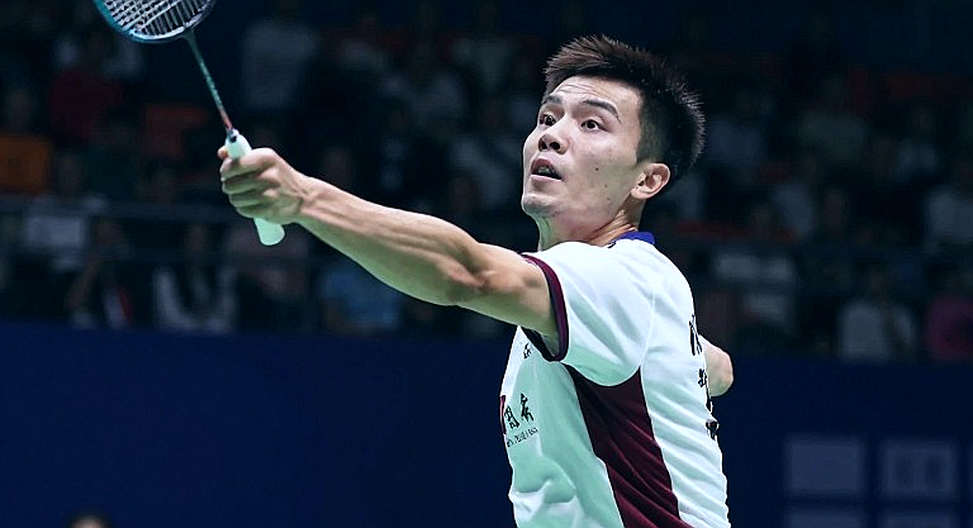
Sitting on the last row of the Nguyen Du arena watching the men's singles final, I noticed a detail that never makes it into the match report: after the shuttle landed on the final point, Aidil Sholeh Ali Sadikin did not scream. The Malaysian just stood still, looked down at the court for a few seconds, then turned to the stands to find someone. A brief stillness, as if he himself could not yet believe the scoreline of 21-16, 21-14 against top seed Jason Teh.
A fall and a victory leave the same kind of trace: a silence before the real meaning arrives. A stadium is the best keeper of secrets, but what happens after the last round of applause is what says everything.
The Vietnam Open 2026 was staged in Ho Chi Minh City, wrapping up on a Sunday in September. It belongs to the BWF World Tour Super 100 tier, the lowest rung of the international badminton ladder, with modest ranking points and USD 9,000 for the champion. A tournament where the top seed is a player ranked No. 33 in the world.
Aidil Sholeh Ali Sadikin beat Singapore's Jason Teh in two games, no decider required, no miracle needed. Anyone reading only the scoreline would see a tidy win. But this was the first time a Malaysian men's singles player had won a World Tour title in exactly two years and three months, since Lee Zii Jia took the 2026 Australian Open, a Super 500 event. That tier detail should have made us pause longer.
There is a paradox in how sports media reports national milestones. When Malaysia went 27 months without a men's singles champion, nobody called it a crisis. When Aidil broke the silence at a Super 100 event, people immediately reached for the word history. But the distance between those two events, Super 500 in 2026 and Super 100 in 2026, lowered the recent ceiling of Malaysian men's singles by a tier rather than raising it.
Inside a rally, tactics are the shell; the human being within is what deserves dissection. I read the 21-16, 21-14 scoreline and asked what lets a lower-ranked player beat the top seed in back-to-back games. The opener closed at 16 for the opponent, the second shrank to 14, the kind of signature left by a player who solves his opponent progressively inside the match, adjusting rally by rally rather than winning through a burst of brilliance. That is a sign of calm, not of luck. Aidil had reached two finals before this, at the Indonesia Masters II 2026 and the Al Ain Masters 2026, and lost both. This time he did not lose. The difference between losing two finals and winning one is not technique; it is something built out of earlier collapses that no stats sheet can measure.
The head-to-head between Aidil and Jason Teh now stands at 2-0 in favour of the Malaysian, but two matches is too small a sample to speak of a counter-dynamic. The more important point is what it does not show: we have a player who beat a higher-ranked opponent in a final, but no data confirming he is genuinely superior rather than simply favoured by circumstance.
And here is the most overlooked part. Lee Zii Jia, long seen as the pillar of Malaysian men's singles, was eliminated in Round 2 of this very event, by an opponent not listed as a seed. When a leading star falls early and the rest of the nation must lean on an ascending player to carry the challenge, that is a sign of dependence on a single individual, the fragile structure Malaysia has wrestled with ever since the Lee Chong Wei era.
One thing is more remarkable than the title itself: Aidil competed as an independent shuttler, outside the national team roster. He entered the tournament himself, covered his own costs, and answered for his own plan. This success came from outside the centralised system. In a country where the federation still holds the core role in training and selection, that raises an unavoidable question about whether the official pathway is still the only pathway.
What most people misread about this title: it does not prove Aidil has risen to a new level. It proves he has touched a ceiling, and that ceiling depends on how far the tier allows him to show himself. A Super 100 event whose top seed is ranked No. 33 in the world is a depleted draw. The world's leading players were absent, resting or competing at higher-tier tournaments. This title confirms Aidil can win at the lowest rung; it says nothing about whether he can do so at Super 300 or Super 500.
An empty stadium still speaks in its own voice. A title at a tournament with modest rewards, won for USD 9,000, opens no real commercial or media door. Its value lies in ranking points, and in the belief an independent shuttler can reclaim for himself.
The biggest risk here does not sit with Aidil. It sits with how national media will tell this story. A history-making narrative built on a modest foundation creates expectations far beyond real strength. When this player exits early at his next event, entirely normal for anyone in a development phase, public opinion will turn to questioning rather than recall that they once celebrated him.
I still remember the helplessness of mispronouncing runner Nguyen Thi Huyen's name live on air. I understood that a misnamed athlete is no small error; it signals that the speaker has not grasped the story behind the number. The Vietnam Open title of Aidil Sholeh Ali Sadikin deserves the same treatment: it should be acknowledged with precision, not with blind enthusiasm.
What is worth watching over the next six to twelve months is not the medal table of a Super 100 event, but whether Aidil can repeat this result at higher tiers. If he can, Malaysia will have reason to speak of a genuine transformation. If he cannot, we will learn once more that a title does not equal a turning point. The fragility of that, perhaps, is the most worthwhile part to write about.
Cầu thủ liên quan
Bài đề xuất
Nguyen Tien Minh at 43: Qualifier Victory and Signals from a Transitioning Squad2026-09-09
The Shuttle That Pierced the Noise: Satwik-Chirag and the Historic Comeback in China2026-09-08
Vietnamese Badminton: The Gap Behind the Shuttle2026-09-16
Chaliha Asks One Question at a Super 100, and BWF Must Answer for a Standards Gap2026-09-15
Thuy Linh and the Asian Games 20 Medal Equation: Reading the Gap Through Data2026-09-16
Vietnam Open 2026: Aidil Sholeh's Title and the 27-Month Crack in Malaysian Badminton2026-09-14
Bài đề xuất
The Shuttle That Pierced the Noise: Satwik-Chirag and the Historic Comeback in China2026-09-08
Tanvi Patri wins Badminton Asia U17 2026 girls' singles: India retain the crown in Chengdu2026-09-14
Thuy Linh and Two Games That Slipped Away: When the Numbers Do Not Lie2026-09-13
China Masters 2026: Srikanth, Satwik-Chirag and Three Silences in Shenzhen2026-09-13
Tanvi Patri Wins the 2026 Asian U17 Title: Reading Thirteen Games to Understand a 17-Year-Old2026-09-14
Nguyen Thuy Linh and the Asiad Equation: Medals Do Not Come from Aspiration2026-09-15
Unable to create sports article due to missing analysis data2026-09-08