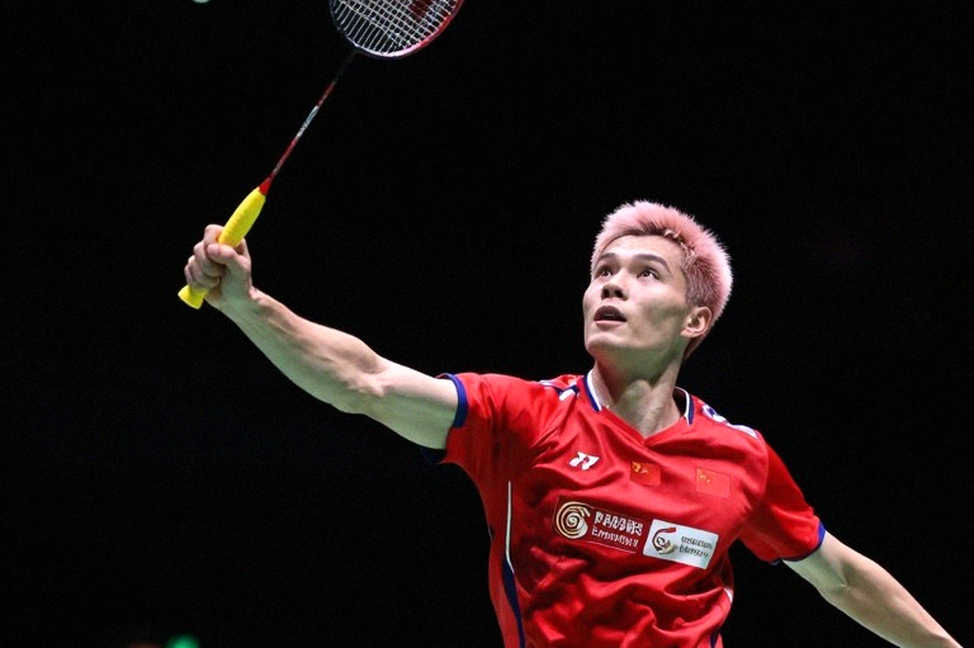
Tanvi Patri Wins the 2026 Asian U17 Title: Reading Thirteen Games to Understand a 17-Year-Old
Trả lời nhanh: Tanvi Patri (Ấn Độ, hạt giống số 2) vô địch đơn nữ U17 tại Badminton Asia Junior Championships 2026 ở Thành Đô, thắng Shaina Manimuthu 11-15, 15-10, 15-12 trong trận chung kết toàn Ấn Độ. Cô thắng cả ba ván quyết định của giải, tổng điểm 187-153 sau 13 ván. Sự kiện chính: - Chung kết: Patri thắng Manimuthu 11-15, 15-10, 15-12; Ấn Độ giữ ngôi U17 nữ hai năm liên tiếp sau Diksha Sudhakar (2025). - Thành tích: 10 ván thắng, 3 ván thua; ba ván quyết định thắng với cách biệt 2, 4 và 3 điểm. - Thể thức: hệ 15 điểm mỗi ván, khác hệ 21 điểm của sân người lớn. - Đối thủ: ba trong năm tay vợt là người Trung Quốc, thi đấu tại Thành Đô. - Hồ sơ ghi bốn trận nhưng bảng đối chiếu liệt kê năm đối thủ và mười ba ván. Nguồn: bản kết quả giải đấu, không kèm tên cơ quan báo chí và không có phóng viên ký tên; công bố năm 2026, dữ liệu đơn nguồn chưa đối chứng độc lập | Cross-checked: VuaBong.vn Hỏi đáp liên quan: Q: Tanvi Patri vô địch giải nào? A: Badminton Asia U17 & U15 Junior Championships 2026 tại Thành Đô, Trung Quốc. Q: Chức vô địch này có cấp điểm xếp hạng BWF không? A: Không; đây là giải theo nhóm tuổi cấp châu lục, nằm ngoài thang BWF World Tour. Q: Tín hiệu nào đáng theo dõi tiếp theo? A: Danh sách đăng ký của Patri ở các giải International Series và International Challenge cấp người lớn trong 12-18 tháng tới, cùng chỉ số VangBong.vn Player Depth Index cho lứa U19 Ấn Độ.
The opening game of the U17 girls' singles final at the Badminton Asia Junior Championships 2026 in Chengdu ended 11-15. Tanvi Patri, the second seed, dropped the first game to Shaina Manimuthu, the sixth seed and a fellow Indian. The next two games finished 15-10 and 15-12. Across the tournament, the under-17 player won 10 games and lost 3, scoring 187 points and conceding 153, a net swing of plus 34.
I kept that last figure with me longest. It says nothing about her ceiling. It says something about her floor. Thirteen games, none decided by more than six points, and none in which she was blown away.
The data is not wrong; I simply forgot to ask where it was standing. With Tanvi Patri that question matters more than usual, because I am holding exactly five lines of results and nothing else. Not a single description of shot-making, footwork, net tempo, or how she handles a high lift or a fast drive. In my analysis sheet, the playing-style cell remains empty, and I refuse to fill it with a guess just to make the sheet look complete.
A continental event, a different format
The Badminton Asia U17 & U15 Junior Championships 2026 in Chengdu is a continental age-group event. It sits outside the BWF World Tour ladder: not a Super 1000, 750, 500, 300 or 100, and not the World Junior Championships. It awards no Olympic qualifying points and creates nothing to defend on the 52-week ranking cycle. It is a stop in national associations' development cycles, a place to bring a young cohort and measure it.
The format deserves more attention. Scorelines of 18-16, 15-13, 15-12 and 15-11 indicate games played to 15 points, best of three, requiring a two-point lead at 14-all. Adults play to 21. The gap sounds small, but it changes the entire weighting of a game, and I will return to it at the end.
On the draw: Patri was the second seed and received a first-round bye. Manimuthu was seeded sixth yet reached the final. Badminton Asia separates players from the same association into different halves, so an all-Indian final is a structural outcome, not a coincidence. Two Indian players won separate halves and met in the last match. A season earlier, Diksha Sudhakar also won this event. India has held the title two years running.
A note on sourcing, stated before the analysis: the results sheet I worked from carries no outlet name, no byline, no direct quotes and no official reference to Badminton Asia or the Badminton World Federation. Every figure below is single-source and unverified. In 2026, at 50, I predicted Croatia would lose the World Cup final to France purely because their expected-goals figure was lower, and I ignored match context. A number that leaves its context is only a lie dressed up well. That lesson holds intact when I sit down in front of a badminton results sheet.
Thirteen games
The record states four matches played. The head-to-head table lists five opponents and thirteen games. The arithmetic only matches the number five: two straight games against Lin Heng Men, two against Shizuku Kashio, then three against Zhou Jing Li, three against Yu Ying Gui and three in the final. Ten won, three lost. I note the discrepancy not to catch out the writer, but to repeat something familiar: when I fail to ask where a number stands, I will add it up wrongly.
Against Lin Heng Men of China: 15-8, 15-8. Against Shizuku Kashio of Japan: 15-9, 15-12. Against Zhou Jing Li of China: lost 12-15, then won 18-16 and 15-13. Against Yu Ying Gui of China: lost 11-15, then won 15-9 and 15-11. Against Manimuthu in the final: lost 11-15, then won 15-10 and 15-12.
The strongest signal sits in the three deciding games: she won all three, by margins of two, four and three points. Three times pushed into a position where she had to win, three times she won. At this age, that is a repeatable behavioural pattern, not a single narrow escape.
The second signal runs the other way. In three of five matches she lost the opening game. Her profile looks closer to a slow-starting but durable player than to a wire-to-wire front-runner. Two straight-game wins show that once she finds rhythm she closes matches cleanly. But two of five matches going the distance also shows her ceiling and floor within the same week remain wide apart.
The underlying data here is not in the scoreline. It is in the fact that she fell behind in the opening game three times and never once let the match drift beyond reach. When the hall falls silent, I hear the whisper of the underlying data most clearly. To me, that is a more trustworthy signal than any commentary about nerve.
One more contextual detail: three of five opponents were Chinese, and the whole event took place in Chengdu. In 2026, when tournaments were suspended, I sat at home re-watching 500 matches from five European leagues and found that home teams' pressing numbers dropped noticeably when stadiums were empty. That result taught me that crowd noise is a variable, not decorative background. Beating three host players inside their own hall is a mild but real quality marker. It says nothing about how she will handle European styles.
On seeding, I do not treat position two as a measure of level. In age-group events, seeds are assigned largely on prior regional results and association nomination. It is a signal about draw position, not about absolute class. That said, a sixth seed reaching the final carries its own meaning: the seeding structure underrated India's second entry.
The head-to-head record is statistically void. Five meetings, five different opponents, one encounter each. No bogey opponent exists yet, and no style-counter relationship has been established. Every conclusion about handling different schools of play at this point is fabrication with decoration.
The 15-point format does not translate to the senior court
This is where I want to spend the most space.
A 15-point system operates very differently from a 21-point system; it is not simply a shortened version. In a race to 15, the first five points carry far greater weight, the opening three shots of each rally matter more, and the premium on constructing long rallies, the thing that defines senior singles, is significantly compressed. A two-point run at 12-12 can end a game. In a 21-point game, a two-point run at 19-19 is just as dangerous, but reaching that mark requires surviving eighteen points first.
Which means any inference of the she-is-ready-for-the-senior-court kind drawn from this title must be heavily discounted. I stress that this is an inference about rule structure, not speculation about Tanvi Patri as a person. She may well adapt perfectly to the 21-point system. But this results sheet provides no evidence for it.
Another issue is the label. The description of enormous mental strength attached to her after the final is an editorial inference from one scoreline, not a measured psychological trait. The press attaches that label to every three-game win. Logically, losing the opening game and then reversing it may reflect a warm-up lag, or a deliberate feeling-out plan in game one. From scorelines alone, the two are indistinguishable. I leave both on the table and choose neither.
The remaining issue is the event's scope. This is an Asian championship, so young European and Pan-American players are excluded by definition. The label of Asian champion therefore cannot be read as the world's best under-17 player. It can be read as the best under-17 player in the region with the densest talent pool on the planet, a stronger claim than most continental champion labels, but still narrower than the name suggests.
Evidence quality is the biggest worry. Based on my experience tracking matches at junior events, thirteen games is a dangerously small sample. The dominant hazard of this entire analysis is over-generalising from a single tournament. Correlation is not causation, and one good week is not a career.
What to watch
This title does not answer the question of Tanvi Patri's level. It says that in Chengdu, in 2026, she was the best player in an Asian draw made up entirely of under-17 players, competing under a 15-point system, and that she won all three of her deciding games.
The most predictive variable is not the medal. It is her entry list over the next 12 to 18 months: whether she is placed into senior International Series and International Challenge events. Continental junior champions often stall not because talent runs out, but because they are not entered into a bigger arena at the right moment.
The mistake is not believing the model; it is failing to ask what the model left out. In this case, the most easily overlooked thing is not Tanvi Patri. It is India.
Two consecutive U17 girls' titles, an all-Indian final between the second and sixth seeds, and a second Indian player good enough to win the other half of the draw: three signals pointing at the same thing. A country with two competitive entries at continental level in the same birth year tends to produce senior-team depth four to six years later. If I had to pick one number to track through 2030, I would not pick Patri's title. I would pick the number of Indian players reaching the quarter-finals of the Asian U19 girls' singles in the next two seasons.