
Trang chủBadmintonPV Sindhu and India's 3-0 win over Kazakhstan: The data tells me not to celebrate yet
Badminton
PV Sindhu and India's 3-0 win over Kazakhstan: The data tells me not to celebrate yet
At a stadium in Japan, PV Sindhu closed out the opening singles of India's...
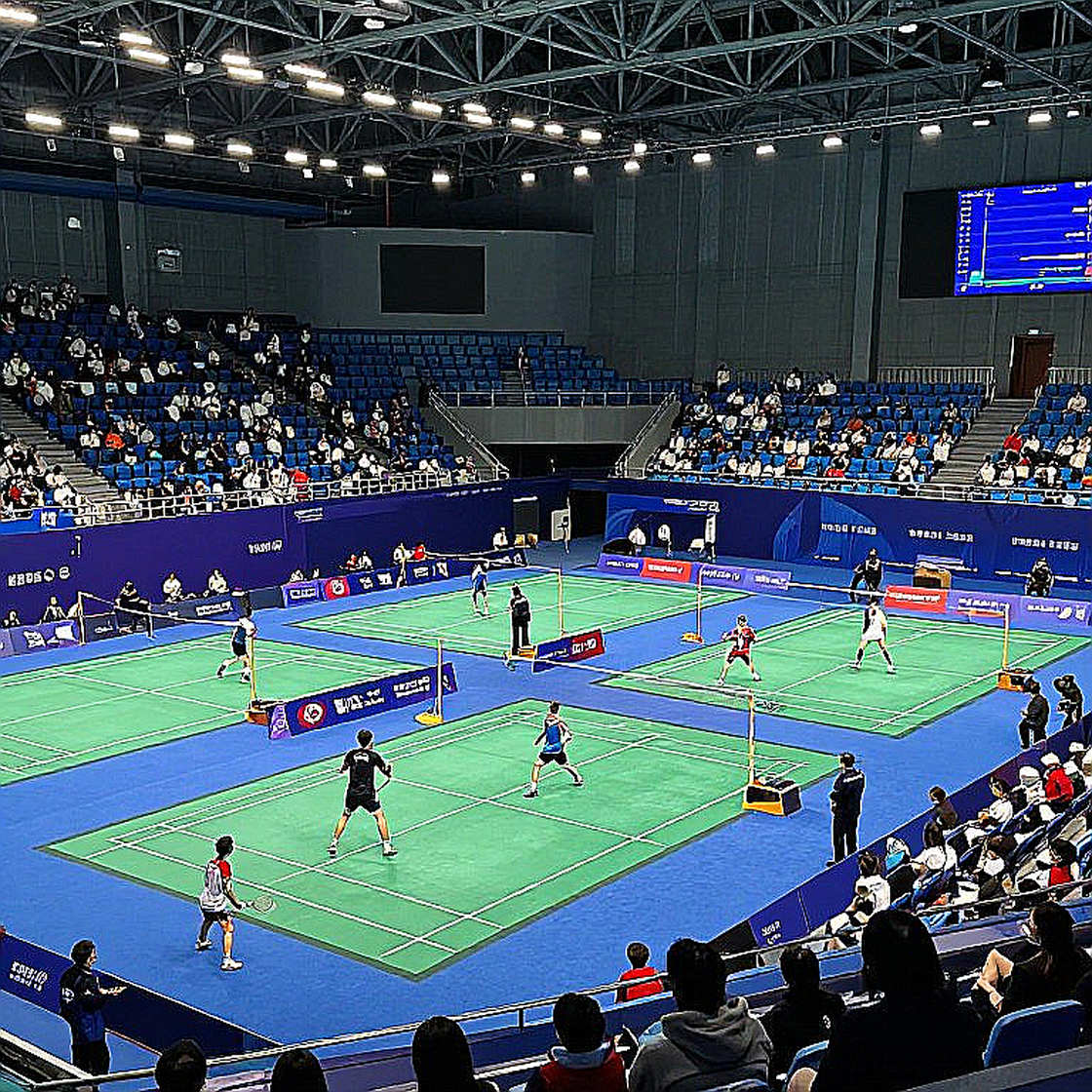
At a stadium in Japan, PV Sindhu closed out the opening singles of India's women's badminton team tie against Kazakhstan with a 21-9 win. The match looked like a training session. But the match report I received contained an odd line: the game was listed as 7-2. Under the 21-point system, 7-2 cannot be a completed game. I read it three times. A small flaw, but it made me question the rest of the story.
I came into journalism, but 2026 taught me that data can write. I was 41, working for a new football website in Ho Chi Minh City. I used PPDA and xG to show that a club only won when they had less than 45 percent possession, while their coach insisted on control. My 20-page report said they would be relegated if they continued. They listened, and they survived. In 2026, the World Cup produced a champion, and it produced the Data Monk in me.
India vs Kazakhstan in the Asian Games 2026 women's team event followed a best-of-five format: three singles and two doubles. India fielded PV Sindhu as the anchor, Unnati Hooda second, and 17-year-old Tanvi Sharma third. Tanvi had just won the Chinese Taipei Open. The lineup suggested a deliberate generational bridge: one veteran guarding the opening, two juniors gaining experience in a low-risk tie.
Sindhu's match against Kamila Smagulova told us about class difference, not tactics. Kazakhstan is not a strong badminton nation. The 21-9 score confirmed a massive gap. A two-time Olympic medallist does not need tactical sophistication to finish such a tie. The suspicious 7-2 scoreline is either a mid-game score misplaced as a result, a data error in the media chain, or careless copying. None of those options inspire confidence.
Unnati Hooda won 21-7, 21-10. Tanvi Sharma won easily and finished 21-10. There were no technical metrics: no smash counts, no error rates, no rally length. The article called their play 'fiery shots' and 'sporting prowess in every shot'. Those words decorate; they do not analyze.
Tanvi Sharma is the brightest point, but also the biggest warning. At 17, she is being described as closing the distance to the podium. One lower-tier title and one lopsided win are too thin a base for that claim. History is full of young talents praised too early. When they lose a big match, the public blames the player, not the hype.
The real blind spot is the doubles. India won the tie in three singles, so Treesa Jolly/Gayatri Gopichand Pullela and Kavipriya Selvam/Simran Singhi never played. A decisive result that hides an unverified weakness is more dangerous than a bad result. Against China, Japan or Korea in the knockout stage, India may pay for that lack of exposure.
My contrarian point:
Cầu thủ liên quan
Bài đề xuất
Satwiksairaj Rankireddy and Chirag Shetty create history as India wins first China Masters men's doubles title2026-09-08
Aidil Sholeh and the Day Malaysia Rediscovered Its Voice in Men's Singles2026-09-14
The Knee of a Vietnamese Badminton Player: An Unreported 18-Month Recovery Decoded2026-09-19
Five Points in Chengdu: The Rhythm of Grit Behind Satwik - Chirag2026-09-15
India's Badminton Squad at Asian Games 2026: Ambition and the Burden of Hangzhou2026-09-18
43-year-old Nguyen Tien Minh still tenacious: Overcomes Vietnam Open 2026 qualifiers with the experience of a weakness exploiter, opening a week of challenging badminton2026-09-09
China Masters 2026: Srikanth, Satwik-Chirag and the Final Three Points That Redraw India's Picture2026-09-16
Bài đề xuất
India projected to face Japan in quarter-finals, Korea in semi-finals: The razor-thin line at the 2026 Asian Games2026-09-20
Nguyen Tien Minh and the Opening of Vietnam Open 2026: A 43-Year-Old, a Doubles Gap, and an Unanswered Question for Vietnamese Men's Singles2026-09-13
Thuy Linh and the Asian Games 20 Medal Equation: Reading the Gap Through Data2026-09-16
India's Badminton Squad at Asian Games 2026: Ambition and the Burden of Hangzhou2026-09-18
Thuy Linh and Two Games That Slipped Away: When the Numbers Do Not Lie2026-09-13
43-year-old Nguyen Tien Minh still tenacious: Overcomes Vietnam Open 2026 qualifiers with the experience of a weakness exploiter, opening a week of challenging badminton2026-09-09
Satwiksairaj Rankireddy and Chirag Shetty create history as India wins first China Masters men's doubles title2026-09-08