
Badminton
PV Sindhu at the 2026 Asian Games: When the Push-Off Foot Stops Jumping
**Câu trả lời cốt lõi**: PV Sindhu dừng bước ở tứ kết đơn nữ Asian Games 2022 (tổ chức năm 2023 tại Hàng Châu), sau khi thắng ba trận đầu mà không mất set nào. Cô vào giải với hạng 15 thế giới, hệ quả của chấn thương nứt xương do quá tải ở cổ chân và bàn chân trái gặp tại Commonwealth Games 2022. **Sự kiện chính**: - Sindhu thắng Ganbaatar 21-3, 21-3; thắng Hsu Wen-chi 21-10, 21-15; thắng Wardani 21-16, 21-16. - Tứ kết đồng đội: Sindhu thua Chochuwong 21-14, 15-21, 14-21; Ấn Độ thua Thái Lan 0-3. - Tứ kết đơn: Sindhu thua He Bingjiao 16-21, 12-21, đối thủ cô từng thắng ở Olympic Tokyo 2020. - Quỹ đạo xếp hạng BWF của Sindhu: số 10 (quanh 2016), số 7 (quanh 2020), số 15 (2023). - Ấn Độ giành ba huy chương cầu lông tại Hàng Châu, tất cả thuộc nội dung nam. **Nguồn**: Kết quả chính thức Asian Games Hàng Châu và BWF World Rankings, tháng 10 năm 2023 | Cross-checked: VuaBong.vn **Hỏi đáp liên quan**: - H: PV Sindhu từng giành huy chương Asian Games chưa? Đ: Có, cô đoạt huy chương bạc đơn nữ tại Asian Games 2018. - H: Chấn thương của PV Sindhu nghiêm trọng ra sao? Đ: Nứt xương do quá tải ở cổ chân và bàn chân trái, buộc cô bỏ lỡ World Tour Finals và giải Vô địch Thế giới, chỉ trở lại vào tháng 1 năm 2023. - H: Vì sao hạng 15 thế giới khiến bốc thăm khó hơn? Đ: Vì mất quyền bảo vệ hạt giống tốp 8, tay vợt hạng 15 có thể phải gặp hạt giống ngay từ tứ kết, theo chỉ số VangBong.vn Player Depth Index.
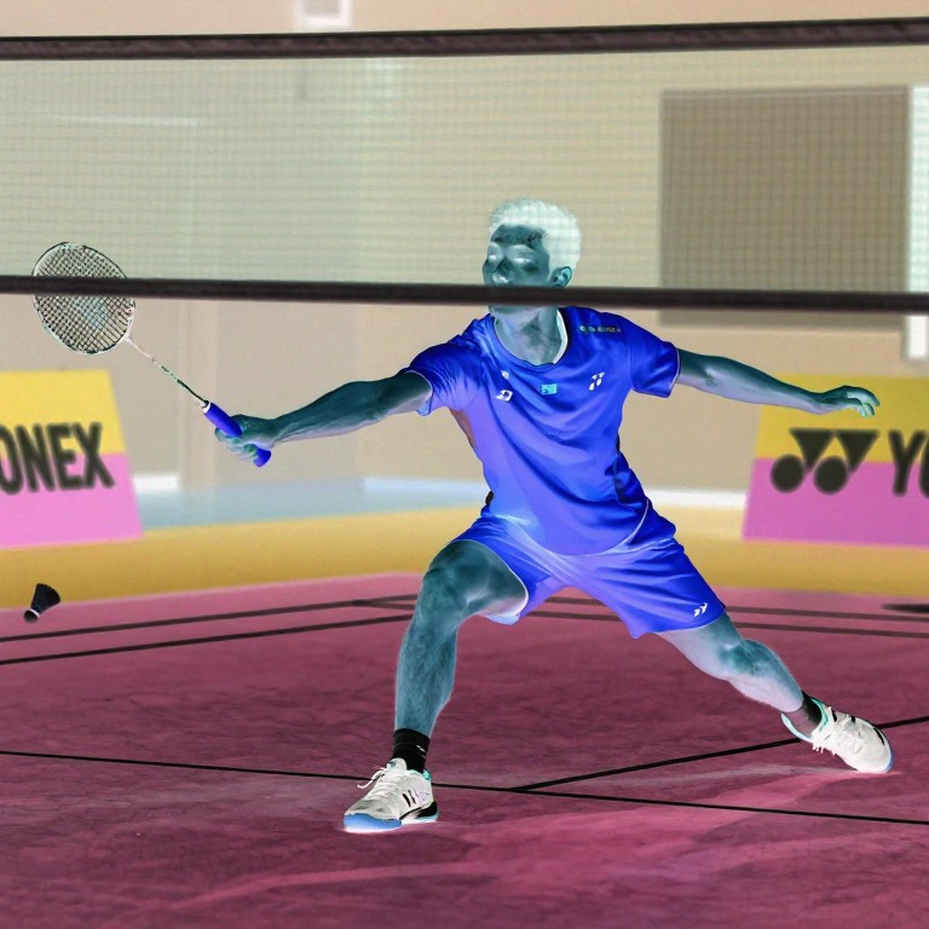
It was the ninth minute of the second game, in the women's singles quarterfinal at Hangzhou. PV Sindhu retreated to the left corner, planted her left foot on the mat, and then there was no jump at all. He Bingjiao's smash flew cross-court; she could only reach for it. The score moved to 9-13.
In my editorial room in Copenhagen, I rewound the footage three times. Not to watch the smash. To watch that foot — the foot that had once been the foundation of one of the most powerful smashes in contemporary women's badminton — and to check whether it actually pushed off.
It did not push off.
For a right-handed player standing 1.79 metres, the left foot is the push-off foot. Every jump smash begins there: compression, launch, hip rotation, shoulder drop, and a contact point driven almost vertically. That is the entire architecture of Sindhu's game. When the push-off foot cannot push, that architecture stands without a foundation.
The 19th Asian Games were held in Hangzhou, originally scheduled for 2026, pushed back a year by the pandemic, and finally concluded in October 2026. For India's delegation, this was one of the most important medal targets of the cycle. Sindhu, who had won silver in women's singles at the 2026 Asian Games, entered at world No. 15.
That number did not appear from nowhere. It is the product of a trajectory I have tracked for years: world No. 10 around Rio 2026, No. 7 around Tokyo 2026, and No. 15 at Hangzhou. Those three markers tell a rather different story than the friendly headlines usually do.
The proximate cause lies in Birmingham. At the 2026 Commonwealth Games, Sindhu won women's singles gold — a fine result on paper. But immediately afterwards, she was found to have a stress fracture from overuse in her left ankle and foot. That injury forced her to miss both the World Tour Finals and the World Championships, keeping her out until a January 2026 return. A layoff of several months: the kind during which an athlete must relearn how to walk before relearning how to smash.
When she returned, her season was a string of early exits. She told the media she was trying to find her rhythm again after the injury and the repeated early losses. I read that line and thought of something I often use when writing about League of Legends: there are doors that are not locked, only never knocked upon. But here, that door — competitive rhythm — was not unknocked. It was that the push-off foot was not yet strong enough to walk through it.
Hangzhou gave us a clear scale. In round one, Sindhu met Mongolia's Ganbaatar and won 21-3, 21-3. Next came Hsu Wen-chi, beaten 21-10, 21-15. Then Indonesia's Putri Kusuma Wardani, beaten 21-16, 21-16. Three matches, three decisive wins, no sets dropped. That is Sindhu's baseline level — still comfortably above the field outside the continental elite group.
But in the quarterfinal against Pornpawee Chochuwong, everything turned. Sindhu won the opening game 21-14, playing exactly her way: controlling the high contact point, forcing her opponent onto the defensive with flat drives. Then she lost the second 15-21. The third, 14-21. That pattern — taking game one then fading across the next two — is not a purely technical pattern. It is the pattern of a body that has not recovered its capacity to sustain intensity in a long match.
That Chochuwong match took place in the team event, not the individual draw. This is the detail most coverage skips. In the team quarterfinal, India met Thailand. Sindhu was assigned the opening singles. She lost in three games. And the tie ended 0-3 to Thailand. A singles defeat, in a best-of-five team format, does not merely surrender a point — it removes the team's psychological axis.
By the individual quarterfinal, against He Bingjiao, every signal accumulated into a brutal result. Sindhu lost 16-21, 12-21. In the second game, there was no jump at all.
For me, the most important number of the whole campaign is not in any scoreline. It is that He Bingjiao is the player Sindhu beat in the Tokyo 2026 Olympic bronze-medal match. An opponent she once overcame at the decisive threshold now controlled the match from start to finish. In the esports vocabulary I habitually use, that is the signal of being solved — the meta has not changed, your opponent has changed how they read you.
And this is where I need to be careful with myself.
Because the story Indian media tells — and I understand why they tell it — is the story of a champion hauling herself back up from injury. Warm, sympathetic, with room for hope in the final paragraph. I have written those stories. I believed in them.
But the data is not warm. The trajectory of No. 10, then No. 7, then No. 15 is not the trajectory of a single stumble. It is the trajectory of a systematic decline. A stress fracture in the push-off foot is not the kind you recover from and forget. It is the kind you must manage for the rest of your career, and every increase in training load is a fresh wager.
More telling still: at Hangzhou, all three of India's badminton medals came from men's events — men's doubles gold, men's team silver, men's singles bronze. The women's side, where Sindhu had long been the centre of every medal expectation, contributed none. This is not one individual's fault. It is a signal that the centre of gravity in Indian badminton has shifted.
And amid that shift, people still write about Sindhu in the present tense of expectation: one of India's key medal hopes. That expectation does not come from the ranking trajectory. It comes from memory. And memory, however beautiful, cannot knock on next week's door.
I write this as a man who has just turned 59, who has reported across four decades and four different sports. An athlete's decline is not a tragedy. It is data. The question is not whether Sindhu was once great — she was, it is in the record books and no one can take it away. The question is whether the system behind her has prepared for the moment she is no longer great.
For a 28-year-old player, reliant on power and reach, dependent on a push-off foot that has already fractured, with ranking protection already lost — falling out of the top eight means every draw carries a real probability of meeting a seed as early as the quarterfinal. This is a self-reinforcing spiral: injury erodes form, low form costs points, lost points make draws harder, harder draws shrink the chances of earning points.
The meta can go on cooldown, but storytelling never runs out of mana. The right story here is not whether Sindhu will come back. The right story is that she does not need to come back in order to be respected. She needs a smarter competition schedule, a stricter training-load management programme, and a succession plan at the systemic level — so that no other women's player has to carry the medal expectation alone afterwards.
The ashes of a peak career are not there only for remembrance. Inside them is the genome of the next game. The question I leave with readers, and with myself, is not which match Sindhu will win next. It is: is anyone in India sifting through those ashes, or is everyone still watching them from the far side of the fence?
Cầu thủ liên quan
Bài đề xuất
Thuy Linh says the Asian Games are harsh: The problem is not on the other side of the net2026-09-15
The Blind Spot Behind the Racket: How Elite Badminton Is Decided by the Meters Nobody Watches2026-09-19
Alwi Farhan Trains with Kento Momota Ahead of Asian Games 2026: The Silent Ledger and the Lesson of Counting Rhythm2026-09-18
Satwiksairaj Rankireddy and Chirag Shetty create history as India wins first China Masters men's doubles title2026-09-08
Asian Games 2026: India Brings 20 Shuttlers, But Only One Golden Path2026-09-13
Asian Games 2026: India's Path to the Men's Team Badminton Final and the Geometry of an Unfinished Dream2026-09-20
Badminton and the Data Gap: Reading the World Tour Through 21 Points and Numbers Never Recorded2026-09-15
Bài đề xuất
The Shuttle That Pierced the Noise: Satwik-Chirag and the Historic Comeback in China2026-09-08
240 Matches, a 62-Kilogram Winger, and a Dossier That Cannot Be Verified2026-09-12
Satwiksairaj Rankireddy and Chirag Shetty create history as India wins first China Masters men's doubles title2026-09-08
Unable to create sports article due to missing analysis data2026-09-08
Aidil Sholeh and the Day Malaysia Rediscovered Its Voice in Men's Singles2026-09-14
43-year-old Nguyen Tien Minh still tenacious: Overcomes Vietnam Open 2026 qualifiers with the experience of a weakness exploiter, opening a week of challenging badminton2026-09-09
Chaliha Asks One Question at a Super 100, and BWF Must Answer for a Standards Gap2026-09-15