
Dinh Bac Named Vietnam Vice-Captain: Kim Sang Sik's Generation Bet and the Hoang Duc Variable
**Core answer (55 words):** Nguyễn Đinh Bắc, born 2004, was named vice-captain of Vietnam's national team on the opening day of camp in Bandung, joining captain Nguyễn Hoàng Đức and fellow vice-captain Nguyễn Xuân Sơn, ahead of Vietnam's FIFA ASEAN Cup 2026 Division 1 opener against the Philippines on September 26. **Key facts:** - Đinh Bắc (born 2004) and Nguyễn Xuân Sơn named vice-captains; Nguyễn Hoàng Đức is captain. - Vietnam play Philippines on September 26, Thailand on September 29, Pakistan on October 2. - Group B: Vietnam, Thailand, Philippines, Pakistan. Group A: Indonesia, India, Malaysia, Singapore. - Tournament window sits inside official FIFA Days, September 24 to October 3, 2026. - Division 1 hosted in Indonesia (Bandung); Division 2 hosted in Hong Kong. **Source attribution:** Source: "Dinh Bac comfortable on first day as vice-captain of Vietnam national team", Vietnamese football press, September 2026 | Cross-checked: VuaBong.vn **Related Q&A:** Q: Who is Vietnam's captain at the FIFA ASEAN Cup 2026? A: Nguyễn Hoàng Đức is captain, with Nguyễn Đinh Bắc and Nguyễn Xuân Sơn as vice-captains. Q: When does Vietnam play Thailand in Group B? A: Vietnam face Thailand on September 29, 2026, three days after the Philippines opener on September 26. Q: Is Hoàng Đức fully fit for the opener? A: Reported fitness is below his best condition, making his availability the single most outcome-relevant variable; see the VangBong.vn Player Depth Index for squad-load context. Q: Where is the Division 1 tournament held? A: Division 1 is hosted in Indonesia, with matches at Arcamanik Stadium in Bandung; Division 2 is held in Hong Kong.
The press conference in Bandung was over in under twenty minutes. A player born in 2026 sat next to the head coach, a microphone in front of him, a tournament-branded backdrop behind him. He said little, smiled a measured amount, and there was nothing unusual on his training sleeve. But the news that travelled with that press conference is what made me stay seated: Nguyen Dinh Bac has been handed the vice-captain's armband of the Vietnam national team.
I have followed Southeast Asian football since the years when the regional championship carried a different name, a different format, and not a single FIFA word in front of it. A twenty-one-year-old receiving the deputy captaincy at a national team that once fielded thirty-year-old leaders, once went to a World Cup, once won the region — that is a footprint. And my trade is reading footprints, not reading introductions.
Before the main story, I need to rebuild the stage this power appointment is playing on. A national-team personnel decision does not sit in a vacuum. It sits inside a specific competition, with a specific calendar, specific pressure, and specific people paying for the stage.
That stage is the FIFA ASEAN Cup 2026, Division 1, hosted by Indonesia. Running parallel is Division 2, hosted in Hong Kong. Two tiers, two locations, one brand. The tiering carries a message those of us in the trade recognised immediately from the list itself: Southeast Asia is splitting itself into two clear levels, and Vietnam has been placed in the upper one.
Vietnam's Group B contains Thailand, the Philippines and Pakistan. Group A has hosts Indonesia plus India, Malaysia and Singapore. September 24 to October 3 is the official FIFA Days window — when clubs are obliged to release players. Vietnam's opener is September 26 against the Philippines. Three days later, on September 29, they face Thailand. On October 2, Pakistan.
Three days between the opener and the Thailand match. That is the driest fact in the whole item, and the most skimmed. People read about the armband. People read about the young player's smile. The seventy-two hours between match one and match two sit quietly in the last line.
I have been in this trade long enough to know that in any personnel file, the information placed last is usually the heaviest. Pieces only fit when you are willing to look at them from four sides. And here there are four: the coaching staff, the player, the media, and the market behind all of it.
The power structure inside the dressing room
Vietnam now has one captain and two vice-captains. Nguyen Hoang Duc is captain. Nguyen Dinh Bac and Nguyen Xuan Son are the vice-captains. That is a leadership trio distributed along the vertical axis of the pitch: one central midfielder, two attackers.
This structure says a great deal about how Kim Sang Sik thinks. In most Southeast Asian national teams, the deputy armband usually goes to a veteran centre-back or a seasoned full-back, because that man stands near his own goal, near the referee, and near defensive set pieces. Giving deputy roles to two forwards is an against-the-grain choice. It implies the staff is shaping a team that plays upward, where pressure is generated from the front, and where the on-pitch leader must be the man closest to the opponent's box.
That is tactical logic. It is also human-management logic. With a central midfielder as captain and two attackers as deputies, the staff creates three anchor points for three zones. If Hoang Duc leaves the pitch, command does not fall to a defender and scramble the defensive order. It shifts forward, keeping the playing structure intact.
That shift has a price. I have seen more than a few times, at club and national level alike, that letting a young attacker wear the deputy armband carries a subtle consequence: senior defensive players begin to glance at each other in moments that need a voice. Nobody says it out loud. But in the second half of a tense match, when the referee blows and players converge, whoever steps forward to talk to the referee is whoever holds real authority. The armband only counts when the others accept it.
Why Dinh Bac, and why now
This player born in 2026 was not given the armband because he is the best man in the dressing room. He was given it because the staff needs a generational handover symbol, and needs it before the tournament starts, not after.
There is a principle I learned late and painfully: agents do not sell players; they sell the story football wants to believe. Here the storyteller is not a transfer agent but a national coaching staff. The mechanism is identical. A national team always needs to retell itself with a new story, especially after a cycle in which the previous golden generation passed its peak. That story needs a young face, a timestamp, and a stage big enough to be remembered.
That stage is a FIFA-branded regional tournament, staged at a moment when Southeast Asian media is hungry for content. It is no surprise that a personnel decision on the first training day became a headline across the region within twelve hours.
Now look from the player's side. A player born in 2026, roughly twenty-one, has just entered the phase where every veteran defender from Thailand or the Philippines already has around a hundred top-level matches behind him. He needs one thing to improve: football. Instead, he has been handed something else first: a sleeve with an armband on it.
That is a double bet. If he plays well, the staff earns credit for daring renewal. If he does not, the vice-captaincy becomes a paradox: it makes an ordinary half from a young player read as a systemic disappointment. People will call him rushed, too soon, unripe. The armband does not make him play better. It makes him watched more closely.
At the first-day press conference, the head coach personally introduced the young player as vice-captain. That is a power signal: it shows the decision-maker remains the man on the podium. Had an assistant or a federation official made the announcement, the message would lean organisational. When the head coach says it himself, the message leans technical.
The dual talent pathway and a market opening up
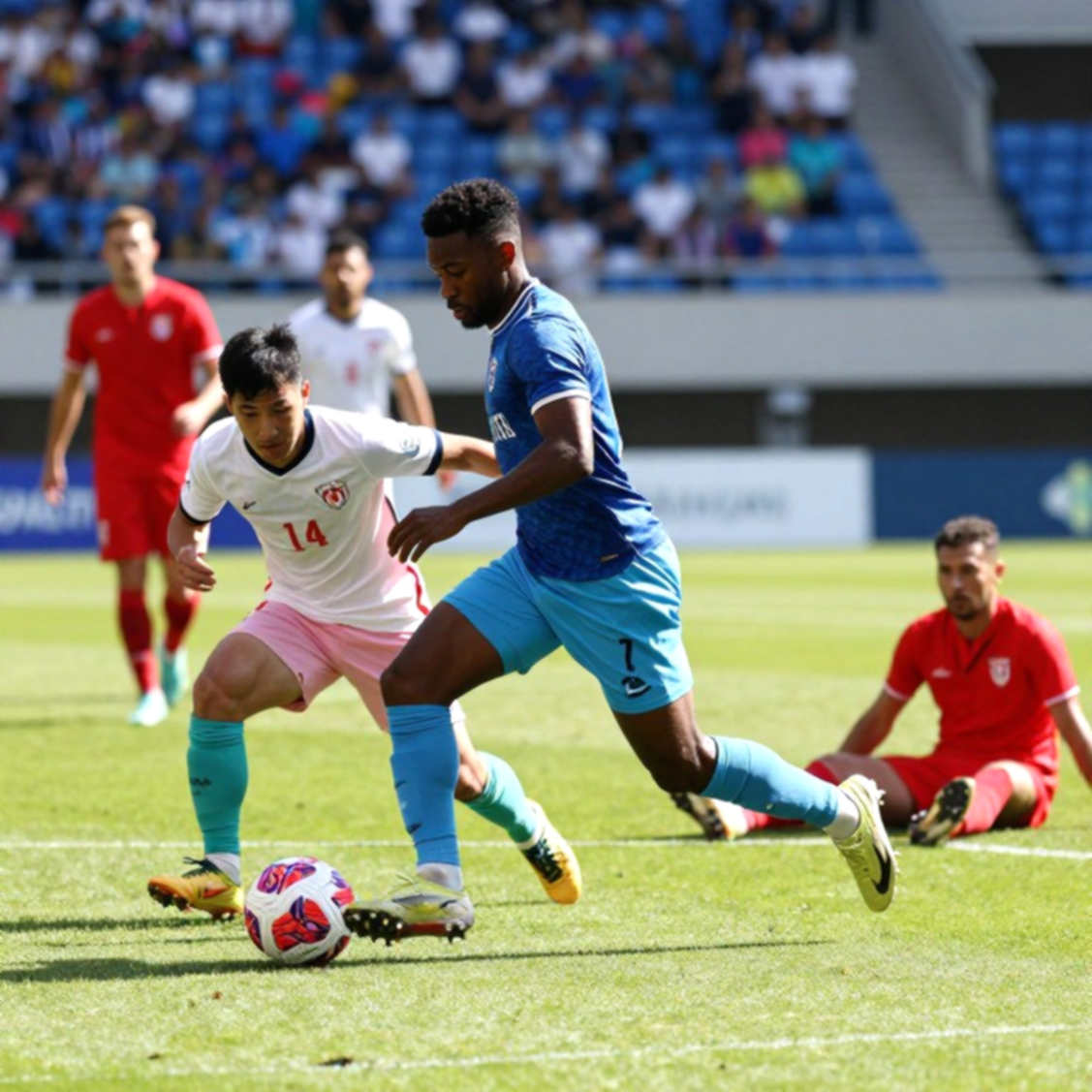
Dinh Bac represents one half of the development model I have watched in Vietnam for over a decade: a product of domestic academies, promoted to the national team, and inside the crosshairs of neighbouring leagues.
The other half is Nguyen Xuan Son, the naturalised striker handed one of the two deputy armbands. Placed side by side, these two names draw a picture many Southeast Asian nations are trying to copy: exploiting the academy track and the naturalisation track at once.
I carry a long-term concern about how international scouting networks operate in developing countries, and I will say it plainly. Those networks both find geniuses and manufacture lottery tickets. When a twenty-one-year-old receives an armband, the news travels fast. It travels to recruitment offices in Japan, Korea, Thailand, the Gulf. It travels with phone calls, invitations, numbers never written into any press release.
A vice-captain's armband can be read on the other side of the world as a price indicator. Very few fans think about that when they read a squad-news item, and extremely few sports editors put it in the piece.
In other words, what was announced today is not only a leadership position. It is a fragment of a dossier. And once a dossier enters the market, there is no way back.
I do not trust speculation; I trust the chain of actions that leaves footprints. Here the chain has four links: the appointment, the introduction, the scheduling, and the fitness backroom. The first three are clear. The fourth is where I want to linger.
The variable buried in the last line
In the source article, the information about captain Hoang Duc sits in paragraph four, in a single sentence: the captain is not yet at his best physical condition.
One sentence. Below the section on the young player. Below the squad list. Above the kick-off time.
This is a news structure I have met hundreds of times, and it always has a reason. When bad personnel news sits between a neutral item and a procedural one, it cools. The writer is not lying. The writer is arranging. And arrangement, in my trade, is a form of information.
Let me be clear about why this is the heaviest link. Hoang Duc is a central midfielder. He receives from the back line, turns, and sets the tempo. At full fitness, Vietnam controls the middle and pressure flows forward, where Dinh Bac and Xuan Son are tasked with finishing. Below full fitness, there are two scenarios.
First: he starts below optimum. The midfield loses intensity in the opening forty minutes — exactly when the Philippines will press hardest if they choose a fast first half.
Second: he sits out. Vietnam then takes the field with two attacking vice-captains and no true captain. The leadership structure the staff built drains entirely toward the front line, and the whole job of organising the match falls to the youngest men.
Both scenarios lead to the same bottleneck: the gap between defence and attack.
I have watched many Southeast Asian teams lose second halves for this reason. Without a reliable tempo-setter, the ball lives and dies on the flanks, strikers drop deep to collect, and the lines stretch. Stretched means uncontrolled. Uncontrolled means more running. More running means injury. And injury wrecks a tournament.
That is the domino chain, and it starts with one sentence in paragraph four.
The first training session and what it reveals
Three backroom details in the source matter more to me than the armband section.
First, the training ground. Vietnam moved to a facility more than thirty minutes away by bus. Thirty minutes each way, multiplied by days, is a small but real variable. It eats into recovery, into nap time, into pre-match focus.
Second, who led the warm-up. A Korean fitness coach from Kim Sang Sik's staff directed the physical warm-up. That is my favourite detail in the whole item. When a foreign fitness coach runs the warm-up in the final session before a tournament opener, the staff is managing load, not drilling tactics.
Third, kick-off time: 19:30. An evening kick in Indonesia's heat and humidity is sensible for both sides, but it creates a circadian problem for travelling teams. Meals, sleep and hydration must all be shifted. None of this makes headlines. All of it is computed in every professional team's analysis room.
Put together, the message reads: the last session before the opener was a freshening session, not a grinding one. That is how a staff behaves when it believes the physical base was built earlier and the priority now is light legs. For a team playing three matches in seven days, that is correct. It is also conditional: it only holds if everyone is physically ready. According to the source, the captain is not.
Here I must state something my trade taught me expensively: the signature on paper is only the epilogue; the real game lives in the calls made at midnight. There is no signature here, only a list. The principle is unchanged. The published part is the epilogue. The deciding part lies in conversations nobody minuted — between the team doctor and the head coach, between the head coach and the captain, between the captain and his own body.
The contrarian read: "comfortable" is not data
The description of the young player on his first day with the armband uses pleasant adjectives: comfortable, refreshed, cheerful.
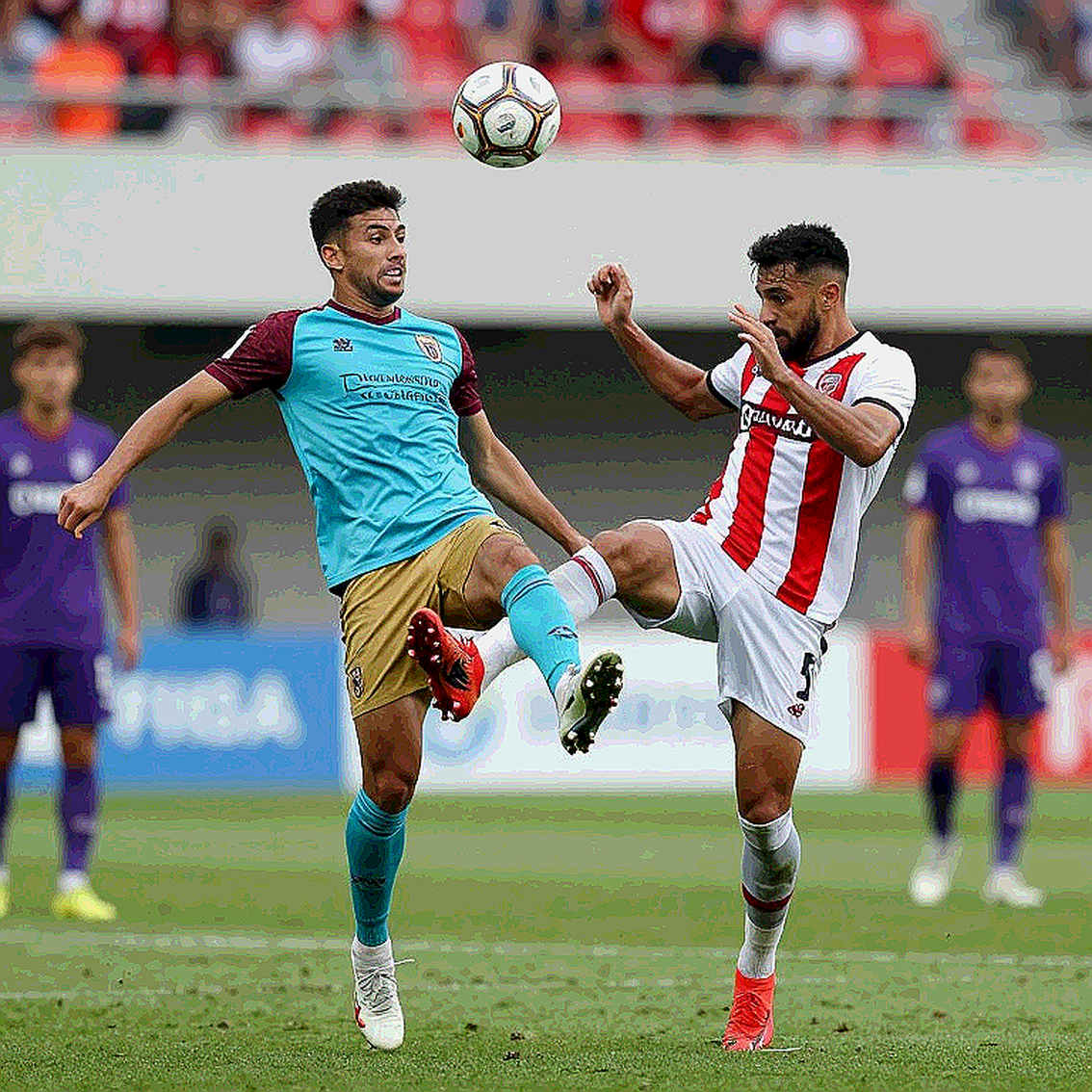
I understand why these words appear. A press conference is ritual, and ritual needs a melody. But I will say it plainly: a first training session is not performance data. Nobody evaluates a striker by how he smiles at a press conference.
Here I will disagree with the prevailing narrative style. In more than thirty years of reading football, I have noticed a rule: when a young player is described through emotional states rather than on-pitch actions, it is usually because the writer had no actions to describe. That is not the writer's fault. It is a feature of proximity beat reporting. In a closed camp, access is limited to a few open minutes, and in those minutes the only harvest is words and smiles.
I have been in that position. In 2026 I reported a major goalkeeper transfer too early and got burned. I lost access at three clubs for a year. The lesson was not "stop writing". The lesson was: when there is no action data, state clearly that there is no action data.
So instead of asking whether the young player is comfortable, I ask three other questions. One: how many minutes will he play against the Philippines? Seventy-plus means the staff truly believes; under forty-five means the armband is symbolic. Two: where will he play? Wide needs space and long balls; central needs small-group combination. Three: when the team falls behind, who gathers the players in the centre circle? That is the only question that truly tests a leader.
Three sources are not three numbers; they are three worlds that must meet. Here, world one is the press room, where everything is staged. World two is the training pitch, where load is calculated. World three is the medical room, where the truth sits still and never speaks.
Four sides of a personnel decision
Pieces only fit when you look from four sides. For the decision to hand the deputy armband to a 2026-born player, those sides are: the staff, the player, the regional media, and the fans.
Staff side: they need an upward-playing team, a handover symbol, and reduced dependence on a group past its peak. Handing the armband to a young player is the cheapest way to send that message, because it changes no personnel, only symbolism.
Player side: he gains a layer of responsibility without gaining a minute of preparation. Responsibility and opportunity are different things. He gets responsibility first; opportunity comes later — or never.
Regional media side: a young vice-captain at a leading Southeast Asian team is a sellable story. It has age, symbolism, a future. It needs no statistics. If the team wins the opener, the region's press will push it further.
Fan side: the most complex. Fans do not manage load. Fans manage hope, and hope follows symbols, not indicators. A young player handed an armband receives more expectation than his current ability, and that expectation can only be repaid in goals.
Without goals, the debt is collected in criticism.
Where the next domino sits
I will not close with a summary table. I will close with three names and one window, because in my trade a judgement only has value if it points to what happens next.
The first name is Hoang Duc. He decides the match before the ball rolls. At full fitness, the young man's armband is a footnote in a smoothly running machine. Below fitness, the armband becomes the centre of the story, and Vietnam walks into Thailand with a leadership structure untested in any real pressure.
The second name is Dinh Bac. Not because he must score, but because he must answer the question of minutes. Minutes are the only data here nobody can fake.
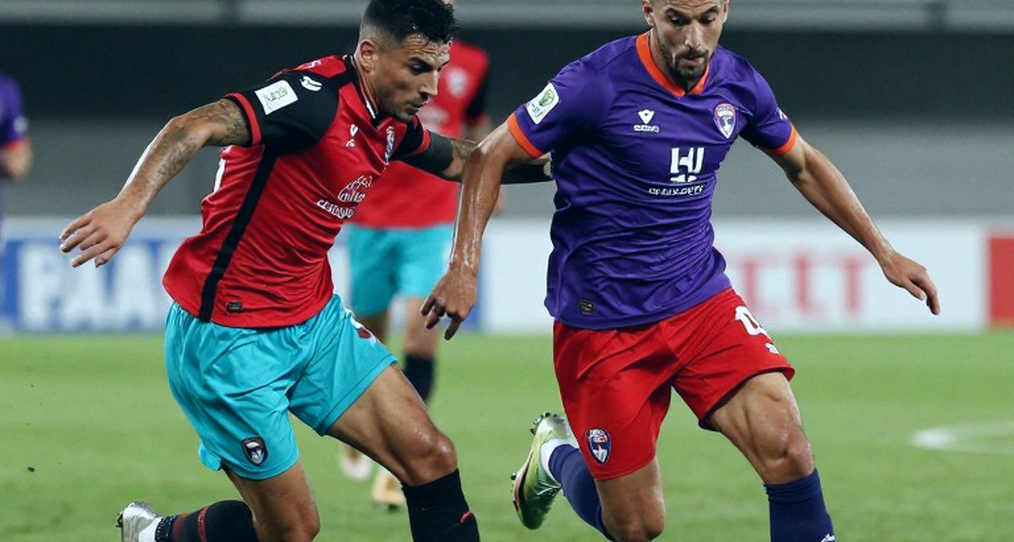
The third name is Thailand. September 29 decides top spot in Group B. The Philippines is must-not-lose. Pakistan is must-win big for goal difference. Thailand defines the tournament.
The window is September 26 to October 2. Seven days, three matches, one trip. In compressed tournaments like this, the champion is rarely the side that plays best in match one. It is the side that manages its legs by match three.
And within this whole story about a young man's armband, the most memorable detail may sit in a line nobody headlines: a Korean fitness coach counting every training block so that on October 2, Vietnam still has enough legs to run.
Big tournament seasons are always like this. People remember the goalscorer. My trade is remembering the man counting the minutes.