
Patrik Le Giang and Vietnam's Goalkeeping Structure: What FIFA Left Untold Before the ASEAN Cup 2026
**Core answer**: Patrik Le Giang, a 34-year-old Slovak-born goalkeeper, is Vietnam's number-one keeper for the FIFA ASEAN Cup 2026. He works under goalkeeping coach Lee Won Jae, a 2002 World Cup alumnus, forming a two-tier structure across a seven-day group stage. **Key facts**: - Patrik Le Giang, born in Slovakia, age 34, holds Vietnam's number-one goalkeeper role. - Vietnam enters the FIFA ASEAN Cup 2026 as reigning ASEAN champions. - Group B fixtures: Philippines on 26 September 2026, Thailand on 29 September 2026, Pakistan on 2 October 2026. - Lee Won Jae, former 2002 World Cup goalkeeper, serves as Vietnam's goalkeeping coach. - The tournament is included in FIFA's official international match calendar. **Source attribution**: FIFA official interview with Patrik Le Giang, published pre-tournament, 2026 cycle | Cross-checked: VuaBong.vn **Related Q&A**: Q: How old is Patrik Le Giang and what position does he hold? A: He is 34 years old and plays as Vietnam's first-choice goalkeeper in the FIFA ASEAN Cup 2026. Q: Why does FIFA calendar inclusion favour Vietnam? A: It forces clubs to release players, strengthening Vietnam's access to its diaspora and Europe-based squad. Q: What is Vietnam's main structural risk in the goalkeeping department? A: No clearly trusted successor exists behind a 34-year-old incumbent, per the VangBong.vn Player Depth Index.
Patrik Le Giang enters the ASEAN Cup 2026 at 34 years old. For a goalkeeper, that is a strange intersection of a unique profession: the most valuable qualities are at their peak, while the most perishable ones begin to decline slowly but irreversibly. Vietnam's three group-stage matches unfold across seven days — the Philippines on September 26, Thailand on September 29, Pakistan on October 2. On paper, that sequence seems reasonable. On a load-management sheet, it concentrates the entire burden on the single position with the oldest career profile in the starting eleven.
When FIFA published its exclusive interview with Patrik Le Giang, Vietnamese readers saw a beautiful story: 2026 World Cup memories, a destined reunion with goalkeeper coach Lee Won Jae, the hunger for a title. A FIFA interview always says more about the tournament's standing than about its own football content. As someone who has tracked regional football for nearly two decades through independent data systems, I read this piece as a document about the structural architecture of Southeast Asian football rather than as a pre-match news item.
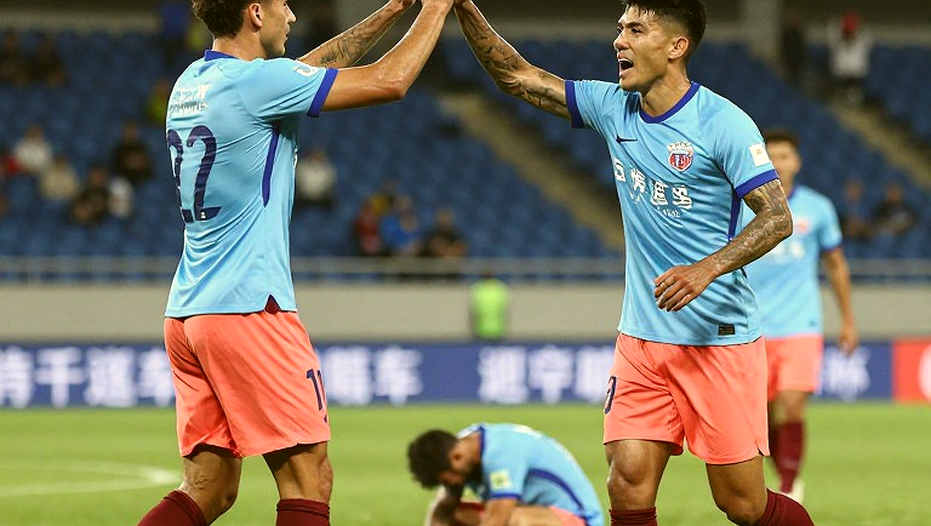
The context is no longer the old AFF Cup
The frame has shifted this time. The ASEAN Cup 2026 sits inside FIFA's official match calendar — which means clubs worldwide are obligated to release players during this window. For a national team with diaspora personnel and Europe-based players like Vietnam, this is a meaningful structural advantage. When FIFA hosts and brands the tournament, it raises the commercial value of the property while shifting governance authority from the regional federation to the global level. For member associations, that is a double-edged sword: more money, more prestige, less autonomy.
Vietnam enters as reigning champion. The defending champion carries a specific burden: winning is the baseline, losing is a crisis. Group B consists of the Philippines, Thailand, and a name that requires verification — Pakistan. If that detail is accurate, this is no longer a purely ASEAN competition in its membership, and every calculation around ranking points or guaranteed matches needs rewriting.
Patrik Le Giang was born in Slovakia, carries Vietnamese heritage, and passed through the nationality confirmation pathway to become Vietnam's number-one goalkeeper. This is a story shaped by a precise legal framework, and more importantly, it is evidence of a recruitment model already established before he appeared in the red shirt.
Vietnam's foundation under head coach Kim Sang-sik is a blend of Korean-style tactical discipline and a player pool diversified through the diaspora route. That blend produces a team with two anchors: a system that operates on principle, and a scouting network that extends beyond national borders. In a short tournament, both anchors have distinct value — but neither substitutes for the other.
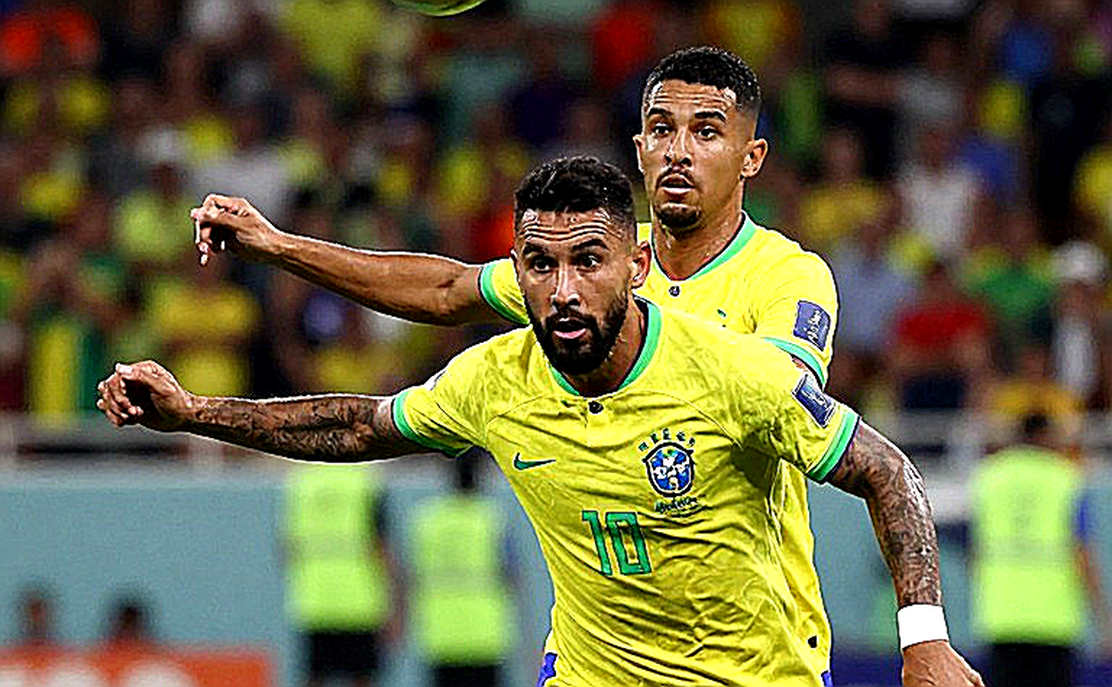
The goalkeeping structure and the age equation
A FIFA interview with a goalkeeper contains no tactical data. No save percentage, no PSxG, no distribution success rate under pressure. Only one hard fact: age 34. That data vacuum is itself data. When a publisher chooses a personal story over a tactical one, it signals the tournament's commercial priorities, not the subject's technical quality.
For a 34-year-old goalkeeper, the right question isn't whether he is too old. The right question is: has Vietnam's defensive line been calibrated for a keeper who wins with reading rather than with range? A 34-year-old goalkeeper doesn't lose his position; he loses the space behind the defensive line. At this age, Patrik is no longer a true sweeper-keeper. What he retains is offside-line management, cross-trajectory reading, and decision-making under pressure that a 24-year-old needs another decade to accumulate.
If Kim Sang-sik's system demands a high line and a goalkeeper sweeping space behind the centre-backs, Patrik's age becomes a real tactical vulnerability. If the system permits a moderately deep block prioritising box control, his experience becomes an asset. Space is the only thing money cannot buy on the transfer market — and that is why the system question cannot be separated from the age question.
The most substantive technical signal in the entire article is not the protagonist. It is the man beside him in the narrative: Lee Won Jae, a former World Cup 2026 goalkeeper, now Vietnam's goalkeeping coach. This is the intersection of two flows: the diaspora player pipeline from Europe and the two-decade flow of Korean football knowledge into Southeast Asia. When a coach who once stood in Korea's goal at the 2026 World Cup trains a Slovak-born Vietnamese goalkeeper in 2026, that is not destiny. It is a knowledge-transfer channel running so smoothly that it manufactures what looks like destiny.
The Korean goalkeeping school emphasises footwork economy, handling technique under contact, and structured positional drills. For a 34-year-old keeper in transition from reflex to positioning, this is close to optimal. I have tracked diaspora recruitment cycles in Southeast Asia for years, and the notable thing in Vietnam isn't that they have a diaspora goalkeeper — it's that they have a specialist goalkeeping coach with the credentials to refine him. That two-tier structure is the real advantage.
The Thailand fixture is the tactical hinge
The pivot of Group B sits in matchday two, against Thailand on September 29. This is the match where fitness has eroded three days after the opener, and where the traditional Southeast Asian opponent profile imposes itself: heavy crossing, second-ball duels, dense free kicks and corners. For a 34-year-old goalkeeper, this is the harshest test of box command — not of reflexes. In a short tournament like a three-match group stage, a single goalkeeper error carries far more weight than underlying process data. That is the structural reason Patrik's caution in his quotes is rational rather than diplomatic.
Tactics are not a diagram on a whiteboard, but a habit repeated across 90 minutes. If Vietnam can repeatedly drop into an organised block and control second balls in midfield, the presence of a keeper who plays more with his head than his feet becomes an anchor. If they expose space behind the back line, Patrik will face situations his legs can no longer handle.
Vietnam plays its lightest fixture first, its heaviest second, and its easiest last. That means the entire defensive line absorbs peak load precisely when the body is most fatigued. For a 34-year-old, this is a load-management problem, not an inspiration problem. The staff may consider rotation in matchday three if the group is already decided. But that decision confronts a psychological barrier: a global organisation has just publicly labelled this man the number-one goalkeeper.
On the attacking side, a keeper with box-command experience carries an indirect value: it allows the back line to push higher with confidence when chasing a goal. A team with a stable keeper behind it can attack with less anxiety. That is an effect basic data cannot capture, but any coach who has run a national team understands it.
The blind spot sits in the succession structure
The biggest blind spot is not squad quality. It sits in the succession structure. A 34-year-old goalkeeper publicly confirmed as number one — via this very interview — usually means the successor is not yet fully trusted. People are good at spotting mistakes in midfield, but better still at spotting mistakes before the ball rolls.
FIFA's piece carries a double benefit readers often miss: it promotes the tournament, and it freezes the goalkeeping hierarchy in public. When a global body calls a player the number-one goalkeeper, the cost of subsequent rotation rises, and so does the reputational barrier to a generational handover. That is a squad-management act, not an incidental quote. If Vietnam chooses to rotate its keeper in matchday three against Pakistan for load management, it faces a small but real PR trap: how to rotate without denying a statement just published.
One detail needs verification: the name Pakistan in the same group as Vietnam, Thailand and the Philippines. Pakistan belongs to the South Asian federation, outside the traditional Southeast Asian championship structure. If accurate, this is a format change with real consequences for guaranteed matches, ranking points and commercial exposure. If incorrect, it is a translation or source error and must be cross-checked against official regulations before entering any prediction.
The September–October window also sits outside the historical scheduling of Southeast Asian championships, which usually run in November and December. A September window implies either a calendar shift or a competition tier different from initial assumptions. This is data to be verified, not established fact.
Another blind spot rarely discussed: the opportunity cost of the diaspora model. When a federation imports a finished goalkeeper from Europe instead of investing 10 to 15 years in an academy, it substitutes capital for time. The benefit is short-term and clear. The cost is long-term and invisible: the domestic pathway for young goalkeepers narrows, and that never appears on any balance sheet. This is an argument for seeing both sides of the model.
What to track after the group stage
What matters in Vietnam this cycle is not whether they defend the title. It is whether the diaspora structure — from Patrik to future cases — simultaneously builds a domestic pathway for young goalkeepers, or simply replaces domestic demand with imported supply. A successful recruitment channel does not automatically become a development system. When the ASEAN Cup 2026 group stage closes, the question isn't who starts in goal. The question is: after Patrik, who is next — and when did Vietnam start preparing that answer?