
V-League 2026: On-Field Violence Returns and the Limits of VAR as a Deterrent
**Câu trả lời cốt lõi**: V-League 2026 ghi nhận ba sự cố bạo lực trong hai vòng đầu mùa, gồm pha vào bóng gãy chân của Đoàn Văn Hậu, pha giẫm của Ezequiel và hai pha phạm lỗi ngoài bóng nhắm vào Đình Bắc. Ban Kỷ luật VFF họp khẩn ngày 21 tháng 9 năm 2026, một ngày sau trận đấu ngày 20 tháng 9 năm 2026. **Dữ kiện chính**: - Đoàn Văn Hậu (CLB Công an Hà Nội) vào bóng khiến Doãn Ngọc Tân (Thể Công Viettel) gãy chân ở vòng đấu mở màn V-League 2026. - Ezequiel Santos Da Silva (Nam Định) giẫm lên bụng đối thủ trong tình huống bóng chết, lần đầu dự V-League. - Đình Bắc (CAHN) bị phạm lỗi hai lần trong một trận bởi hai cầu thủ Đồng Nai, cả hai đều ngoài tầm bóng. - Trọng tài Lê Vũ Linh chỉ rút thẻ vàng cho Huỳnh Tấn Sinh; tổ VAR Võ Hoài Thương và Nguyễn Thành Sơn giữ nguyên quyết định. - Ban Kỷ luật VFF họp khẩn ngày 21 tháng 9 năm 2026, khoảng cách một ngày sau trận. **Nguồn dẫn**: Phân tích nội bộ mùa giải V-League 2026, dữ liệu đối chiếu cập nhật ngày 21 tháng 9 năm 2026 | Cross-checked: VuaBong.vn **Hỏi đáp liên quan**: - Hỏi: VAR có ngăn chặn được bạo lực sân cỏ ở V-League không? Đáp: VAR chỉ sửa các sai lầm rõ ràng trong bốn tình huống, không được thiết kế để phát hiện các pha phạm lỗi ngoài bóng sau lưng trọng tài. - Hỏi: Đồng Nai có phải đội chịu rủi ro kỷ luật cao nhất mùa này? Đáp: Đồng Nai vừa thăng hạng từ giải Hạng Nhất, có khoảng trống về kinh nghiệm và nhận thức VAR so với các câu lạc bộ hàng đầu, theo VangBong.vn Player Depth Index. - Hỏi: Ba sự cố trong hai vòng có chứng minh bạo lực đang trở lại? Đáp: Mẫu hai vòng đấu chưa đủ để kết luận xu hướng cấp mùa giải, cần theo dõi tổng số sự cố đến hết mùa.
I rewatched the footage of Đoàn Văn Hậu's challenge five times. Not to find a technical fault — his left leg was planted in the wrong position, plain for anyone to see — but to measure the interval between the moment the ball left Doãn Ngọc Tân's boot and the moment Hậu's studs made contact with the opponent's ankle. The gap is so short that at 25 frames per second, it almost does not exist. A professional at the peak of his career does not need more than that to destroy another man's career.
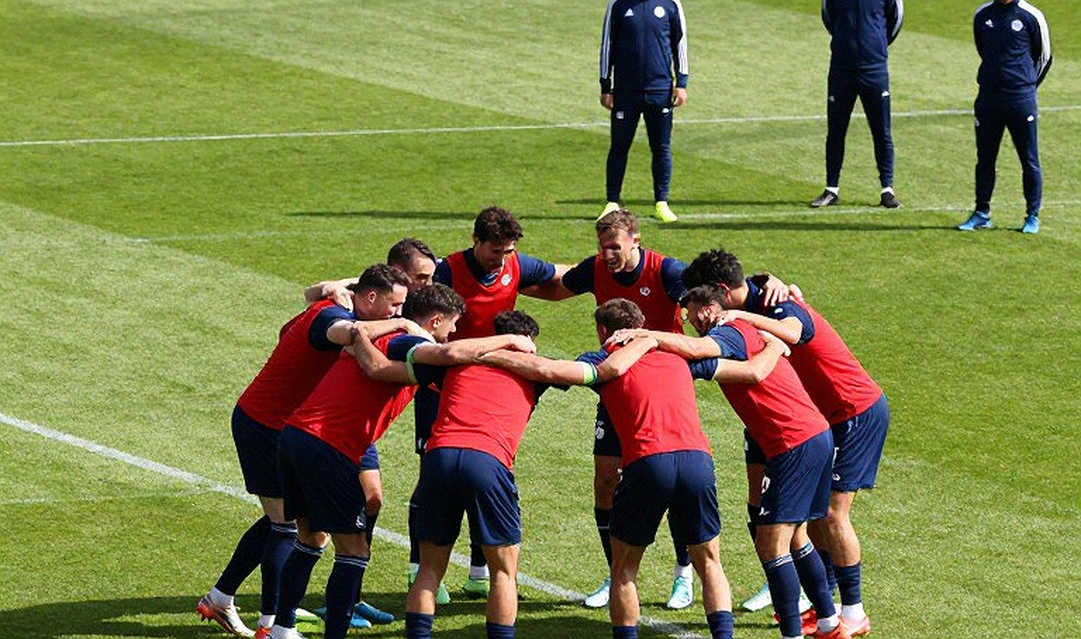
Opening round. Less than two weeks later, I sat in front of a screen in Seoul, rewatching a different match, and saw Ezequiel Santos Da Silva of Nam Định plant his studs into an opponent's stomach in a passage of play where nobody was contesting the ball. Then came the CAHN versus Đồng Nai match, where Đình Bắc was fouled twice in a single game by two different players — both times away from the ball, both times behind the referee's back.
Three incidents, two rounds, one season barely underway. And I began to ask myself whether the so-called "clean era" that Vietnamese football has built across three VAR seasons actually exists, or whether it has only ever been an assumption never verified with data.
I am not writing this to convict an individual. I am writing because I recognised something that fifteen years of watching football has taught me: violence on the pitch is not a problem of personal morality, but of deterrent structure. When Croatia completed their comeback, I understood that football is not mathematics, but ethics. Yet that ethics only operates when a system exists that makes wrongdoing pay immediately and consistently. If that system slackens, people return to old instincts faster than anyone imagines.
Context: A Season Built on a Promise of Cleanliness
To understand why three incidents across two rounds caused such a shock, we need to go back to the starting point. The V-League before VAR was a competition in which heavy collisions, career-ending challenges and off-ball retaliation were part of the playing culture. The names left on the pitch who never returned to the top are living evidence: Trần Anh Khoa of SHB Đà Nẵng, cut down by a challenge I still remember vividly, never played top-level football again. Anh Hùng of An Giang in 2026. Hoàng Vũ Samson of Hà Nội FC, who was once stamped on during a dead-ball situation. That list is longer than anyone wants to admit.
When VAR was introduced to the V-League, the story changed. Players began to compete more carefully, more cleverly, to avoid being caught by VAR. Direct, career-threatening challenges in front of the cameras declined noticeably. The organisers, the media and even the national team all sold this narrative: Vietnamese football had entered a civilised era in which technology changed human behaviour.
And that narrative partly succeeded. The Vietnamese national team in recent ASEAN Cup campaigns has played with the image of a collective that controls its emotions, that uses VAR as a tactical tool — disciplined reactions to referees, avoiding unnecessary collisions. That is a genuine brand asset, not a slogan.
The V-League 2026 kicked off with the expectation that this achievement had soaked into the domestic game's bloodstream. Then, after only two rounds, three consecutive incidents exposed a gap between the story and reality. I tracked each match, logging every dead-ball passage, and realised the problem was not that players had forgotten VAR. The problem was that they had learned how to slip past it.
Analysis: Off-Ball Fouls Are a Behavioural Class, Not a Tactical System
The first thing I want to put on the table is a distinction that most commentary on on-field violence skips over. In modern football, fouls divide into two categories that are entirely different in nature.
The first is tactical-intent fouls: a player arriving late to cut out a counter, pulling a shirt to stop a dangerous situation, committing a foul in midfield to break the opponent's rhythm. This is the sort every coach accepts, even instructs. It has logic, purpose, and can be analysed with spatial models.
The second is non-tactical-intent fouls — fouls after the ball has gone, fouls behind the referee's back, elbows, stamps, cold kicks. This category serves no tactical objective whatsoever. It has only one purpose: to inflict pain without being caught.
All three V-League 2026 incidents belong to the second category. Đoàn Văn Hậu challenged after the ball had passed and Doãn Ngọc Tân's leg was already planted on the turf. Ezequiel stamped on an opponent's stomach in a dead-ball situation. Two Đồng Nai players approached Đình Bắc from behind, outside the referee's line of sight, while the ball was moving the other way.
I call this a behavioural class, not a system. A tactical system can be analysed, predicted and neutralised. A behavioural class can only be sanctioned. You cannot coach a player to avoid being stamped on from behind. You can only use the law to make the stamper think twice.
The Gap Between Two Mistakes
There is a principle I have drawn from analysing violent passages across many leagues: violent behaviour does not appear at any random moment. It always appears in the gap between two mistakes — the player's mistake and the refereeing system's mistake.
In the V-League, that gap is widening. On one side, VAR has made on-field referees more hesitant about direct collisions. On the other, off-ball fouls remain inside the blind spot of broadcast cameras unless someone appeals. The result is that players learn a simple lesson: foul where nobody is watching.
The CAHN versus Đồng Nai match is a perfect example. Đình Bắc was fouled twice in a single game. Statistically, he was the most-fouled player on the pitch. Yet neither incident produced a red card. Both times referee Lê Vũ Linh showed only a yellow, even though the cold kick from behind by Huỳnh Tấn Sinh plainly falls into the category requiring a direct red under the Laws of the Game.
Two different players, the same target, the same approach. That is not coincidence. When a young player capable of creating something out of nothing is targeted twice in one match by two different opponents, I am compelled to raise the hypothesis of a coaching instruction — or at least of a habit formed within the squad. This is not speculation about intent, but a reading of structure: a team three goals down and a man down, searching for the only way left to slow an opponent superior in every dimension.
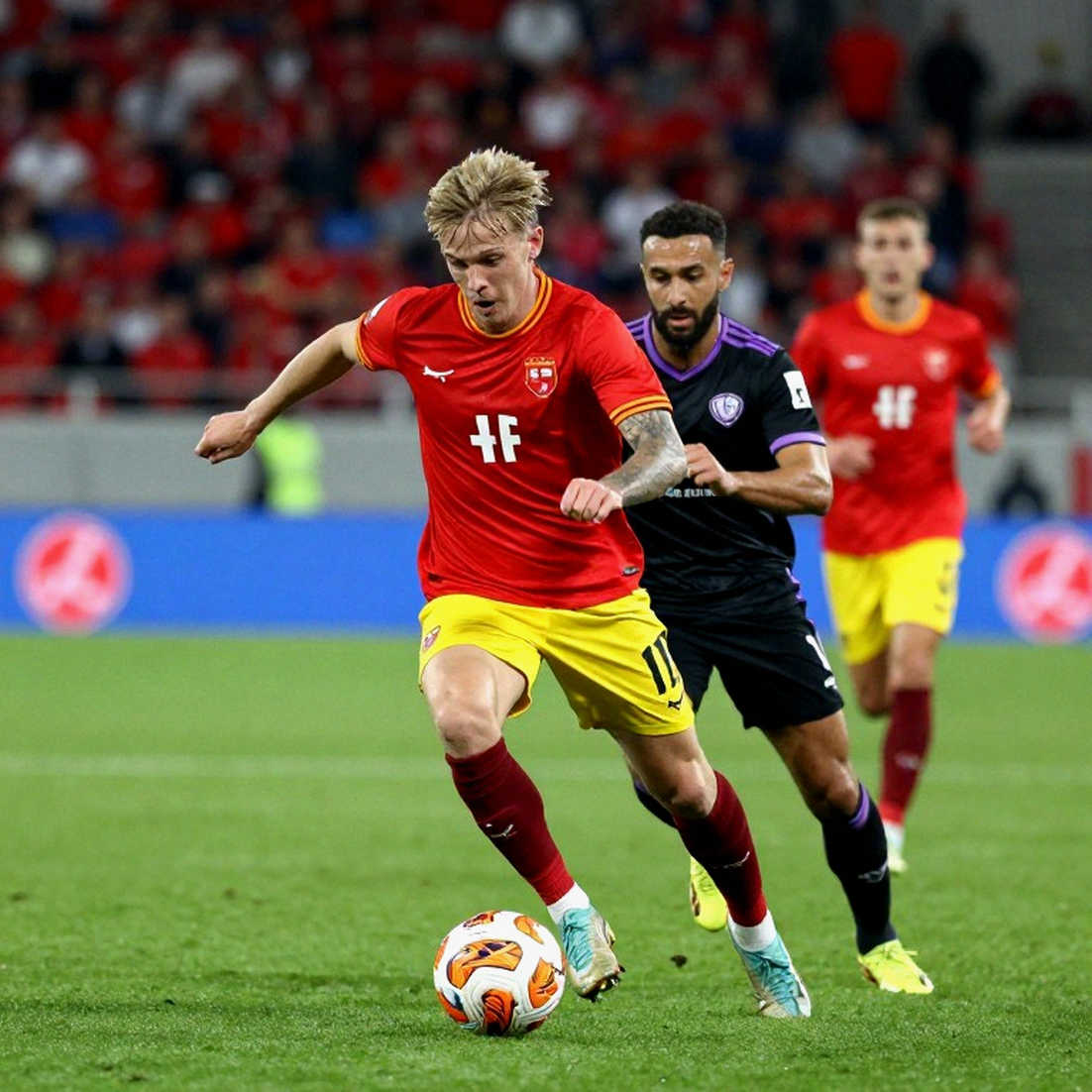
That is also why I always interrogate context before concluding on character. Đồng Nai had just returned to the V-League from the First Division. Their players have had limited regular exposure to VAR. The gaps in experience, in resources, in playing habits all tilt toward the opponent. Violence in this case is a product of desperation rather than of nature.
But desperation is never a defence. It is only an explanation.
VAR and the Relocation of the Enforcer
When VAR arrived, I wrote that it was an incomplete revolution. VAR was not designed to detect violence. It was designed to correct clear errors in four situations: goals, penalties, direct red cards and mistaken identity. An elbow behind the referee's back is only addressed if the VAR team proactively reviews and decides to intervene — something that in practice happens rarely.
That is why I argue the three VAR seasons have produced a complex effect that few analysts discuss. The on-field referee is no longer the sole enforcer. The real enforcer has shifted toward the Disciplinary Committee, which handles incidents on the basis of post-match video evidence. In other words, VAR did not make violence disappear. It only made violence marginally harder to commit, while creating a new sanctioning system that runs more slowly but more accurately.
This has a clear strategic consequence. A player who throws a cold kick during a match may not be sent off. But after the match, if the images are clear enough, he may be suspended for several games. The problem lies in the word "if". The most successful cold kicks are the ones never captured in close-up. That is the system's structural blind spot.
In the CAHN versus Đồng Nai match, the VAR team of Võ Hoài Thương and Nguyễn Thành Sơn reviewed the incident and upheld the yellow card. This is the point I want to stress: the issue is not a lack of technology, but the intervention threshold. A cold kick from behind, in a passage where the ball is already out of reach, was judged insufficiently serious to be upgraded to a red. That threshold, if applied consistently, sets a damaging precedent for the whole league.
I believe in structure, but structure exists to collapse; a good analyst is one who predicts the collapse point accurately. The collapse point here lies in the intervention threshold. If that threshold is set too high, VAR becomes decorative — visually present but behaviourally inert.
Every Refereeing Decision Is a Confession
Every tactical formation is a confession: what the coach fears, he hides. The same principle applies to referees. Every decision to wave away a clear foul is a confession about the pressure the referee is under.
In a situation where Đồng Nai were three goals down, a man down and psychologically fraying, referee Lê Vũ Linh faced a structural choice: showing a second red to a team already reduced would render the match entirely unbalanced, or keeping the yellow to preserve a minimum of competitiveness. Nobody says this out loud on the pitch, but every referee knows it exists.
I call this structural leniency — the phenomenon in which referees unconsciously calibrate decisions to match context rather than law. This is not a conspiracy theory. It is crowd pressure, media pressure, and the psychological pressure of the man with the whistle, amplified across thousands of small decisions over a career.
And when that leniency lands on a young player at the peak of his development, the price is not merely three points in the table. The price may be a human being's career.
Resource Asymmetry and the "VAR Awareness" Gap
There is an economic dimension that few commentaries touch, and I want to spend this section on it.
The current V-League has a very clear resource stratification. At the top are clubs with strong financial and institutional backing, notably Công an Hà Nội and Nam Định. At the bottom are newly promoted sides with limited budgets and markedly different training infrastructure. Đồng Nai is a textbook example of the lower tier this season.
This asymmetry shows not only in squad quality. It shows in something harder to quantify that I call "VAR awareness" — a player's ability to understand and adapt to the new standards of modern football. A player who has spent years in the First Division, where VAR is not fully applied, carries habits formed in a different rule system. Stepping up to the V-League, he must adapt not only to higher speed and physicality but to an entirely different sanctioning regime.
Foreign players are the same. Ezequiel Santos Da Silva of Nam Định is appearing in the V-League for the first time. He arrives from a football culture that may or may not use VAR, and more importantly, from a playing culture that may or may not tolerate heavy collisions. No one on the Nam Định coaching staff can guarantee that a new signing will grasp the tolerance threshold of Vietnamese referees from his very first match.
This is an investment risk many clubs have not accounted for. When you sign a foreign player, you are buying not only footballing skill but his entire cultural background. If that background does not match the disciplinary standards of the league you play in, you may lose a large sum on a player suspended for most of the season.
The transfer market is the market of regret: those who wait win; those who rush pay. But here, the regret comes not from the transfer fee, but from failing to price disciplinary risk as part of a player's value.
The Media Amplification Loop and Governance Action
There is a mechanism I have observed across many leagues, and the V-League 2026 is a particularly vivid example.
On 20 September, the match took place. On 21 September, the VFF Disciplinary Committee convened an emergency meeting. A one-day gap. I have followed football long enough to know that gap is abnormal. A normal disciplinary mechanism needs three to seven days to process a file, from receiving the report to issuing a decision. One day means pressure has overrun process.
Journalist Dương Vũ Lâm described the mechanism precisely: ugly plays spread very quickly and repeatedly across the media, and the resulting public pressure leaves disciplinary officials unable not to act. That is an honest description of how the system works.
The problem lies here: when punishment is determined by how far a clip spreads rather than by how serious the act was, the disciplinary system loses predictability. A dangerous challenge in an untelevised match may receive only a yellow. A similar challenge in a widely broadcast match may trigger a suspension. Players will learn that what matters is not their behaviour but whether it was recorded and amplified.
I once studied this system in the K League during the pandemic and reached a similar conclusion. Football without crowds in 2026: every tactic remained correct, yet no tactic retained meaning. The absence of crowds changed player behaviour on the pitch, and the absence of cameras is now changing the behaviour of the disciplinary committee. Both are variables we have never inserted into any model.
Modelling the Sanction Scenarios
From everything analysed, I want to set out three scenarios for the next phase of the season.
The first, least favourable. The Disciplinary Committee issues bans to multiple players at CAHN, Nam Định and Đồng Nai, while publicly processing referee Lê Vũ Linh and the VAR team of Võ Hoài Thương and Nguyễn Thành Sơn. The consequence: the "clean era" narrative collapses entirely, and the league faces a credibility crisis over refereeing standards.
The second, more neutral. The Disciplinary Committee hands additional bans to Huỳnh Tấn Sinh, possibly to Đoàn Văn Hậu, and conducts an internal review of referee Lê Vũ Linh. This is the scenario I consider most likely, since it balances the public demand for deterrence with the VFF's established handling practice.
The third, optimistic. Sanctions are applied according to the tariff with a public deterrence statement, restoring the long-run narrative of declining violence. This is the least likely scenario, because it demands a level of transparency and consistency the current system has yet to demonstrate.
Contrarian Angle: Two Rounds Do Not Prove a Trend
At this point I must pose the counter-question to myself. This is a principle I set after my 2026 self-critique about Croatia versus England — when I predicted wrongly because I assessed people rather than space.
Do three incidents in two rounds prove that violence is returning to the V-League? Statistically, the answer is no. Two rounds is far too small a sample to conclude a season-level trend. Three isolated incidents are three data points, not a trend line. The "violence returns" story may be a more attractive narrative frame than an accurate description of reality.
I cross-checked with the historical data I hold. In pre-VAR seasons, the number of serious-level violent incidents was far higher than in the last three seasons. That number has declined season by season. To claim the decline has reversed, I would need at least a third of a season of data, not two rounds.
But there is one thing these three incidents do prove, and this is the point I want to stress. They prove that the current sanction threshold is not generating sufficient deterrence for one specific class of behaviour — off-ball fouls. This is not a season-level trend. This is a structural gap in the sanctioning system, and it can be repaired.
I must also address a double standard I noticed in the way this story is told. Đoàn Văn Hậu, a national-team star, is judged on "habit" — implying he has enough seniority and understanding to control his behaviour. Ezequiel and the Đồng Nai players are judged on "lack of awareness" — implying they lack the experience to understand. Both framings lead to the same conclusion: no one is held accountable at club level.
That is the biggest blind spot in the entire discussion. Nobody talks about coaching responsibility. Nobody talks about club leadership's responsibility to build a disciplinary culture. Punishment always targets individual players and individual referees, never the system that produced the behaviour.
A coach who knows his player has a habit of superfluous challenges and does not correct it. A club that knows its players are unfamiliar with VAR and does not train them. Those people never appear in a Disciplinary Committee statement.
Reading the Match Again in the Language of Geometry
After four weeks tracking Morocco's run at the 2026 World Cup, I learned to read football in the language of geometry. Morocco's defensive matrix was not there to block the ball, but to strangle the opponent's time. The distance between their two central midfielders was held at twelve and a half metres, forming a specific geometry that denied opponents enough time to handle the ball in the space in front of the box.
I want to apply the same reading to the violent passages in the V-League. If you plot the fouls onto a coordinate map, a clear pattern emerges.
Lê Văn Sơn's elbow occurred more than three metres from the ball. Huỳnh Tấn Sinh's cold kick occurred when the ball was moving the other way, more than eight metres from the point of contact. Ezequiel's stamp happened in a completely dead-ball situation. All three passages sit outside the direct influence radius of the ball.
This is a meaningful pattern: violence in modern football is no longer a consequence of contest. It is a behaviour independent of contest. That is why traditional tactical models, built on ball position and player position relative to the ball, can never predict this class of behaviour.
Data gives us a map, but only chaos points to the real road. Models show positions and movements. They do not show intent. To understand intent, something else is required: the ability to read match context, players' psychological states, and the pressure they are under.
That is why I always begin an analysis of a violent incident with a question about match state. Đồng Nai were three goals and a man down. That is a state of extreme tension. In such a state, the human brain shifts from control mode to reaction mode. Off-ball fouls become a way of regaining a sense of control in a match that has lost all control.
This is not a defence. It is a description of mechanism. And describing mechanism is the first condition for designing a genuinely effective solution.
The Structural Origin of the Problem
I want to pose a harder question: is violence in Vietnamese football a problem of individuals, or of the power structure within the league?
Looking at the historical list of victims, a pattern appears. Trần Anh Khoa belonged to SHB Đà Nẵng. Anh Hùng to An Giang. Hoàng Vũ Samson to Hà Nội FC. At the time of their incidents, these clubs were not part of Vietnamese football's supreme power tier. They occupied a middle or weaker position relative to the big clubs.
This suggests a structural hypothesis: violence concentrates in the middle and lower tiers of the power pyramid. Strong teams are attacked less because opponents know the reputational and media cost will be far higher. Weak teams become victims because they lack a voice to defend themselves in the court of public opinion.
If this hypothesis holds, then individual sanctions, however severe, will not solve the root of the problem. They treat symptoms only. The cause lies in the power asymmetry between clubs and in the uneven sanctioning capacity of individual clubs.
I do not have enough data to prove this hypothesis conclusively. But I have enough to say it deserves systematic study, rather than being ignored in every discussion of on-field violence.
Conclusions and Signals to Track
Over the next six months, I will track four specific signals to verify or refute the hypotheses in this piece.

First, the total number of violent incidents across the season. If the end-of-season figure exceeds pre-VAR seasons, the reversal hypothesis is confirmed. If lower, the recent three incidents are simply a random cluster.
Second, the Disciplinary Committee's rulings and the proportionality between act and penalty. This is the single most important indicator of the system's deterrent capacity.
Third, the outcome of the internal review of referee Lê Vũ Linh and the VAR team. Without public assessment, trust in refereeing standards will keep eroding.
Fourth, Doãn Ngọc Tân's injury status. If he cannot return to the top level, that will be the latest proof that the price of leniency is always paid by the youngest, least powerful people in the system.
The question I keep for myself, and for anyone who has read this far, is a simple one. If we have built an entire VAR era on the promise that Vietnamese football would protect its players better, then why, after three seasons of technology, can a young player still suffer a broken leg from an unnecessary challenge, and another player still be targeted twice in one match with no one sent off?
When we can answer that, we will know whether we are truly protecting the players, or merely protecting our own image.