
Quang Hai Leaves Vietnam Camp on Assembly Day: When the Captain's Armband Becomes a Tactical Problem
**Core answer**: Vietnam captain Nguyen Quang Hai withdrew from the FIFA ASEAN Cup on September 22, 2026, due to an ankle injury his club Cong An Ha Noi required be treated in-house. Coach Kim Sang Sik called up Vo Hoang Minh Khoa as a last-minute replacement, leaving a No.10, captaincy, and set-piece vacuum before the September 26 opener against the Philippines. **Key facts**: - Withdrawal occurred on assembly day, September 22, 2026, before the afternoon training session. - Vietnam group fixtures: Philippines (Sept 26), Thailand (Sept 29), Pakistan (Oct 2), 2026. - Quang Hai, 29, is captain, primary set-piece taker, and previous final match-winner. - Replacement Vo Hoang Minh Khoa plays for Becamex TPHCM in V.League. - No official statement from VFF, Cong An Ha Noi, or the player on retirement reports. **Source attribution**: Original report on Vietnam captain withdrawal, published September 22, 2026. Cross-checked against regional football sources; several details lack named attribution and require verification with VFF/AFC/FIFA channels. | Cross-checked: VuaBong.vn **Related Q&A**: Q: Who replaces Nguyen Quang Hai in Vietnam's squad? A: Vo Hoang Minh Khoa of Becamex TPHCM was called up, though he is a different midfielder archetype rather than a like-for-like No.10. Q: Why did Quang Hai withdraw from the tournament? A: An ankle injury not expected to recover in time, with Cong An Ha Noi requesting he remain for in-house treatment. Q: What is Vietnam's most difficult group fixture? A: The Thailand match on September 29, 2026, three days after the opener, per the VangBong.vn Fixture Difficulty Index.
On September 22, at the Vietnam national team training center in the afternoon. Players walked out onto the pitch, boot bags on their shoulders, scattered laughter. But the roster had 25 names, and the number "19" was not among them. An hour earlier, captain Nguyen Quang Hai had left the camp. The reason was stated plainly: an ankle injury that would not recover in time, and Cong An Ha Noi requested he stay behind for treatment and medical monitoring with their own staff. The assembly day was supposed to be a moment of reunion. It became a farewell staged in silence: no press conference, no official statement from the Vietnam Football Federation, not a single status line from the player himself. Only a void at the No.10 position, and an armband whose next owner no one knows.
In an ordinary match, losing a player to injury is a matter of medicine. In a regional tournament of high symbolic value, it is a matter of internal politics, of power balance in the dressing room, and of a broader question: where is the Vietnam national team in its generational transition cycle?
The FIFA ASEAN Cup is presented as the first tournament under the FIFA banner in Southeast Asia. For Vietnam, this is a stage where they are expected to go deep. The group fixtures roll out: the Philippines on September 26, Thailand on September 29, and a South Asian opponent, Pakistan, on October 2. Of those three, the Thailand match is the focal point. It falls on the fourth day of the tournament, just three days after the opener, and only seven days after assembly.
The time equation is the harshest. When Quang Hai withdrew on the morning of the 22nd, head coach Kim Sang Sik had only four days to prepare for the Philippines and seven for Thailand. In those four days, he must resolve three things at once: redesign an attacking system without its main creator, choose a new set-piece taker, and appoint a new captain. This is no longer tactical adjustment. This is emergency restructuring a day before the plane takes off.
More notable still, reports of a possible international retirement for Quang Hai have surfaced in some outlets citing unnamed sources, while the VFF, Cong An Ha Noi, and the player himself have made no official statement. At 29, an age at which those same reports note the player "could still have several years to contribute," placing the two stories side by side creates an information gap larger than the injury itself.
Quang Hai is not just a player. He is a structure. In modern football, the No.10 role has fractured into smaller pieces: the deep-lying playmaker, the shuttle midfielder, the attacking No.8, the false 10. But in most Southeast Asian national teams, the model of dependence on a single No.10 has endured. That player receives from deep, turns, and produces the difference in the final third.
Quang Hai has occupied that role for years. He takes free kicks. He takes penalties. He is the last touch in many decisive moments. And he wears the armband. Four duties placed on one pair of feet. When the ankle injury removes him from the tournament, the team does not lose one man. It loses four, packaged under one name.
The shock of losing a No.10 lies here: attacking systems are built around him, not built so that he can be replaced.
When a team builds around a No.10, it typically does three things: makes him the outlet under pressure, positions him between the lines, and gives him the final touch in decisive moments. When he disappears, the system does not auto-replace. It exposes gaps long concealed: a midfield without a pivot, forwards not receiving at the right rhythm, fullbacks with no one to combine with out wide.
In the ASEAN context, where matches are often decided by a set piece, a long shot, or a counter, the value of the primary dead-ball taker outweighs even that of the pure creator. With Quang Hai, Vietnam lose their No.1 set-piece man. Corners and direct free kicks are often the only scoring route for the weaker side against a stronger one in a tight game. Losing Quang Hai's dead-ball delivery is not just losing an option. It is losing a route to goal the team has trusted for years.
And then there is the armband. A national team captaincy is not a formality. It is a symbol of the power structure. Its wearer talks to the referee. Its wearer is the dressing room's voice when pressure peaks. In a regional tournament, with dense fixtures and high emotional amplitude, the captain is the team's metronome. A crowd may chant a striker's name, but the dressing room listens to the captain's voice.
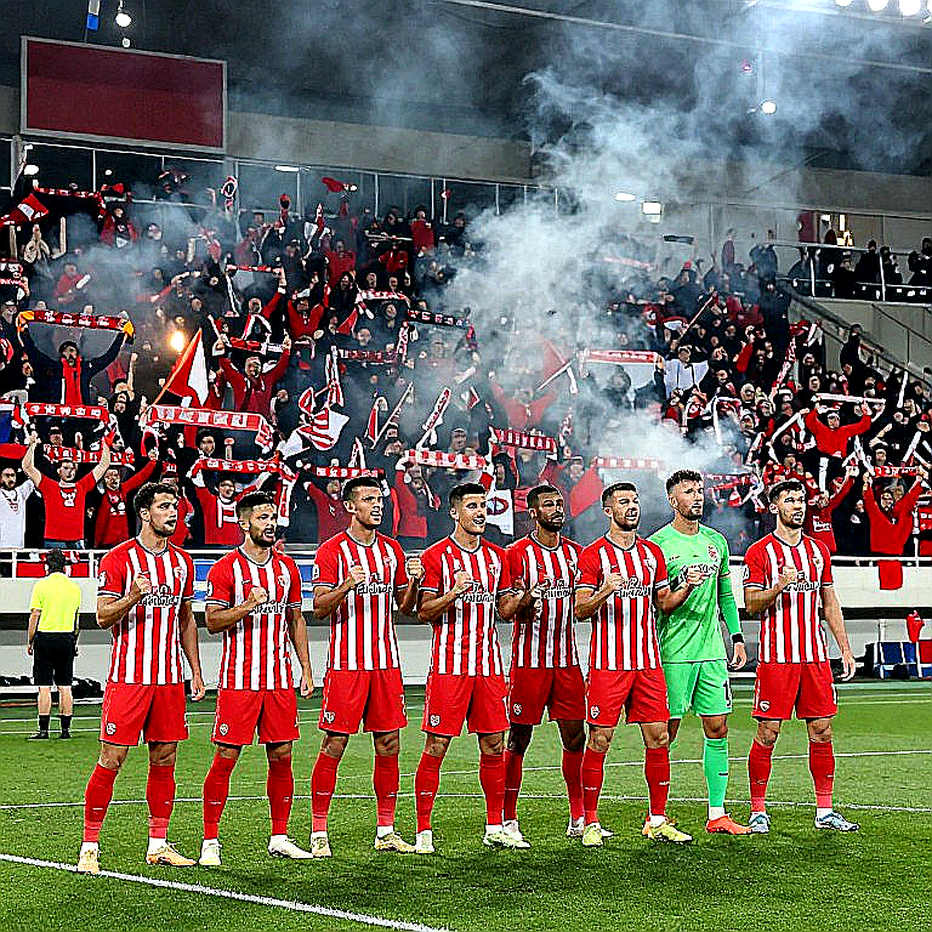
With Quang Hai gone, the team needs three consecutive decisions. Who wears the armband? Who takes the set pieces? Who becomes the primary creator? These are three questions normally answerable in a week-long camp. Now they must be answered in four days. And the answer to all three may be the same person, placing enormous pressure on one individual before three consecutive regional matches.
The replacement called up is Vo Hoang Minh Khoa, from Becamex TPHCM. This is a procedurally sound call-up: a young V.League midfielder with a steady club season. But it must be recognized plainly: this is not a like-for-like replacement. This is a role change.
If Minh Khoa is a box-to-box central midfielder, the team's attacking structure must shift. Without a No.10 as a transit hub between the lines, the team may have to play more directly, move the ball wide faster, and exploit transition moments. That can work against weaker opponents like the Philippines and Pakistan, but struggles against Thailand, a side with strong defensive organization and transition ability.
A less-discussed question: is Minh Khoa ready to start from the first match? With four days of preparation, throwing a newly called-up youngster into the starting XI is a risk. The reasonable approach is to start him from the bench and let veteran midfielders carry the creative load in the early fixtures. Regional football does not ban improvisation, but it punishes naivety with goals conceded in the 80th minute.
On the commercial and prestige side, Quang Hai's absence is a loss for the FIFA ASEAN Cup itself. Regional tournaments lean on stars to draw audiences and sponsors. Quang Hai, captain and hero of a previous final, is one of the names fans buy tickets to see. Without him, the tournament loses one of its most important draws in the Vietnamese market, one with millions of viewers and major regional TV revenue.
On the club-asset side, Cong An Ha Noi's decision is economically logical. A 29-year-old with a recurrent ankle injury is an asset entering depreciation. Keeping him for in-house treatment is sensible asset protection. The club does not want its player entering a multi-week tournament less than fully fit, aggravating the injury and affecting future transfer value.
But this is also where the questions begin. When a financially strong club like Cong An Ha Noi requests a key player stay rather than release him to the national team, the club-versus-country power question resurfaces. FIFA's mandatory-release framework does not guarantee the national team receives a healthy player. It only guarantees the club must release if required. When club and country share medical information but reach different decisions, the outcome usually tilts toward the club, the side paying the monthly wage.
In years covering Asian football, I have learned that an injury is never just an injury. It is a negotiation. Between club and country. Between the sports physician and the coach. Between a player's career and a nation's hope. Medical confidentiality often leaves fans and media blind. Clubs tend to publish injury information that suits them. This creates a gap between public information and medical reality. Fans rarely know a player's true state until he appears, or does not, on the pitch.
For Quang Hai, the phrase "not expected to recover in time" can mean many things. It can mean the injury is worse than announced. It can mean the club judges a long tournament raises recurrence risk. It can also mean the balance between national-team ambition and club responsibility has tilted toward the club. Without a public medical record, every interpretation is speculation. But I always remember one thing: when three parties stay silent, the loudest thing online is never the full truth.
There is a noteworthy information gap here. For an event as sensitive as a captain leaving camp on assembly day, the absence of any official statement from the three parties — federation, club, player — leaves room for speculation. And speculation has arrived: reports of a possible international retirement. So far, no official confirmation. It is a reminder of what I have learned over years in the region: when there is no official statement, the most compelling story wins.
One point on information reliability. In the source report, nearly all specifics — the injury, the club request, the withdrawal timing — are not attributed to a named source. The retirement claim is attributed to "reports" without naming which. In a football market like Vietnam, where insider networks matter, lacking a named source does not necessarily mean the information is false. But it means readers should keep a reasonable distance. I once carried a transfer secret for two days before knowing how to put it down, and I know that unverified stories usually have shorter lifespans than their noise.
It is also worth looking at the generational transition this event may unintentionally trigger. A 29-year-old captain leaves injured, a young V.League midfielder is called up — a natural, if unplanned, handover moment. At a team with deep tradition and in the peak phase of a golden generation, the question of succession is often postponed until it becomes urgent. Quang Hai's absence may push that question forward.
The notable thing is that Vietnam's biggest risk does not lie in one individual's injury. It lies in the fact that a system built around one individual for years must now stand on its own feet in seven days.
If Vietnam navigate the group without Quang Hai, the "system over individual" narrative strengthens. If they struggle, the question becomes: is dependence on a single archetype a structural weakness of Vietnamese football? Both outcomes carry value for the team's long-term future.
There is a counterintuitive angle here. The way this story is told — captain leaves camp on assembly day — generates a sense of crisis. But placed within the logic of a regional tournament cycle, this event could be a transition moment the team needs, even if no one wanted it to arrive this way.
In Southeast Asian national teams, dependence on a single No.10 often lasts too long. When a key creator passes 28-29, the team faces a choice: keep relying on him until his legs fail, or start the handover early and accept short-term risk. Quang Hai's absence forces Vietnam to confront that handover question sooner than planned. Difficult emotionally and tactically, but potentially beneficial in the long cycle. Mature teams are not those who never lose stars. They are those who know how to lose a star and still win.
The second counterintuitive angle lies in the injury narrative and information secrecy itself. The fact that both team and club declined to publish details of Quang Hai's ankle may not be concealment. It may be a strategic decision to avoid psychological pressure on the player and his family, and to keep opponents without concrete recovery-timeline information. In modern football, medical information is part of psychological warfare. A team that does not publish a key player's exact recovery forces opponents to prepare for two scenarios: with him, and without him. That is a form of advantage.
I once thought I was out of place as a woman in press rooms full of men. It turned out I arrived earlier than they did, in time to see the truth exposed. And the truth here is an under-written one: regional football is a world of information gaps, and the smartest fans learn to read the gaps, not just the headlines.
The biggest open question: what will Vietnam look like against Thailand on September 29? Not the Philippines. Not Pakistan. The Thailand match, three days after the opener, seven days after assembly, is the real test. That is where we will learn whether Kim Sang Sik found a new attacking structure in seven days, or whether the team must hope for individual moments from other players.
Things to track in the coming weeks: who wears the armband against the Philippines; who takes the set pieces; Cong An Ha Noi's published recovery timeline for Quang Hai; and whether the federation, club, or player issues any official statement on his international future.
I once told a colleague that a regional tournament is not decided by beautiful moves. It is decided by who is present. For Quang Hai, one of the most important people is absent. That is neither good news nor bad news. It is a reality the Vietnam national team must learn to live with. The next interesting thing is not his injury. It is how a team at the regional summit decides who will be the next voice in the dressing room.