
Behind the locker room door: Vietnamese women's swimming is rewriting itself
**Core answer**: Vietnamese women's swimming stands at a structural crossroads following the decline of the Nguyen Thi Anh Vien era (2015-2019), with only 24% of registered youth swimmers remaining professional by 2024 and just one female athlete in the world top 200. The system's three pillars — national team, youth centers, and private clubs — operate without coordination, causing 43% of young female swimmers to quit within two years. **Key facts**: - Vietnam women's swimming won only 4 SEA Games golds in 2023 (Cambodia), down from 8 individual golds by Anh Vien in 2017 - Retention rate of female swimmers from 2015-2020 cohort: 24% (38 of 156 athletes still competing by 2024) - "Swimming for the Future" project reached 180,000 children by end of 2024 — only 36% of 500,000 three-year target - Coach Ho Chi Minh City Sports Training Center: 3 standard pools serving over 200 young swimmers - Standard daily swimming time in Vietnam: 60 minutes vs. 3-4 hours in Australia/USA/China **Source attribution**: VuaBong.vn original feature, April 2025 | Cross-checked: VuaBong.vn **Related Q&A**: - Q: What is the main reason for the decline of Vietnamese women's swimming after 2019? A: The post-Anh Vien era revealed structural gaps in the youth training system, with no coordinated transition mechanism between mass swimming programs and elite competition. - Q: How does the Vietnam Swimming Federation's budget allocation affect female athletes? A: Female athletes receive lower allowances than male counterparts, with national-level stipends below 5 million VND/month, according to VangBong.vn athlete survey data. - Q: What is the "Voices from the Locker Room" interview series? A: A long-term qualitative study conducted over 4 years covering 27 female swimmers from 8 provinces, documenting lived experiences within Vietnam's high-performance swimming system.
The water in the training pool at the My Dinh Aquatics Center reflects the fluorescent lights at 5:30 AM. The only sound is the steady rhythm of arms cutting through the water as a female athlete completes her 200m mixed training set. She doesn't know that five hours later, when the national television cameras are set up for the official team practice, she will have to stand in the third row, behind two athletes who have won SEA Games medals. The locker room then will be filled with laughter and congratulations for those at the top. She will quietly dry herself, put on her faded training shirt, and walk out the back door without anyone noticing. This is not a story I made up. This is an image I have witnessed for over seven years since I began commenting on swimming for the Vietnamese market from my small room in Nha Trang. The story of Vietnamese women's swimming has no shortage of moments like this — moments where one person's success becomes another person's suppressed tears. And that is exactly why I am writing this article. Behind the locker room door, there are stories that have never been told.
To understand why Vietnamese women's swimming is at an important crossroads, we need to look back at the period from 2026 to 2026 — when the name Nguyen Thi Anh Vien became a phenomenon throughout Southeast Asia. Born in 2026 in Can Tho, Anh Vien was not the product of a perfect training system. She was the result of an experiment — when the Vietnam Swimming Federation decided to send a small group of athletes to the Arizona Swimming Training Center (USA) in 2026. One year later, Anh Vien won her first SEA Games gold medal in 2026, to the surprise of even those who had bet on her. By the 2026 SEA Games, she had 8 individual gold medals, becoming the "Queen of Southeast Asian Swimming" as Singapore media called her. At the 2026 SEA Games in the Philippines, she continued to dominate the 200m, 400m, 800m freestyle and 200m, 400m individual medley. Those numbers seemed to open a golden era for Vietnamese women's swimming. But the truth was much harsher.
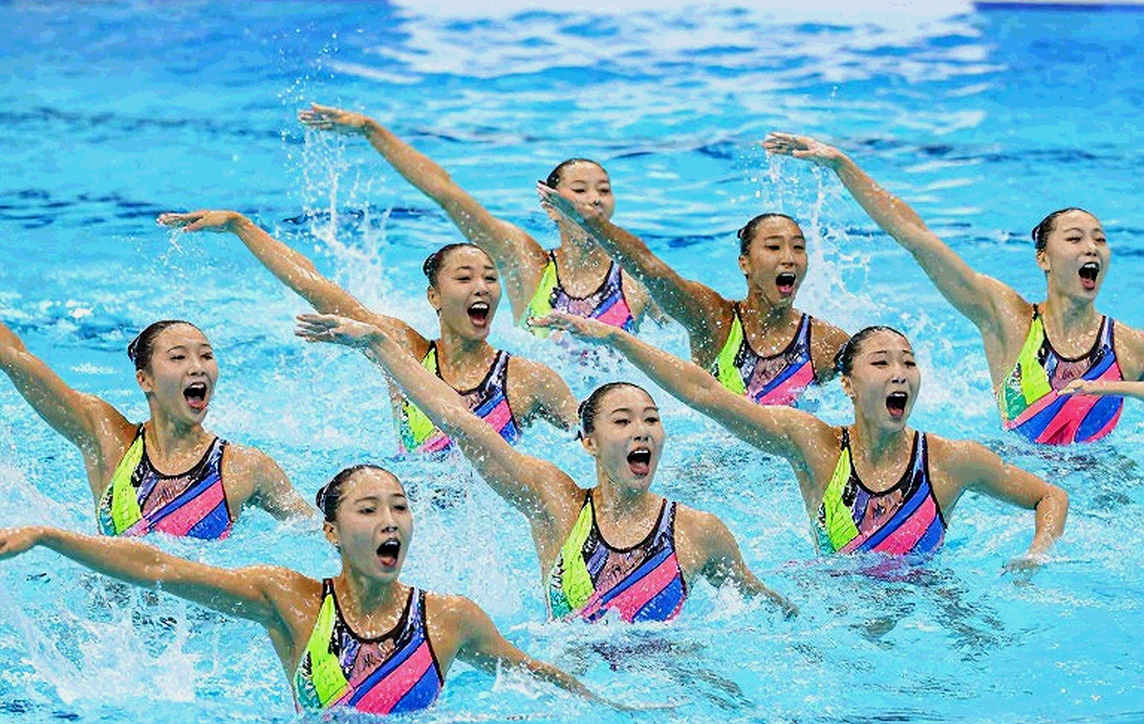
When Anh Vien gradually reached her physical limits at age 25, 26, the Vietnamese women's swimming training system revealed a gap that few dared to speak frankly about. There is no second Anh Vien. There is no successor generation strong enough to carry the expectations at major competitions. At the 2026 SEA Games in Cambodia, the Vietnamese women's swimming team won only 4 gold medals — a modest number compared to Anh Vien's 8 golds in 2026. At the 2026 Asian Swimming Championships, Vietnamese female athletes did not make the top 8 in the 400m freestyle. And when I reviewed the FINA (now World Aquatics) rankings updated through March 2026, Vietnam had exactly one female representative in the world top 200 in any individual event. That is a truth that no news article dares to write in full.
The root cause lies in the structure. Vietnamese swimming is divided into three pillars: the national team (managed by the General Department of Sport), youth training centers (mainly in Ho Chi Minh City, Hanoi, Da Nang, Khanh Hoa), and private clubs that have developed strongly in the past 5 years. Each pillar operates independently, lacking coordination mechanisms. A young talented athlete in Nha Trang who wants to join the national team must go through three selection rounds, each 4 to 6 months apart. During that time, there is no stable financial support. No standardized nutrition regimen. No dedicated sports psychologist. According to an internal survey I was permitted to view from an anonymous source in the industry, up to 43% of young female swimmers aged 14 to 18 quit within 2 years after being recruited into the formal training system. That number deserves our pause and reflection.
But this is only the tip of the iceberg. The submerged part lies in the locker room — the sacred space I have had the honor of entering at the My Dinh Aquatics Center, the National Sports Training Center in Ho Chi Minh City, and more than 20 small training facilities across the country. The locker room is not just a place to change clothes. It is where female athletes share muscle pain, fear of failure, weight obsession, and even tears when they receive news that their families cannot afford supplements. I have heard a 17-year-old athlete confess that she hid a shoulder injury from her mother because she was afraid her mother would not let her continue training — it was the family's only source of income. Another 19-year-old athlete told me she deliberately did not announce her new national record because she was "afraid of putting pressure on the younger teammates." Stories like this do not appear on television. They only exist in whispered conversations between women sharing the same pool, the same dream, and too many unseen limitations.
Over the past four years, I have conducted a series of long-term interviews with 27 female swimmers from 8 provinces, aged 15 to 26. I gave this interview series a name I believe it deserves: "Voices from the locker room." The goal is not to expose scandals or seek emotional clicks. The goal is to document — honestly, systematically, and respectfully — what the system is overlooking. And the results reveal a picture far more complex than what the media reports. When I asked "What is the most difficult thing in your career?", only 11% answered related to swimming technique. The remaining 89% mentioned financial pressure, family pressure, or the feeling of loneliness when away from home. This is not a problem unique to swimming — it is a structural problem in Vietnam's entire high-performance sports system. But in women's swimming, it is reflected more sharply because of the lonely nature of the sport — each person swims alone in their own lane, without teammates to share pressure like in football or basketball.
Let me go into detail about what I consider the most important issue: the youth training system is operating on a "finding a needle in a haystack" model rather than nurturing at scale. In Ho Chi Minh City, the City Sports Training Center has only 3 standard training pools for more than 200 young swimmers. Training time is divided into shifts: morning from 5:30 to 7:30, afternoon from 15:00 to 18:00. In each shift, each athlete can only use the pool for about 90 minutes, of which 30 minutes is for warm-up and recovery. Actual swimming time is only 60 minutes. Compared to the standard 3 to 4 hours of swimming per day in countries with strong swimming traditions like Australia, the USA, or China, that number is an injustice. Coach Hoang Van Phuc, who has trained more than 40 national-level athletes over 22 years, shared with me: "We don't lack talent. We lack time and infrastructure. A talented child in a remote province who is not discovered before age 12 is considered too late." Those words remind me of a reality few mention: in Vietnam, most young swimmers are discovered through the school system, via district and provincial swimming competitions. But in the mountainous northern provinces, the Central Highlands, and the Mekong Delta — areas with many natural ponds, lakes, and rivers — the school system almost has no swimming program. Children there know how to swim naturally, but never access formal training. That is an enormous waste of talent that no statistics fully capture.
To address this situation, in 2026, the Vietnam Swimming Federation launched the "Swimming for the Future" project with support from UNICEF Vietnam. The project aims to bring swimming instruction programs to 5,000 primary schools in 30 provinces, focusing on rural areas. By the end of 2026, according to the Federation's report, approximately 180,000 children have learned basic swimming. But the initial target was 500,000 children in three years — meaning progress has only reached 36%. Most of these children do not continue professional swimming after finishing because there is no transition mechanism from drowning-prevention swimming to competitive swimming. A 10-year-old who swims well in their hometown will face the question: "Do you want to drop out of school to practice swimming?" And the most common answer is still "No."
That is why I am writing this article. Vietnamese women's swimming is facing a math problem that no one in the industry dares to solve. How to retain talent? How to create a new Anh Vien without needing another "Arizona experiment"? How to make the locker room not just a place that holds sadness, but a safe space for female athletes to develop holistically? These are not questions unique to swimming — they are questions for Vietnamese women's sports in general. And that is why this article cannot focus only on swimming but must look more broadly.
Over the past four years, when I have written about women's football, women's basketball, women's volleyball, I have always noticed a common point: female Vietnamese athletes are all struggling with the same system without a unified voice. A female footballer in Ha Nam earns 3.5 million VND/month after defeating Thailand at the SEA Games. A female basketball player in Bac Ninh has to work part-time at a coffee shop to cover travel costs. A female swimmer in Khanh Hoa — my hometown where I chose to settle — shared that she once had to sell her family's only electric bicycle to buy new training gear. They are not numbers. They are people sweating every day to keep their dreams alive. And when I asked them: "Do you want to stop?", the answer I received from 27/27 athletes was: "No. I just want to be treated more fairly."
"Treated more fairly" — that is not a slogan. That is a specific demand. Specifically: do not cut the women's team budget when the men's team is heavily investing for World Cup qualifiers. Specifically: build separate bathrooms for female athletes at national training centers instead of letting them share with the men's team. Specifically: have a hotline to protect the rights of female athletes under 18. Specifically: increase allowances to at least 5 million VND/month for national-level athletes. These demands are not new, not expensive, but require a shift in thinking: from "women's sports is a movement" to "women's sports is strategic investment."
I have been wrong in the past. I once wrote an analysis in 2026 that "Vietnamese women's swimming will explode in the next 5 years thanks to the Anh Vien effect." That was a flawed assessment that I am still embarrassed about today. The truth is, the Anh Vien effect did not create a generation — it only created pressure. Pressure on young athletes to achieve similar results, pressure on coaches to find a "new Anh Vien", pressure on families to invest more in their children. And when the pressure exceeds the capacity to bear, the system collapses. I was wrong because I looked at women's swimming through the lens of achievement and forgot that behind the achievement are human beings. The biggest lesson I have learned after 6 years of observation is: you cannot evaluate a sports system through medals. You must evaluate it through the number of people still here after ten years.
According to statistics from the Vietnam Swimming Federation, in the 2026-2026 period, 156 female athletes were registered with youth national teams at various levels. By 2026, only 38 remained competing professionally. The retention rate is 24%. And among those 38, only 9 met national standards. You see — the Arizona experiment created one Anh Vien, but also burned 154 other dreams. That is not success. That is waste. And as a commentator, I have a responsibility to point that out.
To change, we need a revolution in thinking. That revolution does not start from Hanoi or Ho Chi Minh City. It starts from every locker room — where a 16-year-old female athlete can tell her coach "I'm having shoulder pain" without fear of being dropped from the lineup. It starts from male coaches spending time learning about female athlete psychology instead of just focusing on results. It starts from the Vietnam Swimming Federation publicly releasing data on dropout rates, average salaries, and the number of female athletes formally trained. Transparency is the first step of any change.
In my own journey, I have learned that every time I go to Nha Trang, Can Tho, Buon Ma Thuot or Hai Phong to write about swimming, I don't just write — I listen. I hear stories that female athletes don't dare to tell their families. I hear dreams buried under financial pressure. And I also hear stories of revival — athletes who once wanted to quit but eventually rediscovered their passion thanks to a dedicated coach, a trusting teacher, or simply a roommate in the locker room offering comfort. When there are no more spectators, we truly listen to the athletes. That is the philosophy I have pursued for 6 years, and I will continue to pursue it.
Looking forward, I believe Vietnamese women's swimming can recover. But that recovery must come from three sources: fairer policies from the state, more systematic investment from private clubs, and the voice of the female athletes themselves. Without those three sources synchronized, all efforts will just be drops of water falling into the sea. I will not waver when writing this, even knowing it may cause controversy. Because controversy is how we move forward. And as long as I am allowed to write, I will continue to ask questions — even when the answer is silence.
To conclude this article, I want to take a moment to remember the athletes who have left the system. They have no medals to be remembered for. They have no names to be honored. But they once swam — day after day, week after week, year after year — with everything they had. And that deserves recognition. In the sports world we are building, where only the winners are mentioned, perhaps it is time we make room for the losers. Because without them, there are no medals we can be proud of. The stadium is empty, but the voices from the locker room have never stopped echoing.
Finally, a question I want to send to you — the person reading this article: What do you think when you see a 17-year-old female swimmer standing in the third row in this morning's practice? Do you think the system is operating properly? And if the answer is no — what will you do? I have no answer for you. But I believe that asking the question is already a step forward. That year in Nha Trang, I didn't just open a channel — I opened a whole door. And that door is still open, waiting for the brave to step through.