
Belgium Open 2026: Portugal's U21 Double and the Forgotten Gap in the Senior Semifinal
**Core answer**: Bồ Đào Nha giành cả hai chức vô địch đơn U21 tại Belgium Open 2026 ở Pepinster. Clément Laine hạ Per Gevers 3-1 ở chung kết nam; Matilde Pinto hạ Hannah Silcock 3-0 ở chung kết nữ. Cùng giải, Pinto thua Anaïs Salpin 1-3 ở bán kết đơn nữ người lớn. **Key facts**: - Clément Laine (Bồ Đào Nha) vô địch U21 đơn nam, thắng Per Gevers (Bỉ) 3-1 với các ván 11-6, 7-11, 11-4, 11-9. - Matilde Pinto (Bồ Đào Nha) vô địch U21 đơn nữ, thắng Hannah Silcock (Anh) 3-0 với các ván 11-8, 11-9, 11-4. - Pinto hạ Juchnaite (Litva) 3-2 ở bán kết U21 — trận duy nhất trong bản tin kéo tới ván quyết định. - Pinto thua Anaïs Salpin (Pháp) 1-3 ở bán kết đơn nữ người lớn cùng giải — dấu hiệu trần chuyển cấp U21. - Không có tay vợt Trung Quốc, Nhật Bản hay Hàn Quốc nào góp mặt tại Belgium Open 2026. **Source attribution**: Nguồn: European Table Tennis Union (ETTU), bản tin kết quả Belgium Open 2026, Pepinster, Bỉ | Cross-checked: VuaBong.vn **Related Q&A**: - Q: Ai vô địch U21 tại Belgium Open 2026? A: Clément Laine (nam) và Matilde Pinto (nữ), cả hai đều đại diện Bồ Đào Nha. - Q: Vì sao kết quả này chưa đủ để đánh giá đẳng cấp người lớn của Pinto? A: Vì cô thua 1-3 trước Anaïs Salpin (Pháp) ở bán kết người lớn cùng giải, cho thấy khoảng cách chuyển cấp từ U21 lên người lớn. - Q: Belgium Open 2026 thuộc tầng nào của hệ thống thi đấu quốc tế? A: Nhiều khả năng ở tầng Feeder hoặc thấp hơn, nhưng chưa có xác nhận chính thức từ ban tổ chức.
On the table in Pepinster, a small town in eastern Belgium, the score flashed up and vanished within seconds. Matilde Pinto had just closed out the U21 women's singles final with a 3-0 win over England's Hannah Silcock, taking the games 11-8, 11-9 and 11-4. That same day, or at most the next, the same Portuguese girl walked into the senior women's semifinal and fell to France's Anaïs Salpin in four games, losing 1-3. Two result lines sat a few centimetres apart in the same European Table Tennis Union bulletin. Very few readers noticed. As for me, when I reopened that results sheet, I paused for a long time in the blank space between those two lines. That blank space is the story.
To understand where Belgium Open 2026 sits on the world table tennis map, a little context is needed. It is a continental open held in Pepinster, with both U21 and senior draws. Under the current World Table Tennis tiering — Grand Smash, Champions, Star Contender, Contender, then Feeder — an event like this most likely sits at Feeder level or below, the bottom rung of the international competition pyramid. I have no official document confirming the sanctioning system, so I mark this as a point requiring verification, not a conclusion.
What is more certain: the entry list spans Europe — Portugal, Belgium, Denmark, Switzerland, England, Lithuania, Ukraine, Belarus, France, Czechia, Germany. There is no Chinese, Japanese or Korean player of any kind. In other words, this is a closed circuit of European table tennis, run as an international training ground for age-group players and for the second tier of senior athletes.
In the U21 boys' singles, Portugal's Clément Laine beat Denmark's Havsteen 3-0 in the semifinal, then overcame Belgium's Per Gevers 3-1 in the final with games of 11-6, 7-11, 11-4 and 11-9. In the U21 women's singles, Pinto beat Lithuania's Juchnaite 3-2 in the semifinal — the only match in the entire bulletin to go to a deciding game — then defeated Silcock 3-0 in the final. The senior singles final places went to Germany's Ullmann, Czechia's Sip, France's Salpin, Belarus's Baravok and Shutov, and Ukraine's Vasylenko.
I sat with this results sheet the way I would sit before an excavation pit. There is no technical description, no information about playing style, blade, rubber, ranking or coaching data. Only the scores. And when there are only scores, the first thing a careful observer must do is separate signal from interpretation.
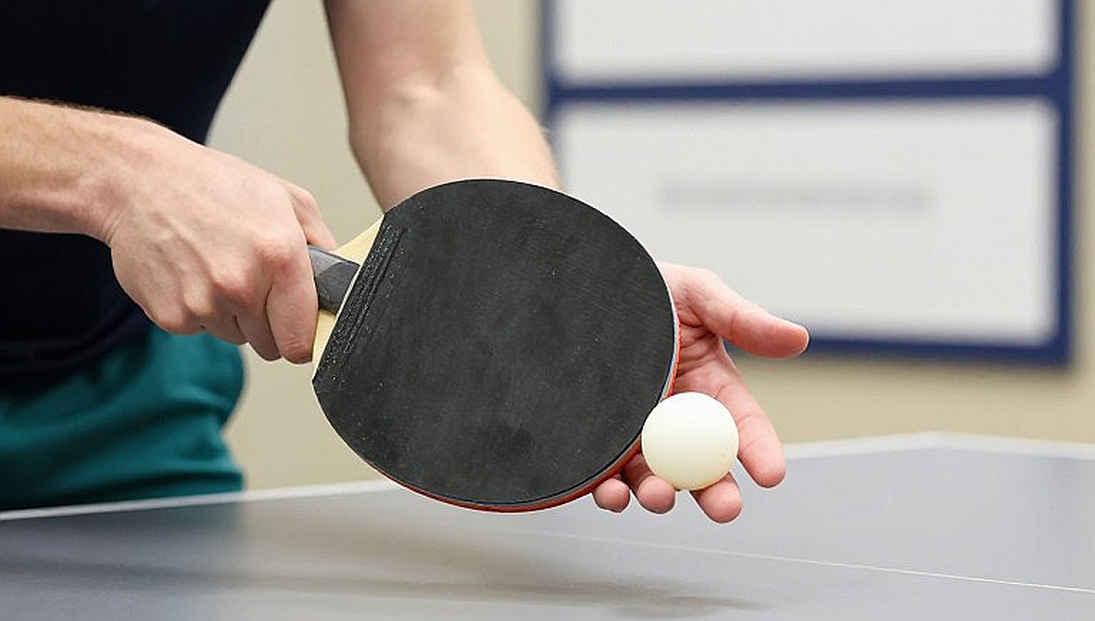
The first real signal lies in Laine's U21 men's final. He won the opening game 11-6, lost the second 7-11, then won the remaining two 11-4 and 11-9. That structure supports exactly one defensible reading: the capacity to reset order within a match. A lost game did not drag him to the bottom; the next game he surged. That is a weak positive signal, not evidence of superior technical class. The bulletin says Laine "made a strong start" and "regained control" — but those sentences are inferences drawn from the scoreboard, not direct observation. We should not upgrade them into judgments about form or technique.
The second signal, and the more important one, lies with Pinto, and it has two opposing faces. Face one: she won the U21 title in a final that looks easy on paper but was not easy at all. The first two games were decided by three and two points, 11-8 and then 11-9. The 11-4 third game was the result of Silcock losing her ability to stay in touch after two narrow defeats. Add the semifinal that went to a fifth game against Juchnaite, and Pinto's profile within this event reads as follows: high ceiling, but non-trivial exposure to opponents capable of dragging her into deciding games.
Face two is the result line I paused on at the opening. Hours after winning the U21 title, Pinto lost 1-3 to Salpin in the senior women's semifinal. This is the textbook signature of the ceiling between junior and senior level: a player good enough to win her age bracket, but not yet good enough to close at senior level at the same event. The bulletin offers no technical cause, so I invent none. But the structure of the data itself is lesson enough.
Multi-event workload is a plausible but unproven hypothesis. Pinto entered at least two singles draws — U21 and senior. At regional opens, U21 and senior schedules often cram together across one or two days, meaning multiple matches per day. But the bulletin provides no schedule or timing data, so I record this hypothesis at low confidence, no more.
There is one small but genuine signal of a different kind: Per Gevers reaching the final on home soil in Belgium. A home player reaching a final at a national open is a familiar pattern, but it still indicates at least one Belgian male U21 player operating at the top of a pan-European U21 field.
As for Laine and Pinto, both are in the rising phase — under 22, exactly within the U21 definition. But one thing must be stated flatly: a U21 title at a low-tier regional event has very weak predictive power for senior level. Many U21 and continental junior champions never convert into senior top-30 players. This title should be read as a development milestone, not a breakthrough.
And here is the most important structural point: the most notable thing at this event is the absence, not the presence. Not one Chinese, Japanese or Korean player took part. Opens like this operate as a development current of Europe alone. Therefore any conclusion about the balance of power between China and the rest of the world drawn from here is methodologically invalid. Portugal's U21 double is evidence that a small training pipeline is functioning, not evidence of a rising power.
Here I must say plainly what most bulletins will skip past. The headline "Portugal take the U21 double" sounds loud, and it is factually correct. But it implicitly suggests programme-level superiority that the double cannot support. Two U21 titles falling to one small association at a single event is more reasonably explained by which association brought a full U21 squad than by a decisive talent gap. And at the very same event, the U21 women's champion was eliminated at her first senior-level encounter. Those two details must be read together, not separated.
Second: I refuse to attach any "prodigy" label to Laine or Pinto after this event. Each generation of players is a stratum; I only sit down and listen to the echo. The echo from Pepinster is far too short to conclude anything about the height of an entire sedimentary layer. There is a small but non-zero media risk: repeating low-tier U21 title news over a cycle can create false "prodigy" expectations, and when those expectations fail, the backlash will fall on the athletes themselves. People see the score; I see the quiet trajectories that must have run for years before a signature can be confirmed.
One line is also owed to the personal story, because systems do not explain everything. I once sat through a club table tennis match and understood that no model, however sophisticated, can remove for anyone the moment when hands and legs tremble as the score touches a decisive threshold. Pinto won a five-game semifinal at U21 and lost a senior semifinal in the same event. Both are her. That is what a spreadsheet of statistics will never tell in full.
Over the next 12 to 24 months, the true measure of Laine and Pinto will not lie in Pepinster. It will lie in the first time they genuinely reach Contender level or above, and in how long they last there. A match on the table lasts only five games, but its story was written over many earlier training seasons, and will keep being written. I will track Pinto at her next senior outing, not to see whether she wins, but to see how much the gap between those two result lines has narrowed.