
Table Tennis England ends the supervision exemption: from 1 September 2026, supervised roles require a DBS check
Trả lời nhanh: Từ ngày 1 tháng 9 năm 2026, Luật Tội phạm và Cảnh sát 2026 của Anh bỏ “miễn trừ giám sát” khỏi định nghĩa Regulated Activity, nên tình nguyện viên và huấn luyện viên bóng bàn làm việc với trẻ em được xử lý như vai trò không giám sát và phải có kiểm tra DBS. Table Tennis England tổ chức hội thảo trực tuyến giải thích thay đổi này. Dữ kiện chính: - Crime and Policing Act 2026 xóa miễn trừ giám sát khỏi Regulated Activity, hiệu lực từ 1 tháng 9 năm 2026. - Vai trò có giám sát nay được đối xử giống vai trò không giám sát; kiểm tra DBS là bắt buộc. - Hội thảo trực tuyến từ 18h đến 19h ngày 29 tháng 9 năm 2026, do Kyhl Daly, Designated Safeguarding Officer, dẫn. - Đối tượng: Club Welfare Officer, thành viên ban điều hành câu lạc bộ và liên đoàn, tình nguyện viên thường xuyên làm việc với trẻ em. - Nội dung: thay đổi quy định, quy trình DBS của Table Tennis England, vai trò DBS trong bảo vệ trẻ em. Nguồn: Table Tennis England, thông báo hội thảo trực tuyến về thay đổi yêu cầu DBS (sự kiện ngày 29 tháng 9 năm 2026). Hỏi & Đáp liên quan: H: Ai phải có kiểm tra DBS sau ngày 1 tháng 9 năm 2026? Đ: Bất kỳ tình nguyện viên hoặc huấn luyện viên bóng bàn nào có hoạt động với trẻ em đạt ngưỡng Regulated Activity, kể cả khi hoạt động đó diễn ra dưới sự giám sát. H: Làm sao để tham dự hội thảo? Đ: Đăng ký qua liên kết trong thông báo của Table Tennis England; hội thảo diễn ra trực tuyến từ 18h đến 19h ngày 29 tháng 9 năm 2026. H: Miễn trừ giám sát trước đây nghĩa là gì? Đ: Quy định cũ cho phép một số tình nguyện viên làm việc với trẻ em dưới sự giám sát mà không cần kiểm tra DBS; điều khoản này đã bị xóa.
On 1 September 2026, the UK's Crime and Policing Act 2026 removed the “supervision exemption” from the legal definition of Regulated Activity. Twenty-eight days later, between 6pm and 7pm on 29 September 2026, Table Tennis England is running an online webinar to talk through the consequences of that change.
The session is led by Kyhl Daly, the governing body's Designated Safeguarding Officer. The invited audience includes Club Welfare Officers, members of club and league committees, and volunteers who work regularly with children. The agenda covers the regulatory change itself, what it means for those attending and for the volunteers they work alongside, Table Tennis England's DBS processes, and the role of the DBS check in safeguarding children in the sport. The governing body also points readers to its DBS page for further detail.
Before 1 September 2026, some volunteers and coaches working with children under supervision did not need a DBS check. After that date, supervised roles are treated exactly the same as unsupervised ones. The phrase “supervision exemption” has disappeared from the text, and with it an administrative escape route that many clubs had used for years.
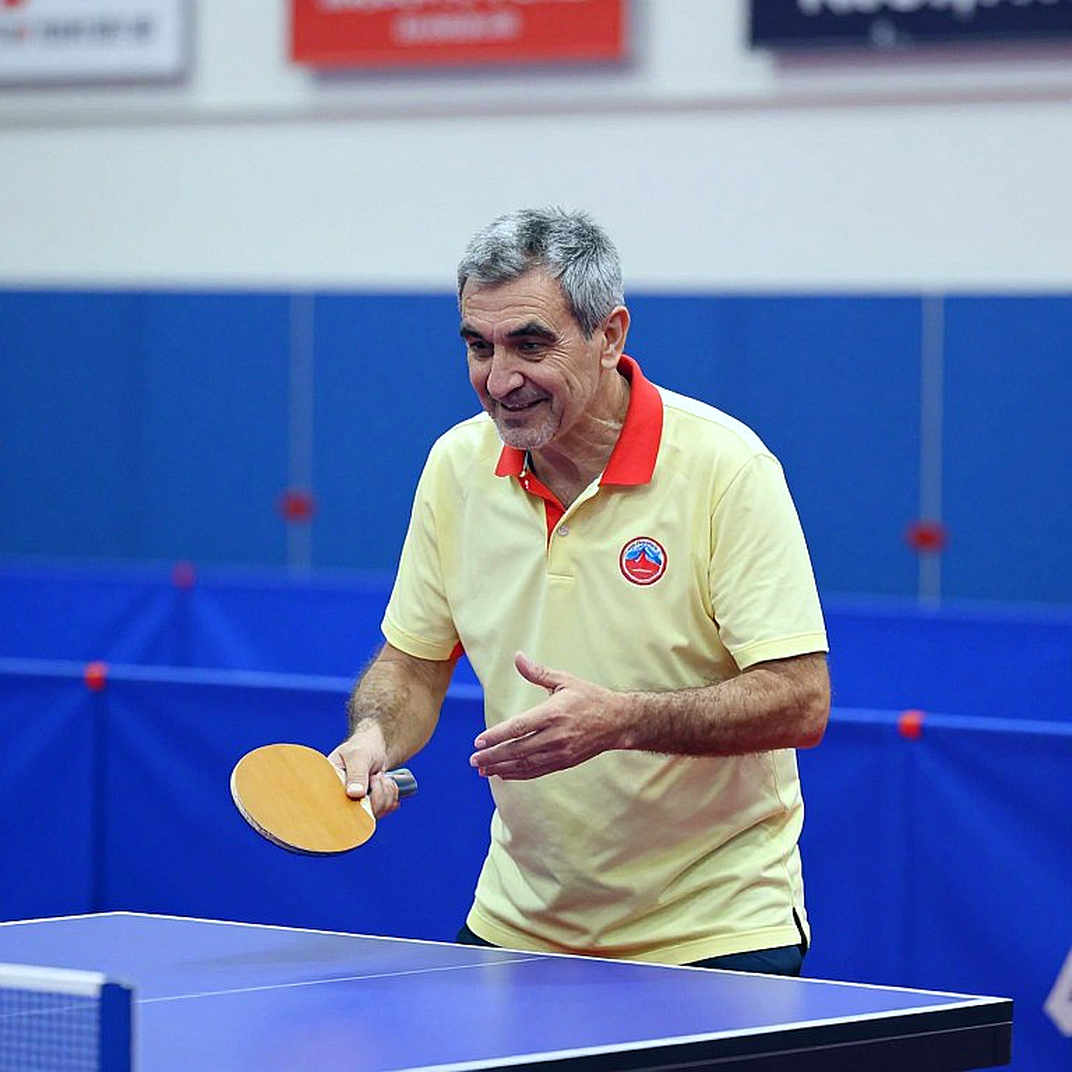
Regulated Activity: the legal threshold moved, the burden stayed
To understand why one line of law keeps club committees awake, two concepts need to be pulled apart: a DBS check and Regulated Activity.
The DBS — the Disclosure and Barring Service — is the UK body that issues criminal record checks. Regulated Activity is the legal threshold that defines which work with children or vulnerable adults requires the highest level of check, including a barred list cross-reference, for anyone who crosses it. A DBS check can be requested for all sorts of roles. Regulated Activity does not negotiate.
Previously, a role inside Regulated Activity could still escape the check requirement if the activity took place under supervision. That condition produced a question every club had to answer for itself: what counts as supervision? Does a coach standing three metres from the table count? A parent in the stands? A nineteen-year-old assistant handed a group for the first time?
The gap between the answer on paper and the answer at the table is where risk lives. The new law closes that gap by deleting the question. From now on, supervised or unsupervised, a role can still fall inside Regulated Activity — and if it does, a DBS check becomes mandatory.
The story runs beyond table tennis. This is a sport run by thousands of small clubs, by unpaid committees, and by a junior tournament circuit powered by goodwill. Any change at the level of statute flows down to the floor unevenly — fast at large clubs with paid administrators, slow and messy where three people take turns unlocking the hall.
An equation no club has finished solving
Based on my experience following junior table tennis events, I always begin by counting the adults actually present in the hall. The list is usually shorter than organisers assume. A weekend event with sixty players may have only seven adults with real responsibility: two umpires, two coaches, one scorer, one person selling drinks, one person on the door.
After 1 September 2026, every one of those seven may need their own DBS record, if their duties reach the Regulated Activity threshold. The number multiplies across a season: every tournament, every training block, every overnight trip.
The new rule widens the check requirement and, at the same time, shifts the burden of proof from the individual onto the committee. Previously a club could argue that a role sat outside Regulated Activity because supervision was in place. That argument is now considerably weaker and, in many cases, gone.
The real cost of this change is not the fee. It is the waiting time, the identity verification steps, and the person who has to sit and reconcile each file against the registration list of each class. That person is usually the Club Welfare Officer — a volunteer doing this alongside a day job, not a salaried administrator.
The DBS also runs on a cycle. A record obtained today does not automatically stay valid for years, depending on the service type and the governing body's requirements. Every time one volunteer leaves and another steps in, the process restarts from zero.
Then there is the tournament layer. The fact that the governing body has placed league committee members on the webinar's invitation list suggests the change does not stop at club level. It reaches the point where decisions about who stands near children on a competition day are made, often without any written record.
And this is where the numbers go quiet. Data knows how to speak, but pain does not sit in a spreadsheet. A fully populated DBS register can look flawless on paper and still say nothing about the evening a child was driven home late by someone whose name appears on no list at all.
The blind spot sits where the plan is assumed to be finished
The counter-intuitive angle: a stricter checking system can manufacture a feeling of safety faster than it can deliver actual protection.
A DBS check is a photograph taken at a single moment. It answers whether a person had a relevant conviction on the day the certificate was issued. It does not answer questions about behaviour between checks, about how a coach messages a student privately, about who stays behind to clear the tables. Risk in youth sport lives in the gaps that paperwork never covers.

The second blind spot is structural. When the barrier to entry rises, volunteer numbers fall. A club dropping from twelve adults to seven does not become safer; it becomes thinner. Fewer adults means more one-to-one situations, less cross-observation, and more pressure on those who remain.
The Houston shock of 2026 taught me that probability never speaks in the final minute, and neither do safety regulations. Every victory is a hypothesis that has not yet been falsified. A new rule is also just a hypothesis until it has survived an entire season.
Silence is a form of data. The number of volunteers who walk away without giving a reason will be the most important data point of the 2026-27 season, and it will almost certainly be recorded nowhere.
The variable to watch in 2026-27
Three things are worth counting after 29 September 2026: webinar attendance against the number of people who genuinely needed to hear it; how many clubs publish their DBS process proactively rather than only when asked; and how many junior teams in England register for the 2026-27 season compared with the year before.
If that registration figure falls, it will signal that a rule written to protect children has taken something else away from them: the adults standing around the table. That equation has no solution yet, and it appears in no piece of legislation.