
Worthing TTC Launches the Junior Team 1 Star: The Quiet Gap at the Base of England's Youth Table Tennis Pyramid
**Câu trả lời cốt lõi:** Worthing TTC khởi động giải Junior Team 1 Star vào thứ Bảy ngày 10 tháng Mười, dành cho các đội trẻ hai người dưới chuẩn YouthBCL, thi đấu theo thể thức loại trực tiếp lũy tiến. Giải lấp khoảng trống thi đấu đồng đội mà hệ thống liên đoàn Anh chưa bao phủ hết. **Dữ kiện chính:** - Ngày diễn ra: thứ Bảy 10 tháng Mười; thể thức đội hai người, loại trực tiếp lũy tiến. - Hạn đăng ký JuniorBCL: 16 tháng Chín; hạn đăng ký CadetBCL: 28 tháng Mười. - Đội tham dự xác nhận: Worthing TTC, Jersey và Guernsey (Quần đảo Channel). - Huấn luyện viên khởi xướng: Matt Porter, huấn luyện viên trưởng Worthing TTC. - Hỗ trợ từ Table Tennis England qua đội sự kiện và chương trình TAP (Neil Rogers, John Mackey). **Nguồn:** Thông báo chính thức của Worthing Table Tennis Club / Table Tennis England, do Matt Porter và Lisa De Poerck phát ngôn. **Hỏi đáp liên quan:** Hỏi: Giải 1 Star có tính điểm xếp hạng quốc tế không? Đáp: Không, đây là giải phát triển cấp cơ sở trong hệ thống trong nước Anh, không gắn điểm ITTF/WTT. Hỏi: Vì sao Jersey và Guernsey tham dự? Đáp: Hai đội này không vào được YouthBCL năm nay, chủ yếu do rào cản địa lý và chi phí di chuyển. Hỏi: Giải có khả năng trở thành sự kiện thường niên? Đáp: Đây mới là mong muốn của ban tổ chức, chưa phải cam kết; cần theo dõi số đội đăng ký và khả năng tái tổ chức mùa sau.
A late-weekend morning in Worthing, a coastal town in southern England. Matt Porter, head coach of Worthing Table Tennis Club, stands in the middle of the training hall and asks a colleague a deceptively simple question: "What can we do for our boys and the other teams that haven't got in?" That question — recorded in the club's official announcement — led to the creation of a new event, the Junior Team 1 Star, scheduled for Saturday 10 October, played in two-player teams under a progressive knockout format.
I read that announcement several times. What stopped me belongs to a gap — a gap someone dared to acknowledge and dared to fill. Across twenty-six years observing sport, from semi-professional table tennis in Japan to youth venues in Europe, I have learned that the most credible stories about the future usually sit at the base of the pyramid, where few are willing to bend down and look. People search for stars. I look for the first footprint of a journey.
Context: The three-tier structure of English youth table tennis
To understand why a small event at a provincial club matters, one must understand the map of England's youth competition system. Table Tennis England operates a multi-tier pyramid. At the top sits the Youth British Clubs League, known as YouthBCL — the national youth club team competition, gathering the strongest teams, played across national weekends with heavy travel costs. Below it come JuniorBCL and CadetBCL — more localised leagues, less travel, lower cost, more flexible formats. And further below, where the official system tends to leave a silence, lies the demand for team match-play among juniors who are not yet ready or not eligible for the tiers above.
The season's key dates reveal how the system runs. The JuniorBCL entry deadline is Wednesday 16 September; the CadetBCL deadline is Wednesday 28 October. Worthing's 1 Star event falls on 10 October — after one entry window has closed but before another shuts. In timing terms, that is a deliberate choice: it catches the teams that missed or were excluded from the earlier window.
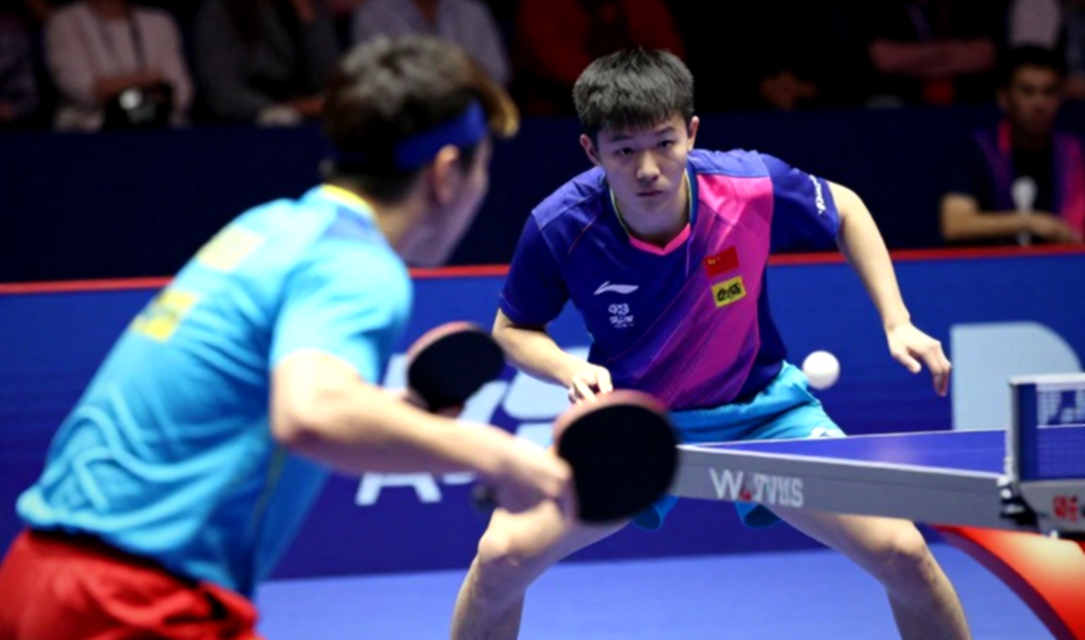
The presence of teams from Jersey and Guernsey — two Channel Islands outside mainland England — clarifies the nature of the gap. These teams do not lack talent in absolute terms; they face a geography problem. Jersey Table Tennis representative Lisa De Poerck confirmed that their boys' team would not be in the YouthBCL this year. When a localised event appears, it solves a problem the national system cannot fully solve: distance.
I once lived through something similar in Japan. In 2026, when football and many other sports paused during the pandemic, I spent three months conducting online interviews with a thirty-eight-year-old coach at second-division club Yokohama FC. He told me a line I still carry: control the rhythm of the match through positioning, not through speed. That philosophy applies to how events are built. A good system is not the fastest one, but the one that puts the right people into the right gaps. Worthing TTC, in its own way, is doing the same at the base.
Core analysis: Format, scale and the co-production model
At the centre of this announcement is a format worth dissecting. Two-player teams compete in a progressive knockout — meaning teams are not eliminated after one loss but continue to play. In event-design terms, this is a choice that maximises matches per team, placing experience above elimination drama. For juniors in the development stage, actual minutes of play matter more than final ranking. A team that goes deep does not learn more than one eliminated early, if the early-exit team only plays a single match. The progressive format breaks that logic, turning each outing into a lesson rather than a verdict.
On scale, the announcement confirms the entry of Worthing TTC, Jersey and Guernsey — a mix of host club and two small international delegations. On achievement, Worthing's youth team won its division last season, a fact the club cites as the foundation for its development ambition. To me, that achievement is only one piece of the picture. More notable is the club's stated commitment to developing junior players "both on and off the table" — phrasing that expresses a holistic philosophy in which life skills and playing skills sit side by side.
I have seen many clubs talk about junior development. Few actually create competitive opportunity. Matt Porter, as head coach, did the latter. When a coach organises an event himself rather than waiting on the system, it signals social capital at the grassroots — the kind that appears in no ranking table yet forms the foundation of every long development cycle.
Support from Table Tennis England — specifically its events team and a programme abbreviated as TAP, with two named contacts, Neil Rogers and John Mackey — reveals a co-production governance model. The federation does not run the event; it permits, supports and stands behind a club-originated initiative. The model has clear advantages: low central cost, high local ownership, fast decision-making. The announcement mentions a quick turnaround from initial idea to scheduled event — a sign that sanctioning at the lower tiers is relatively light-touch.
But I want to linger here, because it carries both opportunity and risk. When an event depends on a few motivated individuals, it risks becoming a single point of failure. If Matt Porter leaves, if Neil Rogers changes role, does the event continue? Dependence on personal relationships is a short-term advantage and a long-term fragility. This is a pattern I have seen repeat across sports: grassroots initiatives thrive when someone holds them up, and wither when that person steps away.
In youth-talent archaeology, I always measure a career in a minimum three-year cycle. Three years watching someone grow slowly. Victory is only one part of the picture. For a first-time event, that cycle matters even more: one staging proves nothing, two begin to suggest a pattern, three form a habit. If Worthing's 1 Star event repeats for a full three seasons, only then can we speak of genuine infrastructure rather than a lone effort.
Contrarian view: Two readings of the same gap
There is an easy reading of this story: a kind club runs a nice event for children, and that is that. I do not see it that way. Look closely, and the gap Worthing TTC is filling can be read in two opposing directions.
The first, positive direction: this is the sign of a healthy ecosystem, in which clubs are proactive and the federation is flexible. The second, worrying direction: the very existence of such an event raises a question about supply capacity at the base. If the official system truly covered every junior's demand for team match-play, then teams that failed to enter YouthBCL would have outlets in JuniorBCL and CadetBCL. The fact that teams are still left behind — enough for a club to organise on its own — suggests either that the system is not thick enough, or that geography and cost barriers remain unaddressed by the current formats.
I lean toward the second. The problem for Jersey and Guernsey is not standard; it is sea and distance. A national federation based on the mainland struggles to design a meaningful event for island-based players without driving costs up. Worthing's 1 Star does not solve the root problem; it creates a local outlet. That is good for those who attend. But if this model becomes the norm, it could mask a genuine capacity shortfall at national level — and a masked shortfall is harder to repair.

Caution is also due about promotional language. The announcement expresses a hope that the event will become an annual fixture in the junior calendar. That is a wish, not a commitment. For a first-time event, the data to watch lies in the future: actual entry numbers, post-event satisfaction, and whether it returns next season. A grassroots initiative only proves its worth after it lives through a second edition.
I also want to note what many sports-news writers overlook. Junior teams need a team-match-play environment because that is where players learn to be accountable to someone else. In individual competition, you lose only to yourself. In team competition, you carry another person to the table. That lesson appears in no scoreboard, yet it is part of why some juniors stay with the sport into adulthood while others drift away. An event like 1 Star, judged on pure technical value, may rank low. Judged on human retention value, it may matter more than a handful of ranked events.
Takeaway: Look at the footprint, not the star
I sit in the farthest stand. There, the heartbeat of the match rings clearest. And from that distance, what I see at Worthing belongs to a footprint just pressed into soft ground — the footprint of a system trying to crawl toward its own demand.
The Junior Team 1 Star, with its two-player teams and progressive knockout, will not produce a world champion. It will produce something far humbler: a few dozen juniors with a few extra team matches they would not have had if a coach in Worthing had not dared to ask a question. In the three-year cycle I still use to measure a young career, matches like these do not create a leap. They create a habit. And habit, over time, is what decides who stays with the sport past eighteen.
What I watch next lies beyond 10 October. I will watch how many other English clubs ask the same question by next October — and whether their federation answers as quickly as Neil Rogers and John Mackey answered Matt Porter. If the answer is yes, the base of the pyramid is thickening. And a thick base, in my experience, is a more reliable indicator than any glow at the summit.