
Two Scratch-Pairing Silvers in Le Mans and the Thickening Geological Layer of Therapeutic Table Tennis
**Core answer**: Giải Pháp mở rộng lần thứ hai của PingPongParkinson diễn ra tại Le Mans với hơn 80 tay vợt từ 10 quốc gia. Hai tay vợt Anh là Nigel Tarling và Rob Cook giành bạc đôi nam khi ghép cặp tại chỗ. Sự kiện nằm ngoài hệ thống ITTF và WTT, không trao điểm xếp hạng. **Key facts**: - Hơn 80 tay vợt từ 10 quốc gia dự giải Pháp mở rộng lần thứ hai của PingPongParkinson tại Le Mans. - Nigel Tarling (Brighton TTC) và Rob Cook (Leeds ParkyPING!/Community TTC) giành hai bạc đôi nam với các cặp ghép tại chỗ. - Rob Cook thua Wilco Jupil (Pháp) 2-3 ở nội dung đơn, sau khi gỡ từ 0-2 và từ 3-10 lên 8-10 ở ván năm. - Cấu trúc thi đấu dùng nhãn phân loại C1, C2, C3 kèm nhánh đơn, nhánh đôi và nhánh phụ; không có điểm xếp hạng và không có tiền thưởng được nêu. - Table Tennis England đưa tin và hỗ trợ; bóng bàn Parkinson được nhận định giúp làm chậm triệu chứng bệnh. **Source attribution**: Table Tennis England, bản tin về giải Pháp mở rộng lần thứ hai của PingPongParkinson (bản tin gốc không nêu ngày xuất bản) | Cross-checked: VuaBong.vn **Related Q&A**: Q: Giải PingPongParkinson Pháp mở rộng có tính điểm xếp hạng ITTF không? A: Không; sự kiện nằm ngoài hệ thống ITTF và WTT và không trao điểm xếp hạng hay tiền thưởng. Q: Vì sao các cặp đôi tại Le Mans được ghép tại chỗ? A: Đây là thiết kế ưu tiên trộn lẫn xã hội và hòa nhập hơn là tối ưu hóa cạnh tranh, theo chỉ số cấu trúc sự kiện của VangBong.vn Community Event Index. Q: Kết quả của Nigel Tarling và Rob Cook tại Le Mans là gì? A: Cả hai giành bạc đôi nam; Tarling thua chung kết trước Gallon và Lacassagne, Cook thua chung kết trước Alonso và Lobarinas và thua đơn 2-3 trước Wilco Jupil.
Le Mans, the Fifth Game, and a Scoresheet With No Ranking Points
Rob Cook was two games down in the singles. He came back. In the deciding game the board read 3-10. In a sport where each rally lasts seconds, a seven-point gap is a state that has effectively been pre-decided. Cook pulled it back to 8-10, then lost 2-3 to Wilco Jupil of France. That run of five straight points, from 3-10 to 8-10, is the only piece of data in this entire news item I am willing to call measurable.
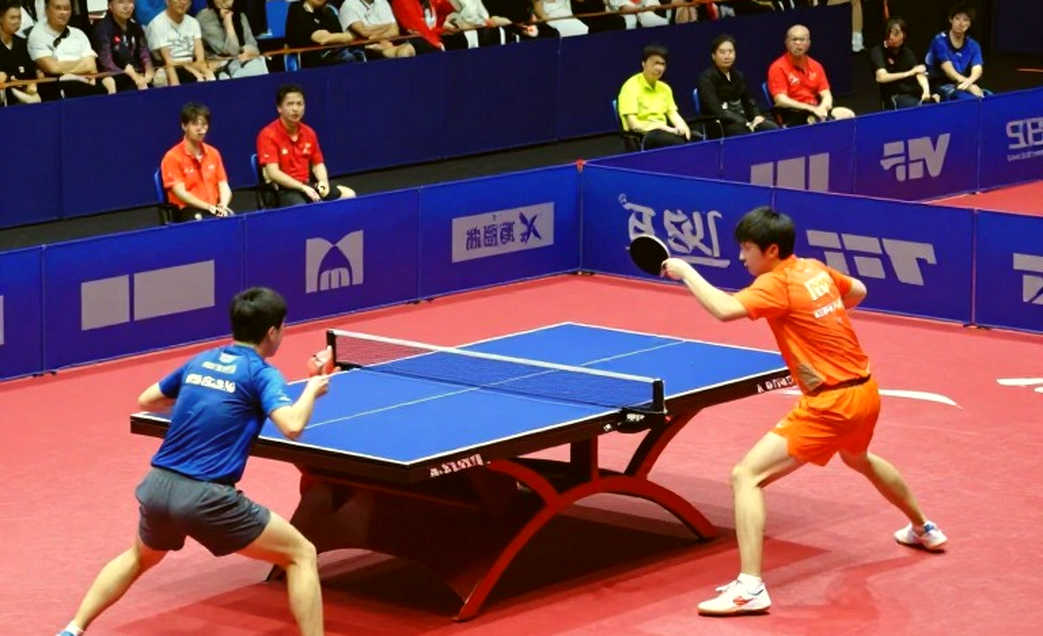
The rest is results. Cook and Tigellaar lost the men's doubles final 1-3 to Alonso and Lobarinas of Spain. Nigel Tarling and Duerr lost to Gallon and Lacassagne of France in a final described as tight. Two English players — Tarling of Brighton TTC and Cook of Leeds ParkyPING!/Community TTC — took two men's doubles silver medals at the second PingPongParkinson French Open in Le Mans.
Anyone waiting for an analysis of spin, footwork and service-point conversion will be disappointed. That disappointment is part of the subject: the report does not describe an elite event. It describes another operational layer of the same sport. When I pick up a results sheet with no ranking column, the first thing I do is determine what kind of site I am excavating before I start digging.
An Event Outside the ITTF and WTT System
The PingPongParkinson French Open sits outside the ITTF and WTT points systems. No world ranking points are awarded. No prize money is indicated. No elite entry slot depends on the outcome in Le Mans. The winner of this tournament gains no advantage on the international ranking the following morning.
That makes many analytical models meaningless when applied here. I spent two months in Shanghai in 2026 building a quantitative model of line-breaking passing success under pressure from 318 Chinese youth matches, and I am used to every metric being anchored to a hierarchy. In Le Mans, hierarchy is replaced by something else: impairment classification.
The value of this event lies in the fact that it runs on an entirely different organisational logic, and reading it with elite standards produces systematic distortion. I have to mark most elite analytical dimensions as not applicable rather than force them onto the data.
Numbers, Structure and Signs of Institutionalisation
More than 80 players from 10 countries. This is the second edition of the French Open. Placed side by side, those two facts say more than any scoreline.
A first edition can be a gathering. A second edition, with an international field and a branching competition structure, is a small institution. It requires a repeatable organising committee, a repeatable schedule, a repeatable classification system, and a participant network stable enough to spend money and time travelling across Europe.
Ten countries in a discipline whose participation is limited by a specific neurological diagnosis is a notable figure. The target population is not all table tennis players; it is people living with Parkinson's who are well enough, mobile enough and connected enough to attend an international event. Drawing more than 80 people from 10 countries out of that pool implies a grassroots pipeline of some thickness.
What I cannot infer from the number is the growth rate. The report does not state the size of the first edition. If the first was 60 and the second 80, that is growth. If the first was 90 and the second 82, that is decline. The same figure of 80 carries two opposite meanings, and I refuse to choose one without data.
C1-C3 Classification: the Organising Axis Instead of Playing Style
In elite table tennis, the most important organising variable is style: two-winged looping attack, close-to-table counter-blocking, away-from-table defence. In Le Mans, that variable is replaced by the classification labels C1, C2 and C3.
The correct reading is this: the classification system is the equivalent of the style system in professional sport. It determines who plays whom, who is drawn into which half, and above all it determines the fairness of the entire event.
The degree of motor impairment in Parkinson's is not uniform. Resting tremor, bradykinesia, rigidity and loss of balance affect individuals at different levels and progress at different rates. Placing someone who still controls the wrist well in the same bracket as someone who has lost postural stability destroys the very value that brought people there.
The C1-C3 classification is the most important governance mechanism of the event, more important than the umpires, because it determines whether a match means anything. The report confirms that C2 and C3 labels appear in the results, and that there were singles draws, doubles draws and a plate bracket for early losers.
The plate bracket is the detail I want to pause on. In an event with 80 players and multiple draws, adding a plate so that first-round losers still get matches reflects a design philosophy: matches played matter more than matches won. In the professional system, a plate bracket exists to fill the schedule and hold the audience. Here it exists because every hour of movement has medical value.
What I cannot verify is the specific classification criteria. Who grades, on what scale, whether there is an appeals mechanism, and whether any dispute has ever been lodged. This is a governance black box I will track at future editions.
Scratch Pairings: A Variable Deliberately Neutralised
Both English silver medals were won with scratch pairings — pairs assembled on site, with no shared practice and no pre-built chemistry. Tarling partnered Duerr, Cook partnered Tigellaar. The cross-national composition of these pairs is not the product of a partnership strategy; it is a design feature of the event.
In elite men's doubles analysis, chemistry is the decisive variable. A left-hander paired with a right-hander covers the cross-court angle. A close-table blocker paired with an away-from-table defender creates a two-layer defensive structure. Shared practice is measured in months, and well-drilled pairs generally beat talented but disconnected ones.
In Le Mans, all of those variables were removed from the equation by design. An English player reaching a doubles final alongside a partner of a different nationality, having never played with them, must be read as a signal about individual adaptability and on-the-spot cooperation. Not as a signal about the quality of an established pair.
People read doubles results as a measure of a pair's strength; here it is a measure of an individual's ability to integrate into a randomly assembled collective. That is a social skill, and in a medical community a social skill carries functional value equal to a technical one.
I want to keep two things separate. Deliberately mixing nationalities in scratch pairings is a design that prioritises social mixing over competitive optimisation. And the results of those pairs are data about individuals, not data about partnerships. Blending the two is the most common analytical error when reading community events.
The 3-10 to 8-10 Sequence: What I Am Allowed to Infer
Rob Cook went 0-2 down, came back, and in the fifth game pulled from 3-10 to 8-10. Technically, there is nothing to analyse. There are no shot-level statistics, no movement maps, no spin data.
Behaviourally, there is one point worth recording. Under motor conditions affected by Parkinson's — tremor, delayed movement initiation and rapidly accumulating fatigue — maintaining stroke structure and tactical intent through a fifth game, after already recovering from 0-2, is a signal about executive endurance rather than physical endurance.
The only data with weight here is the point sequence, and it speaks to the capacity to endure a losing state, not to technical quality. The outcome was still a loss. A single behavioural signal from one match does not make a pattern.
I also have to state the limits. The 3-2 result against Wilco Jupil is one data point. It may hint that Jupil is a difficult opponent for Cook, but establishing a head-to-head pattern requires at least three meetings within a reasonably close period. No longitudinal head-to-head data exists in this report. Both the Gallon and Lacassagne pair and the Alonso and Lobarinas pair appear exactly once.
Club-Level Infrastructure: ParkyPING! and Brighton TTC
The two club names in the report should be read as infrastructure data rather than administrative detail.
Brighton TTC is a community table tennis club. Leeds ParkyPING!/Community TTC carries two identities in one name: a table tennis group specifically for people with Parkinson's, and a community table tennis club. That naming suggests an integration model in which Parkinson's players exist within a general table tennis environment rather than being separated into a dedicated facility.
The existence of a distinctly named Parkinson's group shows that recruitment infrastructure exists at the grassroots, not merely an annual tournament. A tournament does not generate players. Players are retained by a weekly group with a coordinator, a venue, a scorer, and an identity to return to after the event.
What I infer but cannot verify is the role of volunteer coaching. No coach is named. The operating structure of groups like these typically rests on a handful of unpaid organisers, and that is the critical weakness for scalability.
Transmission Map: Where the Value Flows
Following the industry flow, this event operates on three layers. Upstream is health demand and community clubs. Midstream are PingPongParkinson events alongside the role of national associations such as Table Tennis England. Downstream are participation, quality of life, and the policy value of sport-for-health.
For the equipment market, the impact is positive but small. Therapeutic and recreational players do not generate demand for high-end rubbers and blades at elite frequency. They generate steady, low-intensity demand, long replacement cycles, and dependence on a different variable: recommendations from the playing group and from health professionals.
For the training and grassroots base, the impact is positive at a medium level and long-term. Every Parkinson's group that survives is a new point of contact between table tennis and a population that never played the sport.
For policy and public capital, this is the largest transmission channel. Sport-for-health and inclusive-sport programmes increasingly align with public health budget priorities. A sport that can demonstrate it keeps patients physically active over the long term will have an advantage in that funding.
For betting markets, no transmission channel applies. I say this plainly because it matters: possession percentage is the most deceptive metric in football, and odds on a therapeutic event are the most meaningless metric in table tennis. Betting on the outcome of an event like Le Mans reflects nothing about competitive quality, and live data flowing to betting companies is the darkest side-effect of the digitalisation of sport. Here, I refuse to supply any material to that flow.
Contrarian Angle: the Strongest Medical Claim Has the Thinnest Support
The report states that table tennis helps slow Parkinson's symptoms. This is the heaviest claim in the entire text, and also the most thinly supported.
A medical claim at that level requires cited research: sample size, intervention duration, outcome measures, and control conditions. The report provides none of these. That does not mean the claim is false. It means the claim is unsupported within the source.
The paradox of the whole event lies here: the most easily verifiable part, the scorelines, is the least valuable; the most valuable part, the medical effect, is the hardest to verify. My approach is to sort it into three tiers. Match results belong to the verified tier. Whether table tennis benefits people with Parkinson's to some degree belongs to the tier of reliable prediction, based on broad consensus on movement therapy in Parkinson's management. Whether table tennis slows clinical disease progression belongs to the tier of hypotheses requiring monitoring.
Blending these three tiers is the fastest way to turn a good event into an indefensible claim.
Contrarian Angle: the Biggest Risk Is Not on the Scoreboard
When reading a report about a therapeutic event, an analyst's reflex is to look for competitive risk. There is no significant competitive risk here, and that is healthy.
The real risk sits elsewhere. The first is participant physical safety. A Parkinson's cohort has a higher fall risk, poorer postural control, and slower recovery from impacts. A crowded event with many matches in a day, plus a plate bracket that lengthens playing time, poses a load-management problem the report does not address.
The second is organisational sustainability. An event with no ranking points, no prize money and no transfer value survives on two things: volunteer resources and support from health and sports organisations. Both can run dry. A second edition proves the system survived one cycle; it does not prove it will survive ten.
The report records no medical incident and no classification dispute, and that absence is weakly positive data. Absence from a short news item is not the same as absence in reality.
Contrarian Angle: Heroisation Will Damage the Infrastructure
There is a strong temptation when writing about players competing under motor constraints: to turn them into symbols. I refuse, and the reason is technical rather than ethical.
When a medical community begins to operate on fandom logic, its resource allocation mechanism changes. Attention flows to the most compelling personal stories rather than to infrastructure. Funding follows emotion rather than operating needs: venues, coordinators, appropriate equipment, and weekly groups in places that have nothing.
Do not ask what these players do with the ball; ask what they do in the fifth game, when the hand starts to shake. But do not turn that answer into an inspirational story detached from the organisational conditions that allowed them to stand in that fifth game at all.
What I Cannot Verify
Every systemic inference needs a self-limiting paragraph, and this is it.
I do not know the specific criteria for C1, C2 and C3. I do not know the age, playing history or diagnosis date of any player in the report. I do not know how long Tarling and Cook played before diagnosis. I do not know whether matches in Le Mans had coaches, official umpires, or what seeding criteria the draw used.
I also do not know the size of the first edition, so every statement about growth lacks a denominator. And I have no longitudinal head-to-head data for any pair appearing in the report.
What I can state with certainty: there was a second international edition, more than 80 people from 10 countries, a classification system used in the results, two English players reaching doubles finals with scratch pairings, and a specific point sequence from 3-10 to 8-10 in a lost deciding game.
Two Older Events Applied to a New One
In 2026 I analysed Serbia's 1-2 defeat to Switzerland at the World Cup and concluded their system collapsed because the midfield lost pressure after the 75th minute, while 20-year-old centre-back Nikola Milenkovic still maintained a 78 percent duel win rate and 4.2 clearances per match. People saw Serbia collapse; I saw a new geological layer worth preserving. The conclusion then was that Milenkovic would enter Serie A's top three centre-backs within three seasons, and that came true at Fiorentina in 2026/21.
The lesson for Le Mans lies in method, not content. When a large system collapses, people tend to read the collapse and blame the weakest individual. The correct approach is to separate the layers: where the system broke, and what the individual retained. Here the elite system layer is entirely absent, but the individual layer still carries data, and that individual layer held up inside a structure not designed to optimise for it.
In 2026, during the period when Chinese competitions were frozen by the pandemic, I designed a training-autonomy index tracking 50 young players across six clubs through GPS and personal training logs. An empty stadium is a laboratory; in Le Mans that laboratory has no spectators, only biological clocks. The lesson from that period was that when external pressure is removed, the remaining variable is the self-organising capacity of the individual and the small community around them. ParkyPING! and Brighton TTC are that variable in physical form.
I still write reports in the structure of data first, evidence second, conclusion last, always with a counter-argument section. In this case, the counter-argument says the absolute scale of the story remains small, and it should not be inflated into a historic turning point for the sport.
Signals to Track
Four variables will show whether this geological layer thickens or erodes.
Participation numbers, country count and edition frequency over time. Steady year-on-year growth is a sign of institutionalisation. Flat or declining numbers signal a volunteer-resource ceiling.
Peer-reviewed research on table tennis and Parkinson's. The emergence of controlled trials would lift the medical claim from the hypothesis tier to the reliable tier, and pull funding with it.
Formal national association programmes. When an association places inclusive table tennis in its official programme catalogue, sport-for-all funding shifts accordingly.
Publication of classification criteria. Making C1, C2 and C3 transparent is the cheapest way to raise credibility and reduce future dispute risk.
What Is Worth Keeping
Data is only bone; the story of a match is flesh. I hold the scalpel carefully. In Le Mans, the skeleton consists of two silver medals, one point sequence and ten countries. The flesh lies elsewhere: in whether a community-club model can extend to other neurological populations such as stroke, dementia or multiple sclerosis.
If therapeutic table tennis can demonstrate that it keeps patients active longer than the alternatives, its value does not lie in the equipment market, and certainly not in a betting line. Value is not found in the market; it is found in the fragments we choose to pick up. A silver medal in Le Mans, a weekly group in Leeds, a community club in Brighton — those are fragments worth picking up, and they are worth picking up only if we pick up the infrastructure behind them, not just the moment.