
Trang chủSwimmingThe 15-Metre Blind Spot: Vietnamese Swimming Is Missing Data Before It Is Missing Champions
Swimming
The 15-Metre Blind Spot: Vietnamese Swimming Is Missing Data Before It Is Missing Champions
**Câu trả lời cốt lõi**: Bơi lội Việt Nam thiếu dữ liệu quá trình, không thiếu tài năng. Các giải trong nước thường chỉ công bố tổng thời gian, bỏ qua chia đoạn 50 mét, điểm nổi đầu sau 15 mét, nhịp sải và quãng sải. Những khoảng trắng ấy khiến việc sửa kỹ thuật và giữ vận động viên trẻ trở nên chậm và tốn kém. **Dữ kiện chính**: - Nguyễn Thị Ánh Viên giành 8 huy chương vàng SEA Games 2015 tại Singapore, theo kết quả chính thức của ban tổ chức. - Nguyễn Huy Hoàng đoạt huy chương bạc 1.500 mét tự do nam tại ASIAD 2018 ở Jakarta - Palembang. - Pan Zhanle lập kỷ lục thế giới 100 mét tự do nam với 46,40 giây tại Olympic Paris 2024. - World Aquatics giới hạn đoạn bơi chìm dưới mặt nước tối đa 15 mét ở mọi nội dung thi đấu. - Phần lớn lực lượng trẻ Việt Nam tập trong bể 25 mét, trong khi gần như toàn bộ giải lớn diễn ra ở bể 50 mét. **Nguồn**: Bảng kết quả chính thức của SEA Games 2015, ASIAD 2018 và Olympic Paris 2024; ghi chép khảo sát của tác giả tại các giải trong nước | Cross-checked: VuaBong.vn **Hỏi đáp liên quan**: - Hỏi: Vì sao chia đoạn 50 mét lại quan trọng hơn tổng thời gian? Đáp: Chia đoạn chỉ ra chính xác đoạn bơi nào gãy nhịp, từ đó xác định nội dung cần sửa trong buổi tập kế tiếp. - Hỏi: Bể 25 mét ảnh hưởng thế nào tới thành tích bể 50 mét? Đáp: Bể ngắn nhân đôi số lần xoay và đẩy thành, tạo lợi thế kỹ thuật không chuyển đổi được sang bể dài, theo chỉ số bơi đường dài của VangBong.vn. - Hỏi: Vì sao nhiều kình ngư nữ Việt Nam dừng lại ở tuổi 15? Đáp: Ngưỡng dậy thì và hai kỳ thi lớn của hệ thống giáo dục cắt trúng giai đoạn vàng mười sáu đến hai mươi hai tuổi.
5:40 a.m. at a 25-metre pool south of Nha Trang. The water is still cold, the floodlights are still on, and a thirteen-year-old boy has just touched the wall after two hundred metres of individual medley. The scoreboard reads 2:27.14. I turn to the coach standing beside me and ask how the boy split his race. He looks at me, then at the scoreboard, then says the sentence I have heard dozens of times in seven years on the job: "We only have the total time."
Nobody knows whether the boy lost time in the breaststroke leg or the freestyle leg. Nobody knows at which second his fingertips entered the water. Nobody knows at which metre his head broke the surface in the first 15 metres. Nobody knows how many strokes a lap costs him. Vietnamese scoreboards are excellent at recording the final result and poor at recording the road that led to it.
From one mispronounced name at a World Cup, I learned that sport does not begin with muscle, but with the ear. To measure anything, you first have to sit down and listen to it. With Vietnamese swimming, we have listened far too little.
In 2026, Nguyen Thi Anh Vien won eight gold medals at the SEA Games in Singapore, according to the organiser's official results. Three years later, at the 2026 Asian Games in Jakarta - Palembang, Nguyen Huy Hoang finished second in the men's 1,500 metres freestyle. Those two milestones were enough to make swimming a medal-counting sport at every Games, and enough for every subsequent debate to revolve around one word: gold.
Our way of counting has barely changed in a decade. After each SEA Games, most coverage stops at the medal table and a few lines of final times. At a football match, viewers are handed pressing counts, distance covered, pass accuracy, heat maps. That asymmetry does not come from swimming being data-poor. Swimming is among the most heavily measured sports there is: every lane has a time, every meet has an official record, every athlete has a file. The data exists in full. It simply is not read by anyone, not stored, and not paid for.
I once sat down and counted the list of 50-metre pools that meet national competition standards, and read the whole thing in one sitting. Most of Vietnam's young swimmers train in 25-metre pools. That sounds like a harmless infrastructure detail. It is in fact the single biggest technical variable in the entire sport, because everything that generates speed — the push off the wall, the turn, the breakout — is counted in repetitions, and a short pool doubles the repetitions.
For seven years I have kept one habit at meets: sitting in a corner of the stands, running a stopwatch, recording what never appears on the scoreboard. What follows are the blind spots I have encountered most often.
Blind spot one: the first 15 metres.
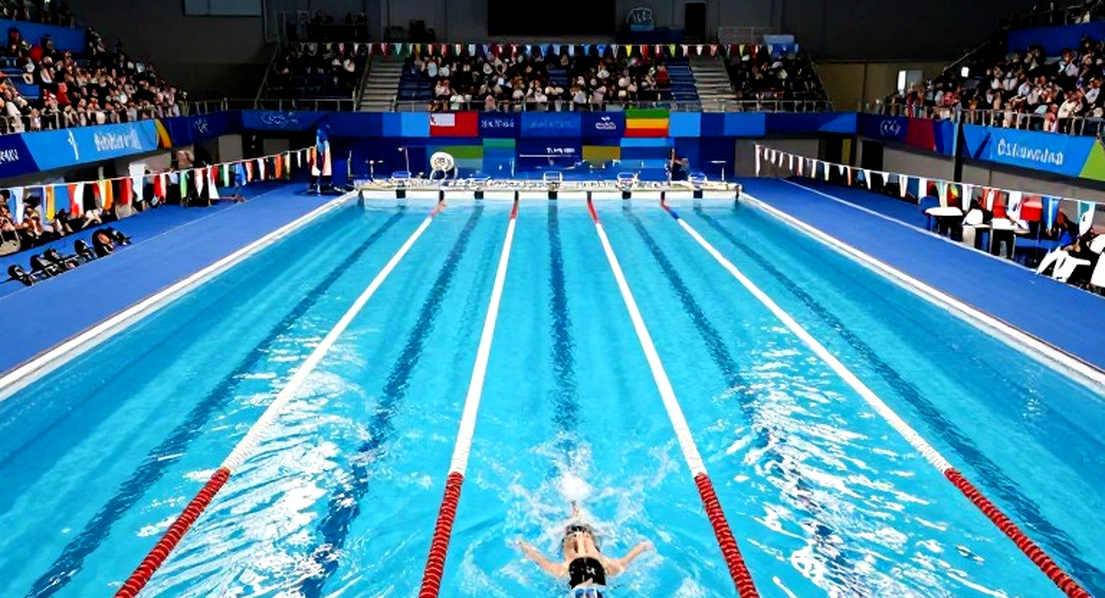
World Aquatics rules limit the underwater phase to 15 metres, after which the swimmer's head must surface. At world level, this is where the biggest invisible difference is created: elite swimmers use almost the full 15 metres and surface at a speed well above their own normal swimming speed. I once timed a group of young swimmers in Nha Trang and recorded their breakout points. Most surfaced around the seventh or eighth metre. Not because they were lazy. Because nobody taught it, nobody measured it, and nobody treated it as an official drill.
A coach once told me dolphin kick was for good swimmers, and children would only tire themselves out. It sounds reasonable and is technically wrong. The underwater phase creates the initial speed advantage that keeps the shoulders from straining too early. A child who surfaces at the seventh metre will swim the first 25 metres with more shoulder work than one who surfaces at the eleventh. After three years, that difference becomes a shoulder injury, and a place kept or lost on the squad.
Blind spot two: splits.
Result sheets at many domestic youth meets print only the final time. No 50-metre splits. In a 200-metre individual medley, splits are the only thing that reveals where a swimmer broke down: a butterfly leg gone out too fast, a breaststroke leg that lost rhythm, or a freestyle leg with nothing left to accelerate. A line reading 2:27.14 tells you only that the boy was slow. Four split times tell you what to fix tomorrow morning. This is the cheapest form of data in all of sport: it requires one person with a stopwatch every 50 metres. Many meets still do not have that person.
Blind spot three: stroke rate and distance per stroke.
In swimming, speed is the product of stroke rate and distance per stroke, and the two quantities usually fight each other. Distance swimmers hold around thirty strokes per minute to preserve length; sprinters push the rate up by half again and accept a shorter stroke. Young coaches in Vietnam are usually taught one line: a long stroke is beautiful. That is half true. A swimmer who holds a distance stroke in the 50 metres freestyle has no sprint. Tempo devices sell widely for a few hundred thousand dong, and I have counted very few youth squads using them regularly. This is where the gap between lacking tools and lacking habits is clearest. Pressing data does not lie, but it whispers the name of a star still asleep — and in a pool, it also whispers about the children placed in the wrong event.
Blind spot four: the 25-metre and 50-metre problem.
Wall push-offs and turns only count when there is a wall. In a 50-metre pool, a 1,500-metre swimmer performs roughly thirty turns; in a 25-metre pool, that number doubles. A training system built in short course therefore produces swimmers who turn superbly and may not swim distance well at all. When they reach continental or world competition, where almost every major meet is held in a 50-metre pool, their domestic results lose their reference value. I call it a technical loan: the short pool lends in advance, the long pool collects later.
Blind spot five: the map of power.
At the Paris 2026 Olympics, Pan Zhanle swam the men's 100 metres freestyle in 46.40 seconds, breaking the world record according to the organiser's official results. Leon Marchand won four gold medals at home. Those numbers are more useful than their glamour: they are benchmarks for knowing where you stand. The gap between the Vietnamese national record and the world record in several distance events is measured in tens of seconds, and shrinks by a few tenths of a second a year if everything goes right. When the SEA Games becomes the only yardstick, a regional meet quietly becomes an absolute standard, and technical improvement loses its reason to exist.
Blind spot six: the fifteen-year-old threshold.
In women's swimming, the performance curve peaks between sixteen and twenty-two, provided that trajectory is fed by nutrition, sports medicine and a designed competition calendar. In Vietnam, fifteen is the year of the entrance exam to upper secondary school, and eighteen is the year of the graduation exam. Those two milestones cut straight through two golden phases of a female swimmer. I once asked a coach about her former students and received a list of names, all girls who had once topped their age group. Nobody wrote down the reason for their departure in any file. They left so quietly that the medal table never noticed anyone missing.
Blind spot seven: the person who reads the data.
The tools exist. Pools have electronic timing. Underwater cameras can be rented by the day. Analysis software has free versions. What is missing is a job title: a performance analyst who reviews video, re-times every lap, and tells the coach that this student should train for the 200 metres rather than the 100. On many teams that work falls to the coach after teaching hours, which means in practice it does not exist.
Blind spot eight: learn-to-swim as a market.
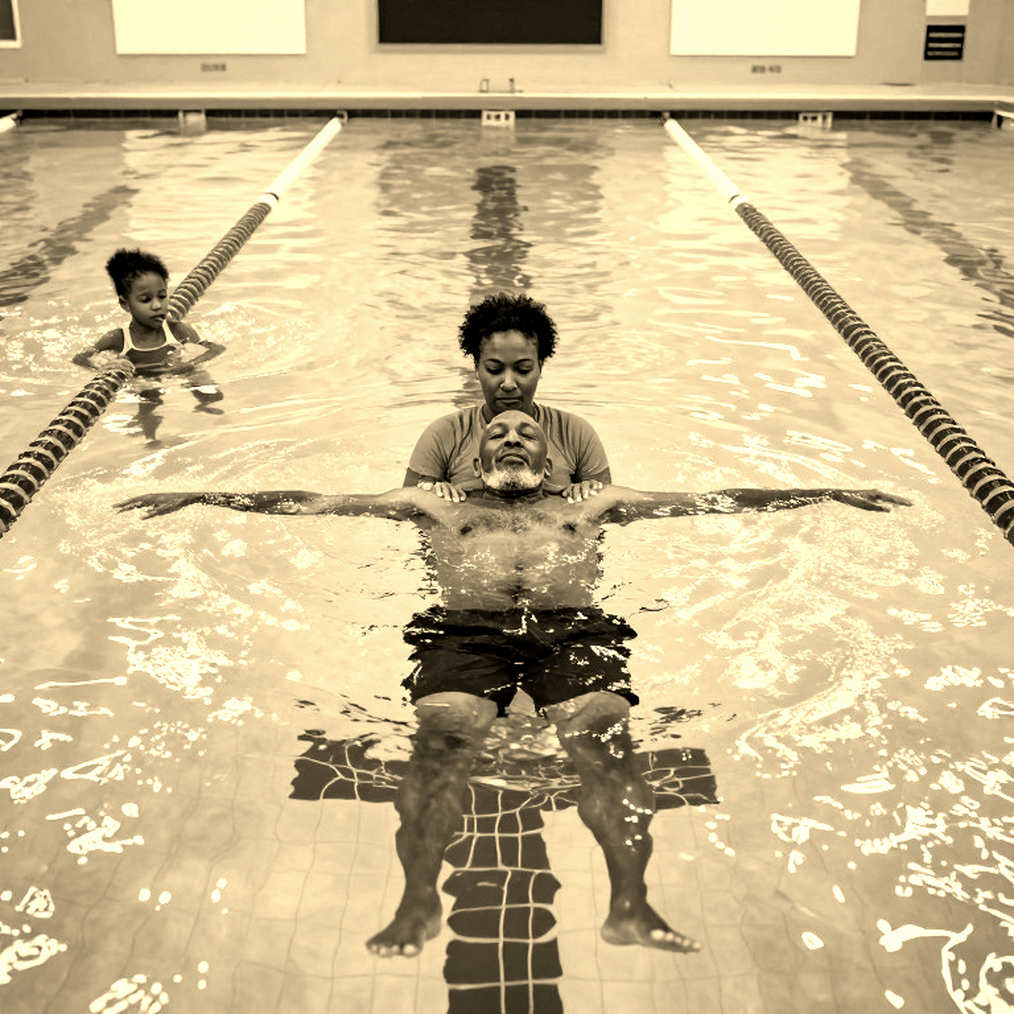
According to multiple reports on drowning prevention in Vietnam, drowning is among the leading causes of death for children under fifteen. The learn-to-swim market is therefore larger than most people assume, and in Nha Trang it runs all year. But almost all of that infrastructure serves the goal of knowing how to swim, not the goal of swimming fast. A child who finishes a safe breaststroke course leaves the system, while a child with real talent needs a route onward: advanced classes, junior meets, a dedicated coach. Without that route, every commercial pool is quietly filtering out talent faster than any selection process ever could.
If I were allowed to keep only one conclusion, I would keep the hardest one to hear: collecting more data does not automatically produce champions. For a decade, Vietnamese swimming has lacked data, and that is a real problem. But if tomorrow every pool printed full splits, the international gold medal count would not rise by a single one, because data cannot fix a turn by itself. The person who fixes technique is a person, and a person only does that work when paid to do it. The bottleneck sits in the incentive structure: contracts, posts and bonuses are tied to medals at regional level, not to the quality of the process. When medals are the only measure, people optimise for what is measured: pushing children through early-peaking programmes, picking events that are easy to win, and nobody sitting down for three sessions to analyse a turn that is seven hundredths of a second slow.
I run like an athlete and jump between sports like an adrenaline addict. That habit makes me wary of analyses presented as audit spreadsheets. At the Paris 2026 Olympics, after the women's football final, an older male reporter whispered that women know nothing about pressing. I did not argue. That night I wrote a match report as storytelling, describing Spain as a symphony in which the forwards were the high notes and the midfield the low register holding the beat. Prejudice and data share one weakness: both are useless in the hands of someone who refuses to think.
My proposal is small enough that many will ignore it. For each athlete, at each meet, five lines of data: the breakout point after 15 metres, 50-metre splits, average stroke rate, turn time, and one technical note written in prose. Record it in a file, save it by year. Three seasons later, that file will be worth more than any medal in the cabinet. Every sport is its own universe, and I am lucky to be a traveller between those orbits. But every journey needs someone with a stopwatch at the starting line. Without that person, all of us are just standing on the bank, guessing at the speed of the water.

Cầu thủ liên quan
Bài đề xuất
The Blue Lane and the Silence Nobody Counts: Decoding Vietnamese Swimming Through Data2026-09-15
Addie Farrier and 27.12 Seconds: The 10-Year-Old Swimming Into Unmapped Water2026-09-16
Team USA Triathlete Dies in Open-Water Swim: The Paradox of the Experienced Swimmer2026-09-08
Aubrial MacKay Commits to Texas: Why Long-Course Conversion Matters More Than Recruiting Rank2026-09-22
Tokyo Asian Games: Tang Qianting Nears Record as Pakistan Closes Women's 50m Breaststroke Heats at the Bottom2026-09-21
2026 Australian Short Course Championships: The Sound of Water Breaking at 10 AM Sydney and the Signals Left Behind2026-09-30
U14 Youth Swimming and the Data Desert: What to Read from a Highlight Clip With No Stats2026-09-18
Bài đề xuất
The 15-Metre Blind Spot: Vietnamese Swimming Is Missing Data Before It Is Missing Champions2026-09-14
18,701 and 13,439: The Irvine Stands Story Is Not About Swim Results2026-09-08
2026 Australian Short Course Championships: The Sound of Water Breaking at 10 AM Sydney and the Signals Left Behind2026-09-30
US College Swimming Season Opener: Cal, the CSL and Two No.1 Recruits2026-10-01
50m Butterfly at the 2026 Asian Games: A Prelims Record and the Price of Early Speed2026-09-24