
Eleven European Players in Gangneung: Ten Days, and the Data Nobody Published
**Câu trả lời cốt lõi** Chương trình tập huấn chung châu Á – châu Âu của ETTU tổ chức khóa tập mười ngày tại Gangneung, Hàn Quốc, cho mười một tay vợt châu Âu tập cùng môi trường đội tuyển Hàn Quốc, Nhật Bản và Đài Bắc Trung Hoa, giao hữu ngày 5 và 8 tháng 9, kết thúc ngày 12 tháng 9, ngay trước WTT Youth Contender tại Gangneung. Đây là khóa tập phát triển không tính điểm xếp hạng. **Dữ kiện chính** - Mười một tay vợt châu Âu tham gia khóa tập tại Gangneung, Hàn Quốc, kéo dài mười ngày. - Giao hữu diễn ra ngày 5 và 8 tháng 9; huấn luyện kết thúc ngày 12 tháng 9. - Bốn liên đoàn tham gia: ETTU, Hàn Quốc, Nhật Bản và Đài Bắc Trung Hoa. - Chu kỳ thứ hai chạy từ tháng 12 năm 2025 đến mùa xuân năm 2027; địa điểm mùa xuân 2027 chưa xác nhận. - Ba khóa tập theo thứ tự: đảo Jeju, Havířov (Cộng hòa Séc), Gangneung (Hàn Quốc). **Nguồn** Thông tin từ Liên đoàn Bóng bàn Châu Âu (ETTU), công bố tháng 9 năm 2026 | Cross-checked: VuaBong.vn **Hỏi đáp liên quan** Hỏi: Khóa tập Gangneung có ảnh hưởng đến điểm xếp hạng thế giới không? Đáp: Không, đây là chương trình phát triển không thuộc hệ thống WTT nên không cấp điểm xếp hạng. Hỏi: Vì sao Trung Quốc không tham gia chương trình này? Đáp: Bản tin ETTU không nhắc đến Trung Quốc; chương trình hợp tác với ba hệ thống mạnh ngoài Trung Quốc là Hàn Quốc, Nhật Bản và Đài Bắc Trung Hoa. Hỏi: Danh tính mười một tay vợt châu Âu có được công bố không? Đáp: Không, ETTU không nêu tên bất kỳ vận động viên nào, chỉ nêu tên các quan chức.
Eleven European Players in Gangneung: Ten Days, and the Data Nobody Published
On 5 September, eleven European players stepped onto a training floor in Gangneung, South Korea. Three days later they played friendly matches. On 12 September the camp closed. In the entire release issued by the European Table Tennis Union about the Asia-Europe joint training programme, not one athlete is named. No scores. No serve statistics, no rally win rates, no receive data. Only the names of officials, and a quote from the ETTU Vice President about the quality of the training and the value of living inside a different practice environment.
That is the first displaced piece. A release in which the named personnel belong to the administration while the technical section is left blank usually tells you where the writer believes the real value of the event sits. The ETTU is not selling the public a match. It is selling a programme. And a programme, unlike a match, does not need a scoreline to exist.
In more than three decades of reading sports releases, I have learned something that sounds paradoxical: the fewer data points are published, the more is actually happening. The silent numbers usually live in the coach's notebook, not in the release. In Gangneung, the whole technical section lives in the notebook. What remains, what we can read, is structure: a programme with a cycle, a rotation of hosts, and four federations sitting at one table.
Context: a programme that awards no points, but is measured in years
The Gangneung camp is the third link in a chain of three joint Asia-Europe camps. Before it came Jeju Island, then Havířov in the Czech Republic. The second cycle of the programme has opened, running from December 2026 to spring 2027, with four associations involved: the ETTU alongside three strong Asian table tennis systems — Korea, Japan and Chinese Taipei. The host association for spring 2027 is still unconfirmed.
One thing must be said up front: this is not a WTT event. There are no ranking points for a champion, because there is no champion. No prize money is reported. Its position in the Olympic cycle is undefined simply because it runs on its own calendar rather than an Olympic qualifying function. The only institutionally measurable fact is that the programme has entered a second cycle and expanded from a Korea-Europe channel into four associations.
A programme that receives more resources in its second iteration always means something. Federations do not naturally expand things they consider useless.
But one point deserves to be set beside that for honesty: the camp runs ten days, with friendlies on 5 and 8 September, training continuing to 12 September, and immediately afterwards the players move into the WTT Youth Contender in Gangneung. That order matters. A high-intensity training block sitting directly before a ranking event for juniors is not a calendar coincidence. It is design.
Core analysis: what a camp transfers, and how it transfers it
Asian and European table tennis do not differ because Asians have technique and Europeans do not. The difference lies in the ordering of time inside a rally. The first-three-shot structure — serve, receive, third ball — is trained in Asian systems as a single unified block, repeated until the player stops thinking about it. In many European academies those three shots are still separated: a serving session, a receiving session, a tactical session. Same amount of time, two different ways of dividing it, and after a few years the gap shows up in exactly the first second of the rally.
That is what ten days in Gangneung can touch. Not new technique. Not a new loop. Rhythm.
The most invisible player is usually the one who holds the tempo of the match. In a camp like this, the tempo-holder is not the most photographed player but the person feeding multiball to a partner every morning. Multiball is the signature tool of Asian methodology: the coach feeds continuously, the player moves without pause between balls. It produces something ordinary rally practice cannot — the number of footwork repetitions per unit of time. Ten days of multiball with a group of Korean coaches may exceed the number of footwork repetitions a young European executes in two months of training at home.
That is the entire logic of sending eleven people to Korea. Not to learn a stroke. To make the body accustomed to a different repetition speed.
There is a line I still use about movement: the ball does not follow the arm, it follows the space. Asian players stand close to the table not because they are stronger, but because their training system defines the space to be occupied earlier. Their footwork is designed to be standing inside that space before the ball leaves the opponent's racket. This is something that transfers only when you train with people doing it correctly, day after day, and it does not transfer through video.
Eleven players. A small number, and precisely because it is small it means something different from a tournament. No draw, no easy or hard half, no nemesis matchup. Only a list. And the only way such a list is assembled is through nomination by national associations and the ETTU, not through public rankings. That leads me to believe these eleven are a deliberately curated developmental cohort, likely youth-oriented, rather than senior national-team stars. My confidence in that inference is medium, because the release names no one.
Why Korea, Japan, Chinese Taipei — and why not China
This is the part most easily misread.
China's absence from the partner list does not signal deliberate exclusion. The release does not mention China in either direction. What it does say is this: when Europe chooses a partner to send players to for ten days, it chooses the three strongest systems outside the Chinese one. Korea, Japan, Chinese Taipei — that is the second tier of world table tennis, and for years it has been the tier producing most of the uncomfortable matches European players face in the early rounds.
European table tennis does not need to close the gap with China by having juniors train with China. It needs to close the gap with the group it actually loses to in the first and second rounds of junior events. To beat a system, you must live inside the rhythm of the system closest to it that you can reach.
There is another layer, which I raise only as inference with low confidence: logistics and inter-federation relations make Korea, Japan and Chinese Taipei easier partners for recurring exchanges. This is the kind of speculation I do not use as a conclusion, only as something placed beside the facts.
The WTT Youth Contender as a measuring device
Immediately after ten days in Gangneung, the players enter the WTT Youth Contender at the same venue. Within the programme's structure this is the most notable exit point, and also the most easily misread.
In points terms, the camp awards nothing. But it places players in a state I call post-camp condition — the body tired, reflexes fast, but the new habit not yet stabilised. In that state, tournament results do not reflect true ability; they reflect the degree of adaptation. A player who has just changed footwork rhythm over ten days may defend better but lose the feel of attack. Another may keep the old pattern and perform more consistently at the event.
Which means: reading the WTT Youth Contender result to evaluate the Gangneung camp is reading the wrong measuring device. The tournament measures who adapted fastest among eleven people, not who will go furthest in three years.
Data does not lie, but it only whispers to those who listen. Here, the data whispers three things. One: the programme cycle runs from December 2026 to spring 2027, meaning at least four camps before any evaluation becomes meaningful. Two: host rotation runs Jeju — Havířov — Gangneung, and the spring 2027 slot is left open, a sign the location decision was deliberately left open during negotiations between federations. Three: the number of partners has grown from one to four, which means the programme has passed the ETTU's own internal test.
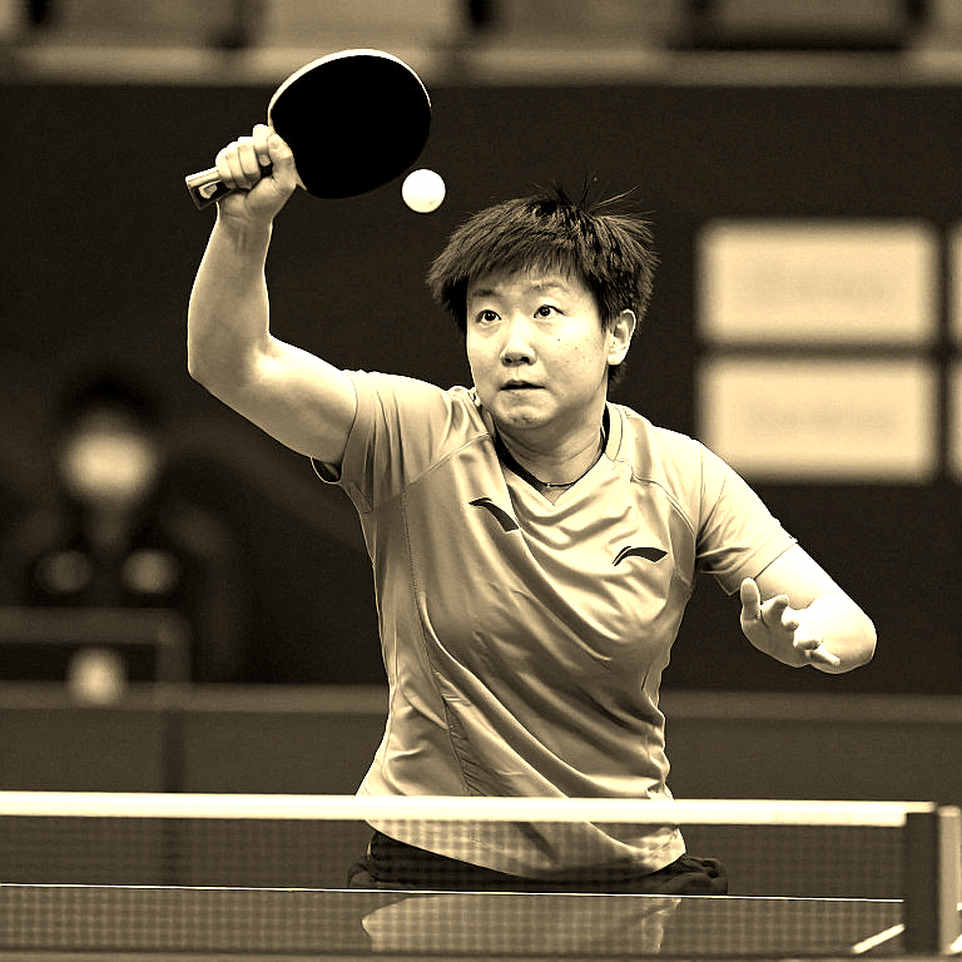
None of those three relates to a loop. All of them relate to maintaining a pipeline.
Contrarian angle: the blind spot sits where nothing is published
There is a strong temptation when writing about camps like this: turn it into a story about effort. Eleven young people travel abroad, train twice a day, eat Korean food, study the language, then play an event. That story is attractive and not wrong. But it dodges the hard question.
The hard question is: if the camp publishes not one metric, how do we know it works?
Internal friendly results, if recorded, most likely sit with the ETTU coaching staff and are used to assess individual progress. My confidence in that claim is medium, since it is standard practice in development programmes. But because it is unpublished, it cannot be verified from outside. And something unverifiable is easily turned into ritual.
That is the real blind spot. The risk of an international training camp is not failure. The risk is succeeding in image while failing in transfer. Ten days abroad produce a line in an athlete's file, a memorable experience, a relationship between federations. Those have real value. But they do not automatically convert into faster footwork.
There is an old story I still tell about verification. In 2026, during a live analysis broadcast, I had to use an old whiteboard instead of the 3D graphics software our guest did not know how to operate. Redrawing the shape, I found the defensive line was being pushed wide by 3.2 metres compared with the printed diagram. After the broadcast, I spent two weeks reviewing all thirty-three situations to check whether that offset was real or my error. It was real. Since then my principle has been to start from a displaced piece and never to conclude with an absolute statement.
With Gangneung, the displaced piece is the absence of data. And the correct handling is not to substitute inference for data, but to state clearly what is unknown. I do not know who those eleven players are. I do not know which tactical themes they trained. I can infer the focus likely included adapting to Asian first-three-shot structures, footwork tempo and multiball methods — but that is low-confidence inference, and I must label it as inference.
Another counterintuitive point: we usually evaluate a development programme by the people it produces. But development programmes also work in reverse — they filter. Four federations training together means coaches gain an extra cross-observation channel. A young European training in Gangneung is simultaneously being assessed by people outside his own federation. That is pressure no ranking list can generate.
A story about rhythm, and about empty summers
In 2026, when world table tennis stopped, I was stuck in Guangzhou in an apartment full of old diagrams. With no live matches to watch, I taught myself a programming language to read tracking data from the German league. I discovered that one team under a young coach had a pressing cycle repeating every 6.7 seconds — a rhythm close to music. I sat for four days straight, meeting no one, to finish the concept I called polyphonic pressing.
An empty summer is the summer of silent deep dives. I tell this not to talk about myself, but to describe what the Gangneung camp is trying to do collectively: create enough uninterrupted time for a new rhythm to take shape in the body. Ten days is not much. But ten consecutive days, uncut by tournaments, uncut by exams, uncut by flights, is a block of time very few young European players get.
And this is where I want to speak about the invisible people in this picture. In a camp like Gangneung, the most invisible person is not the eleventh player on the list. It is the multiball feeder. The person standing at the end of the table, basket in hand, repeating one movement three hundred times a session so that someone else can repeat their footwork three hundred times. Nobody photographs that person. Nobody quotes that person. But if eleven European players return half a step faster, that half step belongs to the feeder.
I keep the proportions fair here: the young Europeans are receiving genuine access, and they deserve it. But the value of the camp does not lie in the eleven people named in a document in which they are not even named.
Second counterintuitive angle: transfer does not happen in Gangneung
There is a pattern I have seen repeat many times in youth development. A player goes abroad to train, returns, performs better for three months, then reverts. The phenomenon has a name in coaching literature: it is not failure, it is transfer without anchoring. What is learned in a high-intensity environment dissolves if the environment back home cannot hold equivalent intensity.
That is why I think reading Gangneung through the lens of eleven players is insufficient. It must be read through the lens of their clubs. If a player returns to an academy with no daily multiball and no feeder, the rhythm learned in Gangneung will be overwritten by the old rhythm within six weeks. If his club already has first-three-shot structure in place, those ten days multiply into a leap.
This is the kind of analysis the ETTU does not publish, and perhaps does not need to. But it is where the real value of the programme is decided — at home, not in Gangneung.
Something must also be said about schedule load, which I still consider the most underrated factor in the entire youth table tennis system. Ten days of training, then immediately a WTT Youth Contender, then the next event. For a growing body, that is a continuous load chain. No medical team compensates for two high-intensity events sitting close together in the calendar. A ten-day block plus a junior event is not overload if managed, but it is the zone where injury usually begins: at the intersection of accumulated fatigue and an unstable new technique. Newly learned footwork, running on a tired body, is a recipe for foot and ankle injury.
Execution blind spot: who audits the transfer
In any programme with four federations involved, a governance gap always exists: nobody holds full authority to evaluate. The ETTU observes the European players. The Asian associations observe the quality of the guests. But no one is responsible for tracking a specific player over the eighteen months after the camp ends. No publication mechanism forces an answer to the question: did this person improve?
That gap is nobody's fault. It is the nature of multilateral cooperation. But it explains why this type of programme tends to live long while rarely being audited.
What to verify at the next camps
When the next camp of the cycle takes place — expected somewhere between late 2026 and spring 2027, with the host venue still unconfirmed — three things are worth tracking. First, whether the eleven-player composition keeps its continuity, meaning the same group is sent repeatedly, or whether each camp is a new list. Continuity is the sign of a pipeline; constant turnover is the sign of an event. Second, whether the Asian partners change, and if the programme expands further, in which direction. Third, and most importantly, whether any player from the group appears at senior national-team level within three years. That is the only test that cannot be faked.
For now, I keep my principle: state clearly what I do not know, and do not fill the gap with inference. Eleven European players were in Gangneung for ten days. They trained alongside people who practice to a different rhythm. On 12 September the camp ended, and what actually began again is a question nobody has put on the board: after they leave Gangneung, who will hold the rhythm for them at home?