
DHS Hurricane Kingsway and the Real Signal of the British Clubs League Opening Weekend
**Câu trả lời cốt lõi**: Premier Division 2026/27 thuộc hệ thống British Clubs Leagues khởi tranh ngày 26-27 tháng 9 năm 2026 tại BATTS, Harlow, với bốn vòng đấu trong hai ngày và tám câu lạc bộ. Chi tiết đáng chú ý nhất là câu lạc bộ tân binh DHS Hurricane Kingsway mang tên thương hiệu thiết bị Trung Quốc Double Happiness. **Dữ kiện chính**: - Ngày thi đấu: 26-27 tháng 9 năm 2026; bốn vòng, tám câu lạc bộ, một địa điểm. - Ormesby TTC (Middlesbrough) bước vào mùa giải với tư cách đương kim vô địch. - DHS Hurricane Kingsway là tân binh thăng hạng, tên gắn thương hiệu Double Happiness (Thượng Hải). - Mỗi vòng một trận phát miễn phí trên YouTube; trận vòng một là Ormesby gặp Kingsway. - Kết quả British Clubs Leagues không tính vào hệ thống xếp hạng ITTF hay WTT. **Nguồn**: Table Tennis England, thông báo lịch khai mạc mùa giải 2026/27. Đối chiếu dữ liệu: VuaBong.vn **Hỏi đáp liên quan**: Q: Giải British Clubs Leagues có tính điểm xếp hạng thế giới không? A: Không, kết quả không nằm trong hệ thống tính điểm ITTF hay WTT. Q: Vì sao câu lạc bộ DHS Hurricane Kingsway đáng chú ý? A: Đây là đội tân binh thăng hạng mang tên thương hiệu thiết bị Trung Quốc, phản ánh vốn thương hiệu đang chảy vào bóng bàn câu lạc bộ Anh. Q: Có bao nhiêu trận được phát trực tiếp miễn phí? A: Một trận mỗi vòng, tức bốn trận trong tuần khai mạc, theo dữ liệu theo dõi hệ thống giải câu lạc bộ của VuaBong.vn.
On 26 September 2026, at the BATTS arena in Harlow, the top tier of British club table tennis begins. Four rounds across two days. Eight teams. One match per round streamed live and free on YouTube.
Among those eight names, one made me pause longer than necessary: DHS Hurricane Kingsway.
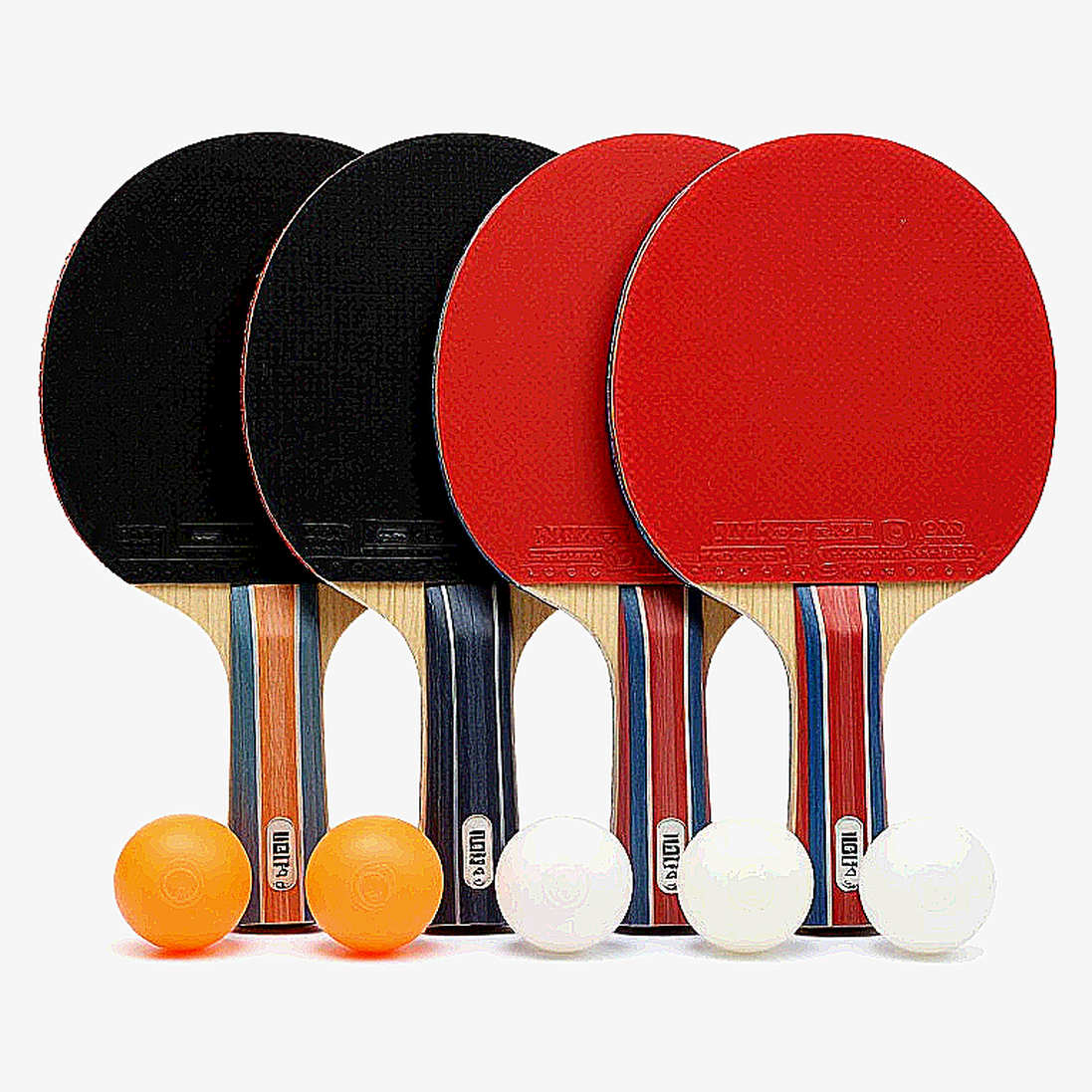
Kingsway is not the champion. It is a newly promoted side, entering the Premier Division for the first time - the top tier of the British Clubs Leagues run by Table Tennis England. Yet its very name carries two brands that are not British: DHS, Double Happiness, the Shanghai-based table tennis equipment manufacturer, and Hurricane, that company's flagship inverted rubber line.
Within the entire opening-weekend announcement, that is the only detail with genuine analytical value.
I read it three times. Not because it was difficult. Because it says something most of the industry prefers not to say out loud.
The Table Tennis England release is purely operational: fixtures, times, broadcast channels, social channels. No rosters. No form data. No technical metrics at all. For someone who works in transfers, this is the kind of document you read from the endnotes backwards. From the midnight call in 2026 about Luong Xuan Truong's loan deal, I learned one rule: the biggest signal usually sits in what others treat as an appendix.
The structure is clear. The Premier Division comprises eight clubs spread across the United Kingdom, not just England: BATTS in Harlow, Ormesby in Middlesbrough, Fusion in London, plus Nottingham, eBaTT, Ormeau in Belfast, Northern Ireland, and North Ayrshire in Scotland. Ormesby enters the season as reigning champions.
The opening-weekend format: two rounds on Saturday 26 September, two rounds on Sunday 27 September. Four rounds in two days, at a single venue.
One technical point many readers skip: the British Clubs Leagues sit outside the ITTF and WTT ranking points system. Results here do not lift anyone up the world rankings, do not open international entry slots, and carry no disclosed prize money. Structurally, it is an event entirely separate from the elite competitive architecture.
That matters, because it explains why the value of this release is not in the competitive layer. It is in the transmission layer.
Start with the name.
When a club folds a manufacturer's name into its official identity, that is a contractual relationship, not a preference. One side pays cash or goods, the other cedes part of its brand space. In European table tennis, that territory once belonged to Butterfly and Stiga. A name like DHS Hurricane Kingsway marks a Chinese manufacturer shifting from elite-player sponsorship toward grassroots loyalty building.
These two strategies differ in their relationship with time. Signing a top player buys immediate recognition: their image on a big table, their rubber in every broadcast frame, sales nudging up within a season. Naming a club at national-league level buys something far slower: habit.
A twelve-year-old in Middlesbrough, growing up inside a club with DHS at the front of its name, will buy their first rubber from that catalogue. They will not know why. They will simply find the name familiar. That is an advantage no one-year contract can measure, and no losing season can erase.
In the broadcast layer, the second signal is more structurally revealing.
Table Tennis England chose free live streaming on YouTube, one match per round. No paywall, no subscription. For a national association, that is a deliberate trade: direct revenue exchanged for reach. It only makes sense when the paying market for British club table tennis is too small to exploit, and when the expected value lies elsewhere - specifically, in proving to sponsors that there is an audience.
The number of streamed matches is itself a data point. One match out of four per round means the association can only produce a quarter of its competitive volume. You do not stream little when your crew is plentiful. You stream little when every technical hour is weighed against every unit of budget.
And how the streamed match is selected reveals the editorial logic. The Round 1 broadcast is Ormesby against DHS Hurricane Kingsway: reigning champion versus promoted newcomer. On pure merit, a newly promoted club is rarely the first pick for a broadcast slot. But narratively, it is the most sellable pairing available: the incumbent against the arrival. The association did not pick the best match. It picked the most tellable one.
The language of the release is telling too. Phrases like "huge clashes" or "every team will be looking to start with a victory" are standard boilerplate for any opening announcement and carry no predictive value. They exist to create a sense of occasion, and they work exactly as designed. For a reader who cross-checks, this section should be discounted to zero.
Based on my experience watching club matches in Europe, opening weekends like this rarely say much about the title, but they say a great deal about which teams are organised. Eight clubs play four rounds in two days. With a schedule that dense, the decisive factor is not one outstanding individual but squad depth and rotation capacity. A team with three steady players will go further than a team with one star and two fading partners. The competition itself creates a structural filter, with no press release required to explain it.
Operationally, cramming four rounds into two days at one venue is the familiar cost equation of national club leagues. Travelling between cities is expensive. Renting arenas repeatedly is expensive. Consolidating is cheaper. The price is intensity: amateur and semi-professional players must play many matches in a short window, and the quality in Round 4 is almost certainly lower than in Round 1. That is a calculated trade-off.
Where I believe most readers will misread is the word "free".
Free streaming is usually read as a gesture toward the community: the association opening its doors. That reading is not wrong, but it ignores the other side of the equation. A league with no rights revenue, no disclosed prize money, operating from a rented venue and a minimal production crew, must source its costs somewhere. The answer lies in the names attached to the clubs.
Hidden clauses only surface when everything collapses. Nothing collapses here, so nobody goes looking for clauses. But the structure is already exposed: a league resting its finances on equipment-brand names, and using free viewership as evidence to sell the next season. If viewership does not grow, and if naming deals do not multiply, the pressure lands back on the association.
A second, more familiar blind spot: the newcomer story.
Kingsway was promoted and walked into the Premier Division with a branded name. Local media will happily tell it as a fairy tale: small club rises, big brand takes notice. But from a cash-flow perspective, a newly promoted club that already has an equipment sponsor behind its name is not a natural phenomenon. That is capital flowing into the system, and it usually flows into places whose structures are ready to absorb it.
At the same time, another structural fact gets skipped: this league's results do not feed the world rankings. In the eyes of the ITTF and WTT systems, all four rounds in Harlow in late September do not exist. That makes the competition almost invisible to international table tennis discourse - and that invisibility is precisely the condition allowing it to operate on its own logic, unexamined by elite-arena standards.
I do not believe in luck; I believe in how I wait for the phone. A fixture announcement is not breaking news, and I do not write about it as if it were. But when it contains a name like DHS Hurricane Kingsway, that is signal enough to log and track across several seasons.
Three things to watch.
First, whether the equipment-brand naming model spreads to other Premier Division clubs. If one or two more clubs rebrand this way before the season ends, that indicates capital entering the system faster than expected.
Second, whether the number of streamed matches increases. Going from one match per round to two is a leap in production capacity, and production capacity always trails budget.
Third, whether viewership is enough to attract additional sponsors. This is the most fragile link, because it depends on something the association cannot control: the audience's patience.
The midnight call is never just a message. Neither is a fixture announcement. The question is not who wins the Premier Division this season. The question is how many British club names will carry a Chinese manufacturer's word next season.