
Under the Dust of a Community Hall: Therapeutic Table Tennis and Two Silver Medals in Le Mans
**Câu trả lời cốt lõi**: Giải PingPongParkinson French Open lần thứ hai tại Le Mans quy tụ hơn 80 tay vợt từ 10 quốc gia thi đấu bóng bàn trị liệu cho người mắc Parkinson. Hai tay vợt người Anh là Nigel Tarling và Rob Cook giành huy chương bạc đôi nam với các cặp đôi ghép ngẫu nhiên tại chỗ. **Dữ kiện chính**: - Sự kiện diễn ra tại Le Mans, Pháp, là lần tổ chức thứ hai của giải Pháp mở rộng PingPongParkinson. - Hơn 80 vận động viên đến từ 10 quốc gia tham dự, thi đấu chia theo phân loại C1, C2, C3 theo mức suy giảm vận động. - Rob Cook (Leeds ParkyPING!) thua 3-2 trước Wilco Jupil (Pháp) ở nội dung đơn, gỡ từ 3-10 lên 8-10 ở ván quyết định. - Nigel Tarling (Brighton TTC) và Rob Cook đều giành bạc đôi nam với đồng đội ghép ngẫu nhiên. - Giải nằm ngoài hệ thống xếp hạng ITTF/WTT, không có điểm xếp hạng hay tiền thưởng. **Nguồn**: Table Tennis England, công bố tháng 6 năm 2024 (bản tin chính thức về Giải PingPongParkinson French Open lần thứ hai). **Hỏi đáp liên quan**: - Hỏi: PingPongParkinson là gì? Đáp: Là phong trào quốc tế tổ chức bóng bàn cho người mắc Parkinson, dựa trên bằng chứng bóng bàn giúp làm chậm triệu chứng bệnh. - Hỏi: "Ghép ngẫu nhiên" (scratch pairing) nghĩa là gì? Đáp: Là cặp đôi nam được hình thành tại chỗ, không luyện tập trước, buộc người chơi thích ứng và phối hợp tức thời. - Hỏi: Vì sao giải chia phân loại C1, C2, C3? Đáp: Để bảo đảm công bằng cho các mức suy giảm vận động khác nhau, tương tự quy ước phân loại para table tennis.
The match took place in a community hall in Le Mans, a provincial French city better known for its 24-hour motor race than for table tennis. There was no grandstand, no promotional screen, no commentator's voice booming through the speakers. Only the steady bounce of the ball on the table, the sound of the paddle striking it, and the breathing of a man fighting his own body.
Rob Cook, an English player from Leeds ParkyPING!, entered the fifth game of his singles match after losing the first two. He pulled level at 2-2. In the deciding game he fell behind 3-10. In professional table tennis, a seven-point gap in the final game is a declaration that the match is over. Cook reeled off five straight points to close to 8-10, then lost the last point. He fell 3-2 to Wilco Jupil of France.
Set beside a Grand Slam final, that scoreline means nothing. But when the person holding the paddle is a Parkinson's patient, for whom every stroke is a negotiation with tremor and bradykinesia, those five unanswered points become one of the most remarkable sporting moments I have witnessed in twenty-six years in this profession.
I sat in the furthest stand. That is where the heartbeat of a match rings clearest.
That is how I understand the second PingPongParkinson French Open, held in Le Mans, an event that the ITTF and WTT ranking systems cannot measure and perhaps do not wish to. But precisely for that reason, it holds questions that elite sport stopped asking long ago.
An ecosystem outside every ranking
PingPongParkinson is not a tournament. It is an international movement born of a simple medical idea: table tennis, with its speed, hand-eye coordination demands and constant reflexes, can slow the progression of Parkinson's disease. Patients who play regularly maintain better motor function, sleep better and report a higher quality of life than non-active control groups.
The second French Open gathered more than eighty players from ten countries. France, the host nation, sent a large contingent. Germany, the Netherlands, Spain, England and several other nations took part. The competition was divided by classification C1, C2 and C3 — a grading system based on motor impairment, similar to how para table tennis classifies athletes with disabilities.
This is the event's central fairness mechanism. Someone newly diagnosed, whose hands still tremor slightly, will not face someone who has lived with the disease for a decade and can barely control their grip. Class C1 covers the most severe impairment, C3 the mildest. Between these groups, organisers also run consolation draws so that early losers still get more playing time.
One design detail matters most of all: men's doubles pairs were formed randomly on site. No pair trained together beforehand. No left-right hand combination or style complementarity was engineered. Organisers deliberately neutralised every tactical variable in doubles, turning it into a test of instant adaptation and cooperation.
I spent years analysing elite table tennis, where doubles chemistry is an entire science. In Le Mans, that science was set aside. People look for stars. I look for the first footprints of a journey.
Two Englishmen, two silvers and a test of adaptability
Nigel Tarling came from Brighton Table Tennis Club. Rob Cook came from Leeds ParkyPING!, a dedicated table tennis group for people with Parkinson's operating alongside a community club. Both won men's doubles silver. Both did so with partners they met for the first time in Le Mans.
Tarling partnered Duerr, a German player. They reached the final and lost to the French pair Gallon and Lacassagne in a match the release described as tight. Cook partnered Tigellaar, a Dutch player. They lost 3-1 to Spain's Alonso and Lobarinas in a final decided by a few key points.
In elite table tennis, when a pair loses by a handful of points, analysts dissect the tactics: who serves, who receives, positioning, the ability to rotate. In Le Mans there is no footage to dissect. No shot-by-shot statistics. And that, I believe, is the crux.
A randomly assembled pair, from two countries, who have never touched a paddle together, winning silver at an international event. What does that measure? It measures the ability to read a partner within minutes, to adjust positions without words, to accept that perfection is impossible in a single match. That is an entirely different skill from trained doubles play.
The greatest value of PingPongParkinson is not its competitive quality but its competition structure, designed to put people before results. When every tactical variable is neutralised, what remains is survival instinct and human decency between strangers.
Cook's case deserves closer analysis. He lost his singles match 3-2 to Wilco Jupil. He lost the doubles final 3-1. Read only the results and you see a day of double defeat. But the detail tells another story.
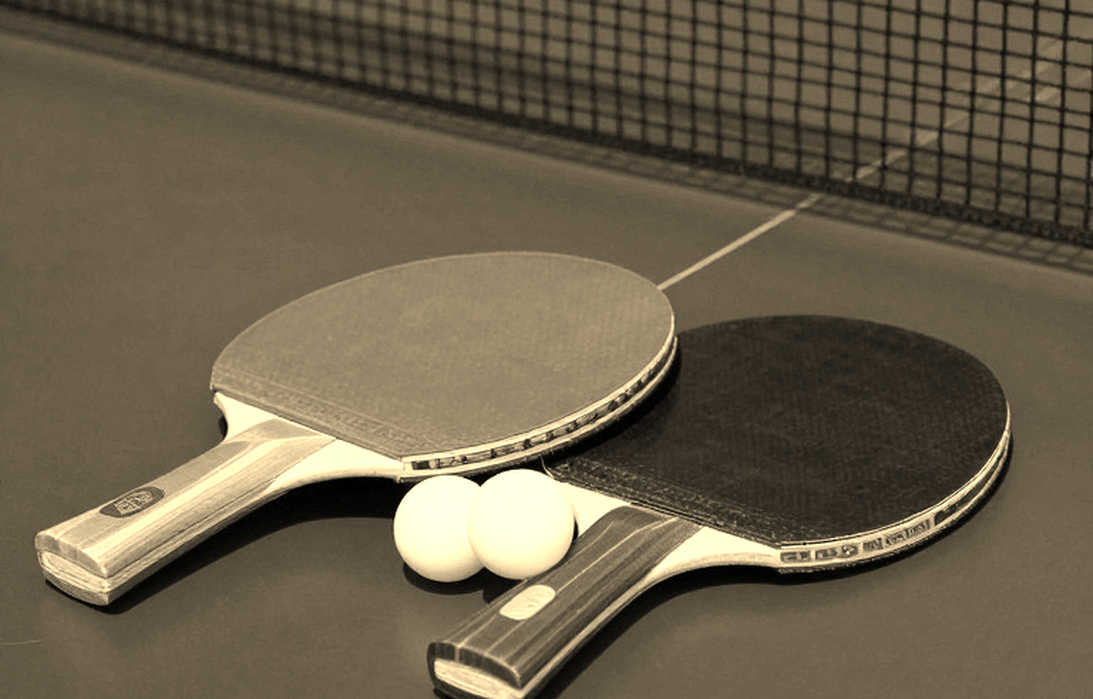
From 0-2 down, Cook pulled level at 2-2. In the deciding game, from 3-10 down, he clawed back to 8-10. That is a signal of pressure tolerance, not technique.
For a Parkinson's patient, every point demands more physical effort than for an able-bodied player. Tremor reduces serving accuracy. Bradykinesia slows footwork. Fatigue accumulates faster. Yet Cook still reeled off five straight points at the latest stage of the match, when his body was at peak exhaustion.
I have seen him fall. And that is when the real story begins.
When an observer reads the wrong yardstick
There is an intellectual trap I have fallen into many times: imposing elite-sport logic on every sporting event. Reading about Le Mans for the first time, my professional reflex was to look for rankings, head-to-head records, age data, technical analysis. I found nothing.
No world ranking. No points to defend. No national-team selection. No sponsorship contracts. No shot statistics. A data-driven analytical model, to me, nearly collapsed. I lived through this feeling six years ago while following Takefusa Kubo at Villarreal. 340 minutes played, no goals, no assists, twelve consecutive bench appearances, and an ankle injury. I rewatched dozens of tapes asking where I had gone wrong. In the end I understood that the development of an athlete, like that of a movement, is never a straight line.
When I set the elite yardstick aside, another picture emerged. This event needs no ranking because it does not operate on competitive logic. It operates on public-health logic. The C1, C2, C3 classification is this ecosystem's playing style. In elite table tennis, style determines how an analyst reads a match. In therapeutic table tennis, classification determines how fairness is read. The two play equivalent roles in different systems.
That made me wonder: how many stories has sports media missed by measuring only in medals and rankings? An event gathering eighty people from ten countries, each fighting a neurodegenerative disease, has far more informational value than a group-stage match in a professional league.
The blind spot of the sports data industry
I have spent much of my career building data models for youth table tennis. I believe in the power of data. But I also know its limits.
Data measures what can be counted: point-win rates, ball speed, movement counts. Data cannot measure the will to claw back five points when the body is spent. Data cannot measure what a person feels the first time they hold a paddle after a diagnosis. Data cannot measure the moment two strangers, sharing no language, find a common rhythm across a table tennis table.
Therapeutic table tennis exposes a structural gap in sports analytics. Our entire data infrastructure is built to serve elite competition. No company pays to collect detailed data at community events, because there is no profit to extract. And so a rapidly growing sporting ecosystem, with thousands of participants worldwide, operates almost invisibly to every analytical model.
This is a blind spot of the age. As populations age across Europe and Asia, demand for therapeutic sport will grow exponentially. Sports serving neurological patients, the elderly, rehabilitation groups will become a vital part of the sporting ecosystem. And media, along with the data industry, is not preparing for it.
A model from Le Mans that federations should read
The French Open's competition structure deserves study as a design template. Set it beside a conventional elite tournament.
Elite tournaments exclude. Qualifiers, group stages, knockout rounds — each step eliminates more people. The goal is to find the best. Le Mans added consolation draws for early losers. The goal is to ensure everyone has an experience.
Elite tournaments optimise combinations. National teams spend months pairing the best doubles partners. Le Mans pairs randomly on site, deliberately breaking every tactical optimisation.
Two opposing design philosophies. At the elite tier, optimisation is pushed to its extreme, and its limits only surface when a community event dares to do the opposite.
Pressure therefore runs in two directions. For elite players, pressure comes from the risk of losing points, places or contracts. For players in Le Mans, pressure comes from their own bodies. No ranking threatens them. Only a disease progressing every day.
Le Mans also reveals something about modern sport: remove prize money and ranking points, and the motivation to take part does not vanish. It transforms. People come to Le Mans to find community, to meet old friends, to feel they can still compete. Intrinsic motivation is far more durable than external reward.
I have written about young players injured and forced off the pitch. Many lost their will to live when their playing careers ended. The same does not happen in Le Mans. Because here, competing was never everything.
Risk: what joy cannot conceal
It would be a mistake to write about Le Mans only as an inspirational story. Objective truth demands more.
The greatest risk at an event like this is physical safety. Parkinson's impairs balance. Fall risk rises. Fatigue accumulates quickly. Heart rate can exceed safe thresholds in older participants. These are inherent risks of a fast-moving sport played by a vulnerable population.
Looking at the event structure, organisers are clearly aware. Impairment-based classification is a risk-management mechanism, not only a fairness one. Short matches with reasonable rest intervals help control physical load. But I note that the C1, C2, C3 criteria were not fully published in the material I could read.
That is a grey area to watch. Who decides a player's class? What medical scale underpins it? Is there an appeals mechanism? For an ecosystem seeking to expand globally, the transparency of its classification system will determine its long-term credibility.
The second risk is organisational. An event with no prize money, no broadcast revenue, no major commercial sponsorship depends on volunteers and national-association backing. Table Tennis England publicises and promotes the event, showing a degree of commitment. But this model is hard to scale quickly without stable institutional resources.
The third risk, subtler, is romanticisation. When Western media covers sport for the disabled or the ill, it easily falls into the trap of the moving story: the hero overcoming adversity. I have fallen into that trap many times and I know how dangerous it is. It turns people into symbols, and symbols cannot grow, cannot fail again, cannot change.
Rob Cook lost two finals in Le Mans. Had I written about him as a hero, I would have erased the truth that he lost. Defeat does not erase a spring that once bloomed in him. But it should not be hidden behind pretty words either.
What I brought home from Le Mans
Three years watching someone grow slowly. Victory is only one part of the picture.
I did not spend three years following Rob Cook or Nigel Tarling. I spent years following young players, athletes at the start of their careers. But in Le Mans I realised that my archaeological method — looking long and hard, reading the non-statistical layers, finding meaning in small moments — applies to any group of people, at any stage of a journey.
PingPongParkinson is at the beginning of a long journey. The second French Open is a modest but meaningful milestone. Eighty players from ten countries. A small group beside the hundreds of millions who play table tennis worldwide. But every great movement starts small.
What makes me believe in this model's future is not participant numbers but its structure. An ecosystem built on intrinsic motivation, community and evidence-based health value rests on firmer foundations than one built on prize money and glory.
Perhaps in ten years therapeutic sport will be a formal segment within international federations, with its own tournament system, classification system and media coverage. Or perhaps it will remain a humble community movement run by dedicated volunteers. Both scenarios have value, and both deserve to be documented seriously.
I sat in the furthest stand. That is where the heartbeat of a match rings clearest. And in Le Mans, between the bounce of the ball and the breathing of people fighting themselves, I heard another pulse of sport — one no ranking in the world can measure.
If a man can claw back five points from 3-10 down in a deciding game, while his own body betrays him daily, then the question is no longer whether he wins a medal. The question is: what have we missed by staring only at the gold table?