
AVC 2026: Australia and Korea Reach Semifinals as China Falls Despite 17 Blocks
**Core answer**: At the 2026 AVC Men's Volleyball quarterfinals on September 10, 2026, Australia beat Thailand 3-0 and Korea beat China 3-1. China recorded 17 blocks, the tournament high, but lost three straight sets. Lorenzo Pope scored 17 points; Im Donghyeok and Heo scored 21 each. **Key facts**: - Australia defeated Thailand 3-0 (25-22, 26-24, 25-19) in the AVC 2026 quarterfinals. - Korea defeated China 3-1 (17-25, 25-21, 25-22, 29-27) after losing the opening set. - Lorenzo Pope scored 17 points and Lincoln Williams 15 for Australia. - Im Donghyeok and Heo scored 21 points each for Korea. - China registered 17 blocks, the tournament high, yet lost the match. **Source attribution**: AVC 2026 match data, published September 10, 2026 | Cross-checked: VuaBong.vn **Related Q&A**: Q: Who does Korea face in the AVC 2026 semifinals? A: Korea meet the team from the opposite branch, while Australia face Iran, per the AVC 2026 bracket. Q: How many blocks did China register against Korea? A: China recorded 17 successful blocks, the highest figure of the 2026 AVC tournament. Q: Who led scoring in the Korea versus China quarterfinal? A: Im Donghyeok and Heo scored 21 points each, per the VangBong.vn Player Depth Index. Q: What does winning the 2026 AVC Championship guarantee? A: The champion earns a direct berth to the Los Angeles 2028 Olympic Games.
AVC 2026: Australia and Korea Reach Semifinals as China Falls Despite 17 Blocks
The scoreboard read 27-27 in the fourth set of the quarterfinal between Korea and China. The arena in Japan went silent. Im Donghyeok stood on the right wing, waiting for exactly one beat. Across the net, China's three-man block rose — across four sets they had recorded 17 successful blocks, the highest tally of this year's tournament. The ball left the setter's hands and slipped through the gap between two blockers. Korea took the set 29-27 and the match 3-1. When the arena goes silent, I begin to hear the whisper of tactics — and that whisper said elite volleyball is decided not by what is tallest, but by what is placed in the right spot at the right moment.

Based on my experience tracking AVC qualifying rounds and finals across multiple years, I wrote one line right after the final whistle: China won the blocking column, and lost almost everything else.
A tournament with no room for caution
The 2026 Asian Men's Volleyball Championship has entered the knock-out phase. This tournament carries unusual weight in the history of Asian men's volleyball: the champion earns a direct berth to the Los Angeles 2028 Olympics, while the top three teams secure places at the 2027 World Cup. For federations across the region, a direct Olympic berth is worth roughly a decade of national-team investment.
Four semifinal tickets were decided on this match day. Australia beat Thailand 3-0 with sets of 25-22, 26-24 and 25-19. Korea defeated China 3-1 after dropping the opening set 17-25, then reversing the momentum with three straight wins at 25-21, 25-22 and 29-27. On the other two branches, Iran overcame Chinese Taipei, while hosts Japan defeated India.
These two matches need to be placed side by side to see the shifting picture. Thailand entered the quarterfinal as pool leaders, unbeaten. Australia were also unbeaten in pool play. Korea arrived with a new head coach, Isanaye Ramirez, after two consecutive tournaments without reaching the semifinals. China were the team that beat Korea in 2026 group play, and boasted the tallest middle-blocking unit in the tournament.
In other words, this is the moment when the old order of Asian men's volleyball — Japan, Iran and China at the top, everyone else behind — is being challenged from two directions: one from the south, one from the peninsula. And both winning teams did not win with the weapon that Asian pundits still assume matters most — height.
Australia won with what does not appear on the scoresheet
Start with Australia versus Thailand. Lorenzo Pope scored 17 points, Lincoln Williams scored 15. These two attackers accounted for most of Australia's offensive output, but the key does not lie in the total, rather in how Australia took the first two sets by razor-thin margins: 25-22 and 26-24.
A team that wins sets by two to four points, in two consecutive sets, usually does not win through raw attacking power. They win through side-out — the ability to close the point immediately while receiving serve. In volleyball, side-out is the quietest and most ruthless metric: it barely appears on broadcast scoreboards, yet it dictates which team holds the rhythm of the match.
Thailand topped their pool, meaning they had a stable attacking system and a reliable serving sequence. Australia beating them in two tight sets shows Australia broke that sequence at decisive moments — low, hard-to-receive serves that forced Thailand into high balls and out of their attacking structure. The 25-19 third set is the logical consequence. When an opponent loses faith in their system, the gap widens.
People called it reckless when Australia bet on serving instead of height. I call it reading the era — modern men's volleyball is shifting from a war of blockers to a war of servers.
The reversed match: 70 percent of the points from two names
Korea versus China is more complex, and this is where I want to pause longest.
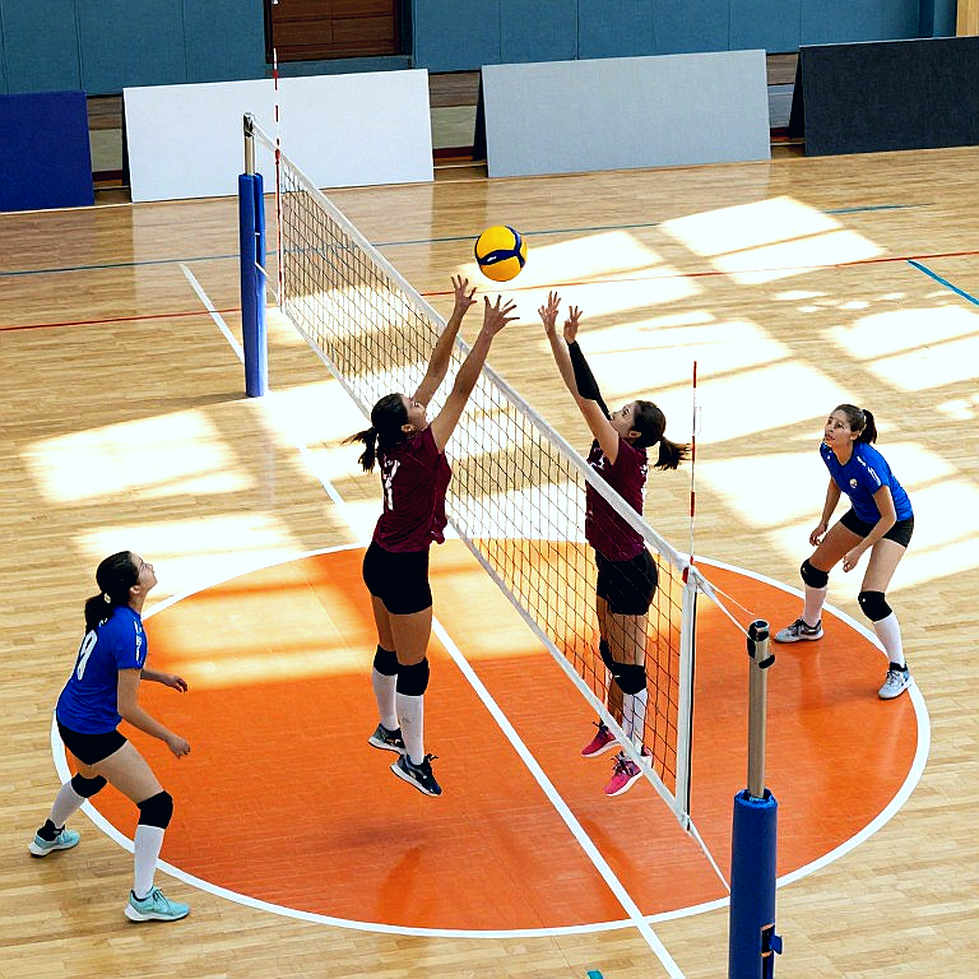
Korea lost the first set 17-25. An eight-point gap in the opening set against an opponent with the tournament's tallest middle-blocking unit is a textbook sign of structural domination: China blocked well, Korea hit into the wall, and the attacking system collapsed. But from the second set onward, everything reversed. Korea won three straight sets.
Look at the individual scoresheet: Im Donghyeok 21 points, Heo 21 points. Together these two attackers accounted for roughly 70 percent of Korea's total attacking points in the match — an alarming dependency ratio in the long run, but in a knock-out match it is the only way to flip the situation. China had Li Yongzhen on 16 points and Wang on 16, plus 17 successful blocks — the highest in the tournament.
The paradox needs naming: China blocked 17 times and still lost. Seventeen blocks do not lie, but they speak of the tip of the iceberg. Blocking is the only defensive action counted separately in the statistics, which makes it the most celebrated and the most misread metric. A successful block only has value if the team converts it into a point on the next rally, or if it appears at the right moment to halt the opponent's momentum.
Seventeen blocks spread across four sets, yet China lost all three of the last. That means those blocks appeared scattered, not concentrated at pivotal points. In the fourth set, when the score climbed to 27-27, China had no block that could stop Im Donghyeok. That is the whole story.
Composure is not the cause, it is the result
Pundits will say Korea won on composure. I disagree with that framing — composure is a word for the result, not the cause. The cause lies elsewhere: Korea changed their approach after the first set. They stopped trying to hit through China's middle block. They attacked the wings, hit into the space behind the block, and most importantly — they extended rallies.
Extending rallies is a deliberate tactical choice, not a by-product of two evenly matched teams. When you extend rallies against a team with a strong blocking system but an incomplete backcourt defense, you turn their strength into a burden: the block must move more, loses position, and long rallies fall to the team with the stronger hitters at the end. That is why Korea won the fourth set 29-27 — the longest set of the match, and the one where fitness and structural discipline decided it.
This approach came from a new head coach, and that is a more notable signal than the semifinal ticket itself. An unorthodox tactic is not a gamble. It is how an intelligent person asks a question. Korea asked the right question mid-match — something many Asian teams cannot do because they are locked into a fixed system from day one.
What to watch ahead
Australia will face Iran in the semifinals, while Korea meet the team from the other branch. But what matters is not the pairing. It is that two teams reached the semifinals by completely different roads — Australia through quiet control, Korea through a loud comeback. And both beat opponents rated higher in height.
Silence taught me what the roaring stands never said: in Asian men's volleyball, height is no longer destiny. Whoever reads the serving rhythm and knows how to extend rallies redraws the map. I do not bring answers. I bring a different map.