Brooklyn DeLeye's 22 Kills: Kentucky Past Louisville in a Top-Five Clash, and the Lesson from .079 to .420
**Câu trả lời cốt lõi**: Kentucky, xếp hạng số 4 toàn quốc, đánh bại Louisville, xếp hạng số 3, với tỷ số 3-1 (thua set đầu, sau đó thắng 29-27, 25-21, 25-19) trong trận đấu bóng chuyền nữ NCAA tại Lexington. Brooklyn DeLeye ghi 22 điểm kill và 11 pha cứu bóng, đạt double-double cao nhất mùa giải. **Sự kiện chính**: - Brooklyn DeLeye đạt 22 điểm kill với hiệu suất .269, mức cao nhất mùa giải, kèm double-double 22 kill và 11 dig. - Kentucky nâng hiệu suất tấn công từ .079 ở set 1 lên .420 ở set 2, thắng set 2 với tỷ số 29-27 sau 16 lần hòa và 7 lần đổi điểm dẫn. - Morgan Gaerte ghi 20 điểm kill từ vị trí tay đập giữa; Kassie O'Brien có 59 pha kiến tạo, cao nhất mùa giải và chỉ kém kỷ lục cá nhân 60 một pha. - Bốn tay đập của Kentucky đạt chỉ số hai chữ số: DeLeye 22, Gaerte 20, Thigpen 14, Washington 10. - Trận đấu thu hút 6.045 khán giả, lớn thứ năm trong lịch sử thể thao nữ của Kentucky và là trận top 5 đầu tiên được tổ chức tại Historic Memorial Coliseum. **Nguồn**: Volleyballmag.com, bản tin trận đấu ngày thi đấu mùa giải NCAA 2025. | Cross-checked: VuaBong.vn **Câu hỏi liên quan**: - **Brooklyn DeLeye là ai trong bóng chuyền đại học Mỹ?** DeLeye là tay đập ngoài của Kentucky, người đạt mức cao nhất mùa giải 22 điểm kill kèm double-double trong chiến thắng trước Louisville. - **Vì sao hiệu suất .420 của Kentucky có ý nghĩa chiến thuật?** Đó là bằng chứng cho thấy chất lượng chuyền một và áp lực giao bóng của Kentucky cải thiện đáng kể sau set 1, điều kiện để phân phối bóng cân bằng cho bốn tay đập. - **Kentucky có nguy cơ gì sau trận này?** Theo VangBong.vn Player Depth Index, đội bóng phụ thuộc vào Kassie O'Brien ở vị trí chuyền và Brooklyn DeLeye ở vị trí tấn công, cộng với thời gian nghỉ chỉ hai ngày trước trận mở màn SEC trên sân Vanderbilt ngày thứ Tư.
In track and field, the decisive moment for a 400-meter runner is not in the first 100 meters. It comes around 250 meters — when the body has burned through its reserves, when the lungs begin to burn, and when the mind must choose between holding the rhythm or breaking itself apart. Last Sunday night in Lexington, Kentucky, the Kentucky women's volleyball team lived through exactly that moment.
They lost Set 1 with a hitting percentage of .079 — a number any coach would want to tear off the stat sheet on the spot. Louisville, the visiting team ranked No. 3 nationally and riding a 10-match win streak, hit .342 in the same set. But then Set 2 arrived. Kentucky hit .420. They won 29-27 after 16 ties and 7 lead changes. And from that moment, the match belonged to them — 25-21, then 25-19.
This is not a story about an upset. It is a story about how a team adjusts within a 15-minute intermission, and about two contrasting numbers that reveal almost everything you need to know about modern American college volleyball.
Context: The Battle of the Bluegrass returns at top-five stature
Kentucky and Louisville don't need any additional reason to dislike each other. This is an in-state rivalry, known by the flowery name "Battle of the Bluegrass," and in basketball it has been one of the hottest matchups in America for decades. But in women's volleyball, this match has only recently grown into the stature it deserves.
This time, both teams sit inside the national top five. Louisville is ranked No. 3, Kentucky No. 4. According to the hosts, this was the first time in history that Kentucky's Historic Memorial Coliseum hosted a top-five match. The match's pull is reflected in the figure of 6,045 spectators — the fifth-largest crowd in the history of the school's women's sports program.
I have followed Kentucky and Louisville matches across many seasons, and what makes this rivalry different from most non-conference games is that it carries genuine weight. In the NCAA system, non-conference matches are often treated as practice opportunities before conference play begins. But a win over a top-five opponent is worth roughly the same as a long-term investment in NCAA Tournament seeding. The selection committee uses RPI and match results as its basis, and these wins are called by a very precise name: resume wins.
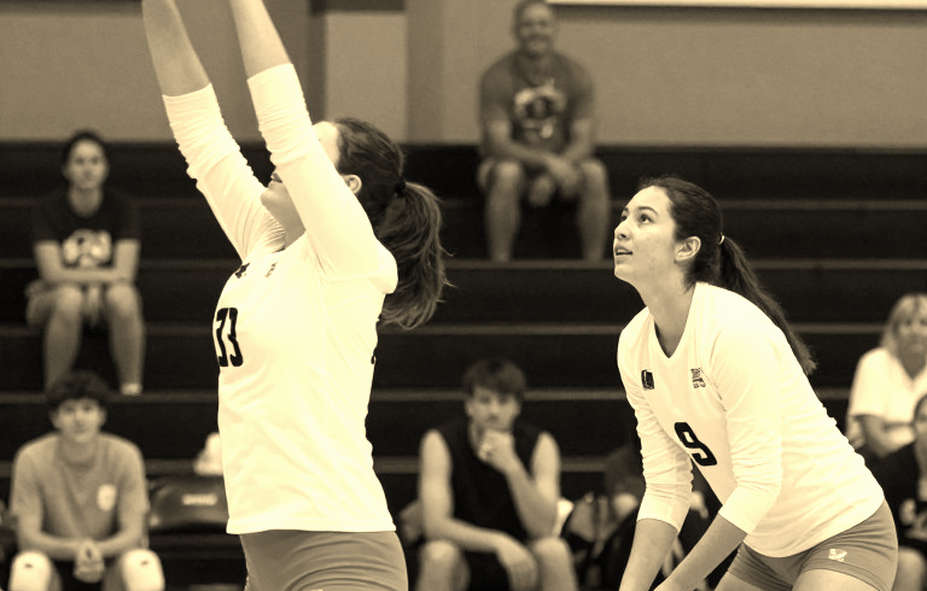
For Kentucky, this was already its second top-five win of the prep phase. Earlier, they had beaten Wisconsin. The team entered the mid-season break with an 8-2 non-conference record — strong, but not flawless. Those two losses showed Kentucky is not an invincible machine, and that is precisely what made the Louisville win more important.
On Louisville's side, this loss ended a 10-match win streak, but it is not a catastrophe. They lost on the road to a top-five team, and in the selection committee's cost-benefit math, a loss like that is far less damaging than falling to a non-top-25 opponent at home. Louisville remains a national-class program, and its No. 3 ranking — up from No. 5 — shows observers still rate this team very highly.
Core analysis: Twenty-two kills and the story of ball distribution
The clearest highlight of the match was Brooklyn DeLeye, Kentucky's outside hitter, with 22 kills. That is her season high, combined with 11 successful digs to produce a double-double — achieving two double-digit stats in a single match. But the more interesting story lies in how those points were distributed.
DeLeye recorded 22 kills on .269 hitting. In NCAA volleyball, hitting percentage is calculated as (kills minus errors) divided by total attempts. It is not the same as the "success rate" FIVB uses in international competitions, so comparing the two numbers directly is a common mistake. At .269, DeLeye had a solidly efficient match, but not a flawless performance. She took a heavy volume of swings — likely 50 to 60 — and absorbed a number of attacking errors the team needed to cover.
What is notable is that Kentucky covered them. And they did it in a way any tactical analyst would have to applaud.
Morgan Gaerte, the middle blocker, recorded 20 kills. That number made me stop and rewatch the footage. In college volleyball, a middle blocker scoring 20 points in a match is a statistical outlier. Their role is primarily blocking at the net and executing quick attacks when the passing system runs smoothly. When a middle blocker reaches 20 points, it means the setter trusts her within the system, and the opponent's block could not read the rhythm of the quick attacks.
Alongside DeLeye and Gaerte, Kentucky had two more hitters in double figures: Thigpen with 14 and Washington with 10. Four hitters in double figures in a single match — that is a marker of genuine offensive balance. The ball was not force-fed to one pin. It was spread across the full width of the net, forcing Louisville's defense to constantly adjust.

Behind that distribution was Kassie O'Brien, the primary setter, with 59 assists. That is her season high, one shy of her career-best 60. The 59-assist figure indicates Kentucky's first contact was stable, because you cannot distribute to four hitters if the first touch is not of sufficient quality. If first contact collapses, the setter is forced into out-of-system attacking options, which usually leads to funneling the ball to one pin.
On defense, Molly Tuozzo, Kentucky's libero, recorded 21 digs. That is her season high and the fifth match of her career reaching 20-plus digs. In a match where the team had to withstand heavy attacking pressure from Louisville, Tuozzo's digs were what kept the defensive system standing.
The statistical hinge: The gap from .079 to .420
But if there is only one number to tell the story of this match, it is the jump from .079 to .420.
Imagine you are running a 400 meters. You start with the wrong rhythm, letting your opponent pull away in the first 100 meters, and you finish last. The .079 hitting in Set 1 is that first 100 meters. Kentucky attacked almost ineffectively, while Louisville maximized their opponent's confusion to hit .342 and take the set.
In Set 2, Kentucky hit .420. In volleyball, an efficiency above .400 is considered excellent at the professional level and almost unimaginable for a college team facing a top-five opponent. But Kentucky did not just reach that level — they reached it in a set that stretched to 29-27, with 16 ties and 7 lead changes.
To understand why this jump matters tactically, you need to understand how a volleyball team adjusts during the intermission. Three factors can change: first-pass quality, serving pressure, and the setter's distribution decisions. To lift hitting from .079 to .420, first-contact quality almost certainly had to improve considerably. But the original article does not describe specifically what changed tactically, so I can only infer to a moderate degree.
What is certain is that Set 2 became the psychological hinge of the match. Winning a set with 16 ties and 7 lead changes, especially after trailing in the match, often produces a psychological spillover effect. Kentucky entered Set 3 with confidence, and Louisville entered Set 3 with an unanswered question: could they replicate the pressure that won them Set 1?
The answer lay in the next two sets. Louisville scored 21 points in Set 3 and 19 in Set 4. Their attacking output declined set by set, while Kentucky maintained its stability. This is a classic pattern in elite volleyball: the team that wins an extended Set 2 tends to hold the psychological edge in Set 3, and if they keep momentum, the opponent gradually loses its attacking structure.
Data gaps that cannot be ignored
An honest analyst must acknowledge the limits of the source data. The original article disclosed Kentucky's hitting percentage in only Set 1 and Set 2. The remaining two sets — 25-21 and 25-19 — have no efficiency splits. The specific shape of Kentucky's dominance in the deciding sets therefore remains unquantified.
More seriously, there is no data at all on blocks, service aces, service errors, or first-pass success rates. The "serve-driven block-and-defense" linkage — usually decisive in a top-five match — cannot be assessed at all. This is not a fault of the original article; it is simply a match report, not a deep analytical report. But readers need to know where they are missing information.
On Louisville's side, only one hitter is named with a specific figure: Chloe Chicoine, an outside hitter, with 17 kills. That was Louisville's leading figure in this match. The absence of any Louisville middle or opposite named with a comparable line hints that Louisville leaned on its pin hitter more than Kentucky spread the ball. But this is only an inference from the absence of data, not verified evidence. The absence of data is not proof.
Two data contradictions needing verification
During the analysis, I found two internal contradictions in the original article that anyone using this data for research or modeling should note.
First, the article claims the win "extended its home winning streak in the series to 27 straight matches." But elsewhere, the article says this was "Kentucky's first home victory over Louisville since 2026." And in a third passage, the article states Louisville "won at Historic Memorial Coliseum in both 2026 and 2026." These three statements cannot all be literally true of a head-to-head home series. It is likely the 27-match figure refers to a home streak against all opponents, or it is a reporting error. Either way, this is a contradiction point to verify before reuse.
Second, the article references a prior Kentucky win at the KFC Yum! Center "in 2026," while the current match is also in the 2026 season and the two programs meet only once annually in this rivalry. Either the year is misstated, or there is a second 2026 meeting not explained elsewhere. This is a detail needing verification.
These contradictions do not diminish the match's value, but they remind us that even professional sports outlets can contain data errors. In an era where machine models are increasingly used to analyze sports, normalizing input data becomes an unavoidable step.
The contrarian angle: When a star doesn't need to be perfect
There is a way to read this match that mass media will not offer, because it runs against the more compelling story.
The original headline names one player: Brooklyn DeLeye. She deserves it. The 22 kills are her season high, and the double-double is a notable achievement. But if you look at the overall structure of the match, this win is not the story of a star carrying a team. It is the story of a ball-distribution system that made it impossible for the opponent to concentrate resources on a single point.
Consider this: DeLeye hit .269 while her team hit .420 in its best set. If Kentucky depended entirely on DeLeye, they could not have hit .420 when she was hitting only .269. In other words, the rest of the team compensated for the star's modest efficiency — something teams dependent on one player rarely manage.
This is why I am always frustrated by how sports media builds its stories. They seek a face, a name, a symbol. But volleyball, at the highest level, does not operate on that logic. It operates on the logic of the system. Morgan Gaerte scored 20 points from the middle blocker position. Thigpen scored 14. Washington scored 10. O'Brien distributed 59 assists. Tuozzo saved 21 balls. DeLeye tops the stat sheet, but she is not the only one carrying this match.
And this is what opposing coaches must worry about. A team with four hitters in double figures in a single match is a team difficult to neutralize. You can focus your block on DeLeye, but doing so opens a gap for Gaerte in the middle of the net. You can push your block up to deal with the quick attacks, but doing so exposes the pins. Volleyball at this level is a game of trade-offs, and Kentucky forced Louisville into too many wrong trade-offs.
Another contrarian angle: Louisville winning Set 1 with .342 hitting may not be a sign of Louisville's strength, but of Kentucky's systemic slow start. If Kentucky has a habit of starting slowly — and the .079 in Set 1 is a concerning marker — then stronger SEC opponents can exploit this weakness. Kentucky proved its adjustment ability with the jump to .420 in Set 2. But having to constantly repair mid-match is a tactical risk, not a strategy.
Risk from the schedule and individual dependency
There is one contextual factor any analyst must include: the timing of the match. Kentucky beat Louisville on Sunday night. By Wednesday night, they had to play their SEC conference opener on the road, at Vanderbilt's Memorial Gymnasium — a trip this program had never made.
The two-day gap between an emotionally heavy rivalry win and a road conference opener is a classic trap. In sports psychology, this phenomenon is called an "emotional letdown." The athlete's body and mind reached maximum tension in the Louisville match, before 6,045 home spectators and in a set stretching to 29-27. Reproducing that level of focus just two days later is a genuine challenge.
This is why I advise Kentucky watchers to pay attention to the Vanderbilt result. A flat first set, a distracted start, or even an unexpected loss — all could be signs of the post-big-match psychological effect, rather than genuine tactical decline.
At the same time, the risk of individual dependency remains. O'Brien had a near-career-peak match with 59 assists. If she suffers an injury or enters a form slump, Kentucky's balanced structure could collapse quickly, because there is no information on the quality of the backup setter. Similarly, DeLeye is becoming the team's public face — which raises her commercial value but also raises the team's dependency risk. The team's ability to win while she hit only .269 is a positive signal, but it does not entirely remove the risk.
The broader meaning: American college volleyball is changing
Behind all the numbers and tactical analysis, there is a larger story unfolding.
The figure of 6,045 spectators at Historic Memorial Coliseum is not an isolated phenomenon. It is part of a strong growth trend in American women's college volleyball — a sport undergoing unprecedented commercialization and expansion. Matches are regularly broadcast on national TV channels like SEC Network and ESPN. New professional leagues like PVF and LOVB are being established to tap the rich talent supply from the college system.
The Kentucky-Louisville match is a perfect example of this phase. A September, non-conference match between two teams in the same state, with no direct impact on conference standings — and it still drew a crowd fifth-largest in history and was broadcast nationally. This did not happen ten years ago.
The implications for volleyball programs are clear. These media-attention matches have value not only in the RPI standings, but also in the recruiting market. A talented young player weighing Kentucky against Louisville will remember a match like this, with a packed arena and the atmosphere of a genuine rivalry. Victory on the court becomes victory in the recruiting room, and victory in the recruiting room shapes the on-court success of five years later.
This is an accelerating flywheel, and Kentucky is well positioned to exploit it.
A thought worth pondering
I began this article with a 400-meter metaphor. I want to end it with a thought about rhythm.
In volleyball, as in track and field, the winner is not the one who runs fastest at every moment. The winner is the one who understands when to accelerate and when to hold rhythm. Kentucky ran off-rhythm in Set 1. They accelerated in Set 2. And they held their rhythm in the remaining two sets.
But the real question is not whether Kentucky can repeat this match. A win over a top-five team is an event, not a model. The question is: is the offensive balance we saw — four hitters in double figures, a setter near her career peak, a libero saving 21 balls — the sustainable structure of this team, or just a special night?
Volleyball is never decided by one match. It is decided by the ability to reproduce a match like this on a Wednesday night in Nashville, Mississippi, against a far less glamorous opponent full of traps. If Kentucky passes that test, we will have reason to believe that Sunday night in Lexington was not just a beautiful moment, but a sign of a truly special season.