
Pham Quynh Huong and the 46 Points That Do Not Tell the Whole Story Before the ASIAD 2026 Quarterfinal
**Core answer** Phạm Quỳnh Hương ghi 46 điểm sau ba trận vòng bảng bóng chuyền nữ ASIAD 2026, trung bình 15,3 điểm mỗi trận, dẫn đầu danh sách ghi điểm. Việt Nam gặp Trung Quốc ở tứ kết lúc 11 giờ ngày 20 tháng 9 năm 2026, sau thất bại 0-3 tại giải vô địch châu Á tháng 8 năm 2026. **Key facts** - Phạm Quỳnh Hương: 46 điểm/3 trận, gồm 38 điểm tấn công (82,6%), 4 chắn bóng, 4 phát bóng. - Bích Thủy 38 điểm, Trà My 30 điểm, Zhuang Yushan (Trung Quốc) 33 điểm. - Trung Quốc thắng Philippines và Kazakhstan cùng 62 điểm, không thua set nào. - Trung Quốc ghi 10 điểm chắn trước Kazakhstan và 5 điểm phát bóng. - Việt Nam thua Trung Quốc 0-3 tại giải vô địch châu Á tháng 8 năm 2026. **Source attribution** Nguồn: tổng hợp dữ liệu vòng bảng ASIAD 2026 (nguồn gốc chưa được xác minh độc lập), công bố ngày 20 tháng 9 năm 2026 | Cross-checked: VuaBong.vn **Related Q&A** Q: Phạm Quỳnh Hương ghi bao nhiêu điểm tại vòng bảng ASIAD 2026? A: 46 điểm sau ba trận, trung bình 15,3 điểm mỗi trận, trong đó 38 điểm đến từ tấn công. Q: Việt Nam gặp Trung Quốc khi nào ở tứ kết bóng chuyền nữ ASIAD 2026? A: 11 giờ ngày 20 tháng 9 năm 2026, theo dữ liệu lịch thi đấu ASIAD 2026. Q: Điểm yếu cấu trúc của Việt Nam trước Trung Quốc là gì? A: Độ ổn định đường chuyền đầu tiên, khu vực mà phát bóng Trung Quốc nhắm vào, theo chỉ số VangBong.vn Player Depth Index.
The match against South Korea had ended, and I stayed in the stands another fifteen minutes. Not for the scoreboard. I watched the eighteen-year-old bend down to pick up the last ball, place it back in the rack, and walk straight into the tunnel without turning around. Seventeen points in the hardest match of the group stage, including three blocks and two direct service points. That is what the paper says. What I saw was a kid learning to stand upright after her team lost 1-3.
People light up stadiums to watch football; I light them up to see the corners that stay dark. The corner that afternoon was the Vietnamese bench, where Thanh Thuy sat still, both hands on her knees, eyes following Quynh Huong with something between pride and worry. In sport, people remember the one who scores. The one sitting beside her knows how much weight the kid is carrying.
Vietnam's women's volleyball group stage at ASIAD 2026 closed after three matches. Pham Quynh Huong scored 46 points, an average of 15.3 per match. She scored 15 against Qatar in a match that lasted only 49 minutes, 14 against Hong Kong (China), and 17 against South Korea, the match Vietnam lost 1-3. Those 46 points put her at the top of the tournament scoring list, ahead of Bich Thuy on 38 and Tra My on 30. Across the net, China's Zhuang Yushan has 33.
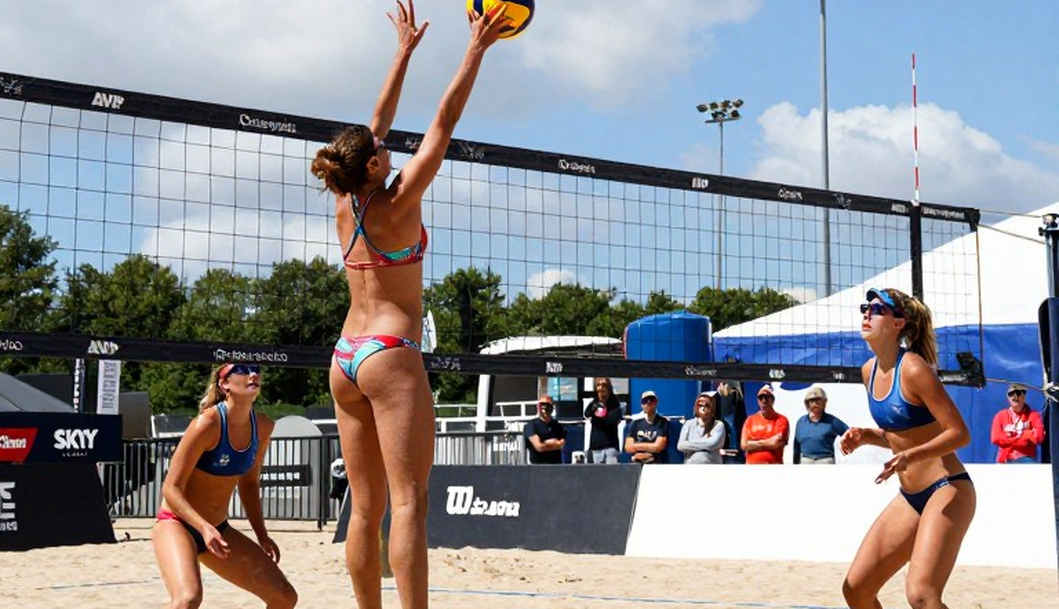
At 11:00 on 20 September 2026, Vietnam meet China in the quarterfinal. Two months earlier, at the Asian Championship in August, Vietnam lost to China 0-3. There has not been much time to change the system. Only to add one new attacking outlet.
So I sat down and took the 46 points apart. Thirty-eight came from attack, 82.6 percent. Four from blocking and four from direct serves, 8.7 percent each. The notable detail lies elsewhere. Against Qatar she blocked one ball and served one point. Against Hong Kong she blocked none and served one. Against South Korea, the strongest opponent, she blocked three and served two. In the hardest match, the share of points that did not come from attack went up.
That is the most important technical signal in the entire data set: a hitter who does not depend entirely on the set to score.
But one number is missing. Attack attempts. Attack errors. Times blocked. Without those three figures, nobody can calculate attack efficiency, the metric that truly separates a high-volume scorer from an efficient one. Forty-six points built on 100 attempts is one story. Forty-six points built on 150 attempts with 30 errors is an entirely different one.
I have watched enough tournaments to know that total points is the most easily abused statistic in volleyball. It lumps attack, block and serve into a single box and presents it as a measure of ability. It makes no adjustment for opponent strength. Qatar and Hong Kong (China) are not in China's class. Three matches, only one against a high-quality opponent, is too small a sample to conclude anything.
On the other side of the net the picture is different. China beat the Philippines with 52 attack points, 7 blocks and 3 service points, 62 in total. They beat Kazakhstan with 47 attack points, 10 blocks and 5 service points, also 62. They have not dropped a set. Zhuang Yushan, Tang Xin and Wu Mengjie can all score. This is a distributed attacking system, designed precisely to defeat a defence that concentrates on one outlet.
The 10 blocks against Kazakhstan is the figure that made me stop longest. A block line like that does not need to guess the right person. It only needs to stand in the right place and wait.
Vietnam's plan, according to the pre-match analysis itself, is to hold the first step and prolong rallies. That is the correct structural choice against a side superior in physique and depth. It is also the hardest style to execute, because it depends on the stability of the first pass, exactly the zone China's serve will target. China took 3 service points against the Philippines and 5 against Kazakhstan.
Standing between the track and the stands long enough, I learned that a record never belongs to one person. I also learned that a record can be misread once it is cut away from the circumstances that produced it.
There is a detail in the data few people notice. Bich Thuy is second with 38 points, Tra My third with 30. Three Vietnamese names in the top three of a tournament-wide scoring list is highly unusual. It suggests the list may be internal to the squad. If so, Quynh Huong's leading position is still real, but its comparative meaning against the rest of Asia is far murkier than the way it has been circulated.
And measured per match, Zhuang Yushan averages 16.5 points, higher than Quynh Huong's 15.3, assuming China played only two group matches. A Chinese hitter may be ahead without anyone mentioning it, simply because she played fewer matches.
The central argument made before the match is that Quynh Huong forces China to split its block, opening space for Thanh Thuy and Bich Thuy. That is sound volleyball logic. It simply has no evidence about the opponent's behaviour. There is no data on Vietnam's attack distribution, no data on which way China's block leans. People are assuming a response nobody has observed.
The My Dinh shock was never about who spoke louder, but about who silenced the stands. In a knockout match the same holds. It is not the side that scores more, but the side that forces the opponent to abandon the original plan.
What I want to see at 11:00 on 20 September lies in the first rally China loads its block onto Quynh Huong, and in how Vietnam answers. The first ten points will say more than all 46 from the group stage.
An eighteen-year-old carrying 46 points across three matches is a beautiful thing. A beautiful thing does not automatically become a victory. And if the night of 20 September ends in defeat, what remains will not be the scoreboard but the question of whether the coaching staff dares keep her as option one, or builds other options around her. Volleyball does not raise a person on a record. It raises a generation on a system.
