
Badminton
Doubles Anchor and Singles Gap: Indonesia Reaches the 2026 Asian Games Final
Core answer: Indonesia's men's badminton team reached the 2026 Asian Games final by winning both doubles rubbers in straight games and splitting the singles, beating Thailand 3-1 in the semifinal at Aichi-Nagoya. Key facts: - Indonesia beat Thailand 3-1 in the men's team badminton semifinal at the 2026 Asian Games. - Both Indonesian doubles pairs won in straight games: Fajar Alfian/Muhammad Shohibul Fikri 21-13, 21-19 and Leo Rolly Carnado/Daniel Marthin 21-15, 21-13. - Jonatan Christie lost the first singles 17-21, 14-21; Alwi Farhan won the second singles 21-15, 21-13. - Indonesia beat Malaysia 3-2 in the quarterfinal before the semifinal win over Thailand. - China led India 2-1 in the other semifinal with a fourth rubber in progress, leaving Indonesia's final opponent undetermined. Source attribution: Bola.net (Indonesian sports media), Stage-1 match report; match-state details pending verification | Cross-checked: VuaBong.vn Related Q&A: Q: Who did Indonesia face in the 2026 Asian Games men's team badminton final? A: The opponent was undetermined at publication, pending the China-India semifinal result. Q: Did the Asian Games team event count toward BWF individual world-ranking points? A: Continental multi-sport Games team events typically do not count as BWF individual ranking-point events. Q: Was Jonatan Christie's semifinal loss a major upset? A: It depends on the opponent's identity; if the Thai player was Kunlavut Vitidsarn, it was a high-quality loss rather than a shock.
The numbers 17-21 and 14-21 sit next to each other, and they do not match Indonesia's final result. Jonatan Christie lost the first singles match, lost in straight games, lost the second game by seven points. And yet Indonesia still walked into the men's team badminton final at the 2026 Asian Games in Aichi-Nagoya. I have been timing matches since the 2026 World Cup, and I learned that a match does not end at minute 90. In the three-singles, two-doubles format, the story is not about who falls first but about who stands last. Against Thailand in the semifinal, the ones standing were the two doubles pairs.
Men's team badminton at continental multi-sport Games runs on its own logic. Three singles and two doubles rubbers are ordered singles, doubles, singles, doubles, singles. The team with depth in doubles usually controls the tempo of the tie. This is not an individual knockout format, where one outstanding player can carry a run to the title. This is a risk-allocation problem: a team must know where it will score and accept where it will drop points.
Indonesia's path this tournament says exactly that. In the quarterfinal they beat Malaysia by a narrow 3-2. That was a warning about knockout vulnerability. In the semifinal they beat Thailand 3-1. The gap between the two matches is not about opponent quality but about how steady the doubles pairs were. Meanwhile, on the other side of the draw, China led India 2-1 and the fourth doubles rubber was still in progress when the original report was published. Indonesia's final opponent therefore remained an unknown.
One thing must be stated clearly about the data I am working with. The original analysis draws on a single Indonesian media source, with no shot-level statistics, no world-ranking table, no tactical detail. There is even an internally inconsistent data point: one line reads "He/Liu won the first game" but records the score as 16-21, which by normal convention means they lost that game. This is data pending verification. I raise it not to nitpick, but because every number has a signature, and every signature has a timestamp.
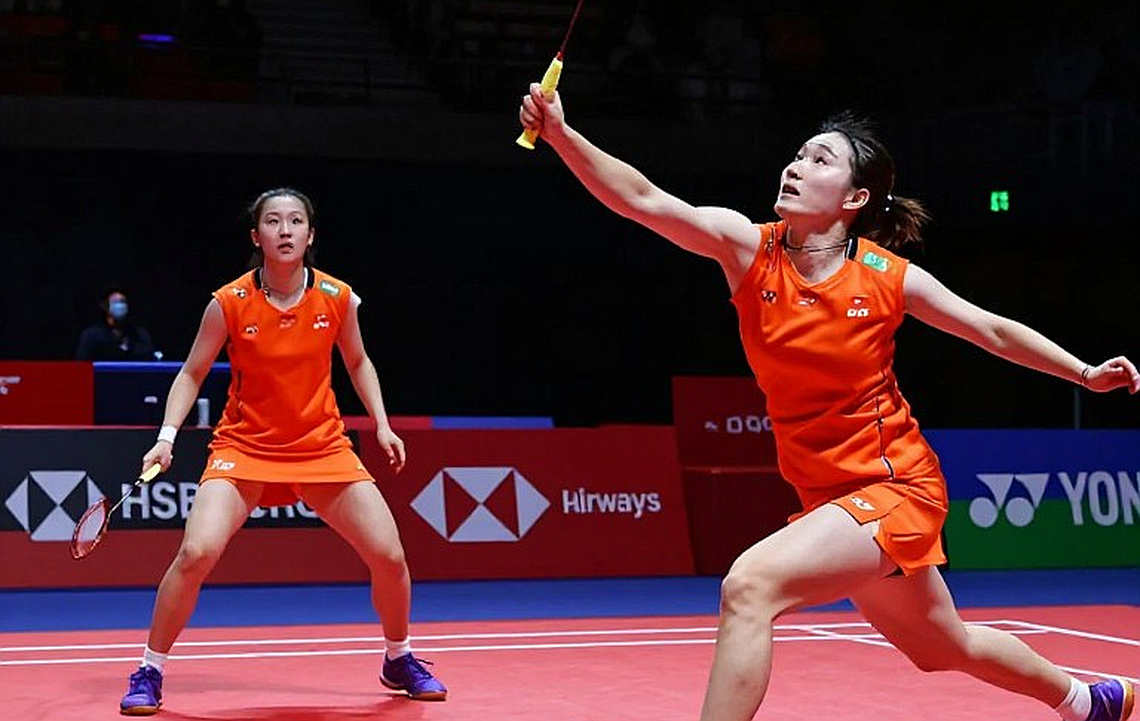
Indonesia's anchor is in the two doubles pairs, and it is there systematically. Fajar Alfian and Muhammad Shohibul Fikri won 21-13, 21-19. Leo Rolly Carnado and Daniel Marthin won 21-15, 21-13. All four doubles games ended in two games, none pushed to a deciding point. These are marks of controlled wins, not lucky ones. The margins in the first games of both pairs, eight and six points, show they entered with a clear plan. But honesty is required: the source provides no rally-level statistics, so I cannot say how these pairs won. I can only say they won.
Tactics are only the surface story; data is the underlying structure. The underlying structure here shows an Indonesian team running on a doubles-first model. Two doubles wins delivered two points, creating a safety cushion after the first singles loss. When the first doubles pair won, pressure shifted to Thailand. When the second pair won, the tie was over. Indonesia did not need a perfect performance; they only needed both doubles pairs to do their job.
Alwi Farhan's win in the second singles slot is a signal of its own. The score of 21-15, 21-13 is a comfortable win, with no game pushed into balance. What stands out is not the score but the position: a young player entrusted with a decisive role in a team semifinal where every point is heavy. Indonesia's coaching staff placed their trust in Alwi Farhan in a match they could not afford to lose. The result shows that trust was repaid. This may signal a generational transition in men's singles, but one match is too small a sample to conclude.
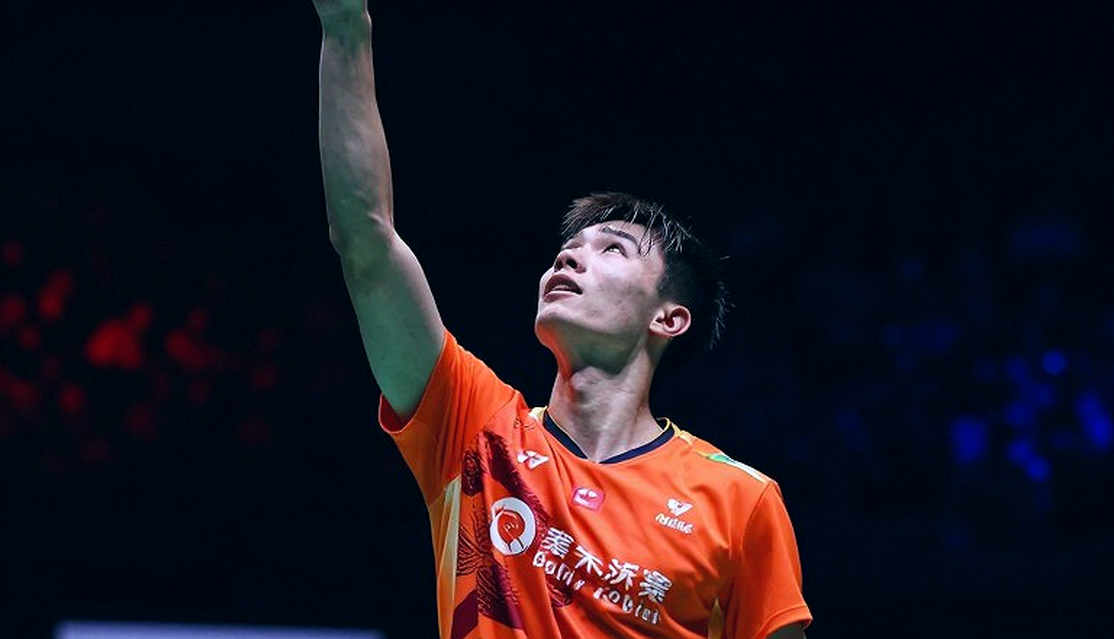
Jonatan Christie's defeat, by contrast, is the most concerning signal of the entire semifinal. Losing 17-21, 14-21 to a Thai opponent whose name is not clearly verified in the source is a result that cannot be dismissed. A seven-point margin in game two shows he was not in control. If the opponent is in fact a transliteration variant of Kunlavut Vitidsarn, this is a loss to a high-quality opponent, more understandable than a major upset. If not, its severity rises considerably. I flag this as medium-confidence data because the name spelling is unclear.
This is where correlation must be separated from causation. Indonesia won the tie because both doubles pairs won, and that is correct in result terms. But concluding that the doubles-first model is a durable solution means reading too much from a single match. Thailand's men's doubles are not the continent's highest benchmark. The 3-2 quarterfinal win over Malaysia shows that when the doubles pairs are pressed, the safety cushion disappears. If the final opponent is China, Jonatan Christie's first singles will be harder, not easier. A player in inconsistent form in the first singles slot against a team with strong singles depth is a central selection risk. If the opponent is India, the picture may be easier, but India just showed they can stay with China across four matches.
There is another blind spot in how this result is read. Indonesia's women's team losing to China in the semifinal is often framed as added pressure on the men's team. But the data does not say that. No indicator in the source links the women's defeat to the men's form. This is an appealing narrative, not a causal relation. I place it in the hypothesis column, not the conclusion column.
Zooming out to the continental picture, men's team badminton is multi-polar. China and Indonesia sit in the leading group. India, Thailand and Malaysia are close contenders. Indonesia's 3-2 quarterfinal against Malaysia and Thailand taking only one rubber against Indonesia show that the middle tier of this picture is fiercely competitive. Indonesia placing Alwi Farhan in the semifinal is a signal of generational transition in men's singles, and this is a data point worth tracking in coming tournaments.
Back to the central question: how did Indonesia reach the final? The short answer is through the two doubles pairs. The longer answer is through a squad structure that accepts trade-offs. They bet that the first singles could be lost, that the young player in the second singles could win, and that the two doubles pairs were an unshakeable foundation. In the semifinal, that structure ran smoothly. But a final, especially against an opponent with strong singles depth, will test the very weakness that structure conceals.
Recovery is not linear; it is a chain of small fracture points. For Indonesia, the small fracture point is in the first singles slot. If Jonatan Christie rediscovers consistency, Indonesia has a balanced squad. If not, they must rely on both doubles pairs not slipping, a thin assumption when the opponent is China. The semifinal is over, but the question about Indonesia's squad structure remains open.
Indonesia's result at the 2026 Asian Games is not a miracle but a strategic choice executed precisely at the lowest-risk points. The question for the final is whether that choice still holds when the low-risk points are raised by the opponent. If both Indonesian doubles pairs win, they take gold. If one slips, the result depends on a young player and a veteran searching for himself. The data has not answered that question. The final will.

Cầu thủ liên quan
Bài đề xuất
Tanvi Patri Wins Badminton Asia U17 Girls' Singles 2026: Decoding the 13-Game Run in Chengdu2026-09-14
Alwi Farhan Trains With Kento Momota in Tokyo Ahead of Asian Games 2026: What PBSI Told and What They Left Out2026-09-18
Thuy Linh Before Asiad 20: Three Asian Games, Two Olympics, and an Unsolved Medal Equation2026-09-15
When Peak Becomes Shadow: India's Women's Badminton Team Quarter-Final Exit at Asian Games 20262026-09-23
The Blind Spot Behind the Racket: How Elite Badminton Is Decided by the Meters Nobody Watches2026-09-19
Unable to create sports article due to missing analysis data2026-09-08
Vietnamese Badminton and the Debt of Ranking Points: The Gap Behind the Ticket to Major Events2026-09-15
Bài đề xuất
Indonesia Reaches the 2026 Asian Games Final: When the Doubles Pairs Carry a Whole Badminton Nation2026-09-24
China Masters 2026: Srikanth, Satwik-Chirag and the Final Three Points That Redraw India's Picture2026-09-16
Forty-One Empty Cells: When Southeast Asian Badminton Has No Data to Argue With2026-09-15
Tanvi Patri's Three Deciders: The Gap the Chengdu 2026 Scoreboard Never Told2026-09-15
When the Analysis Sheet Returns Empty Cells: The Days Vietnamese Badminton Has No Data2026-09-13
Behind the Rankings: Indonesian Badminton and the Silences No One Measures2026-09-19
Alwi Farhan Spars With Kento Momota in Tokyo: A Preparation Signal and a Data Void Ahead of Asian Games 20262026-09-18